Plyometric Training in Rehabilitation
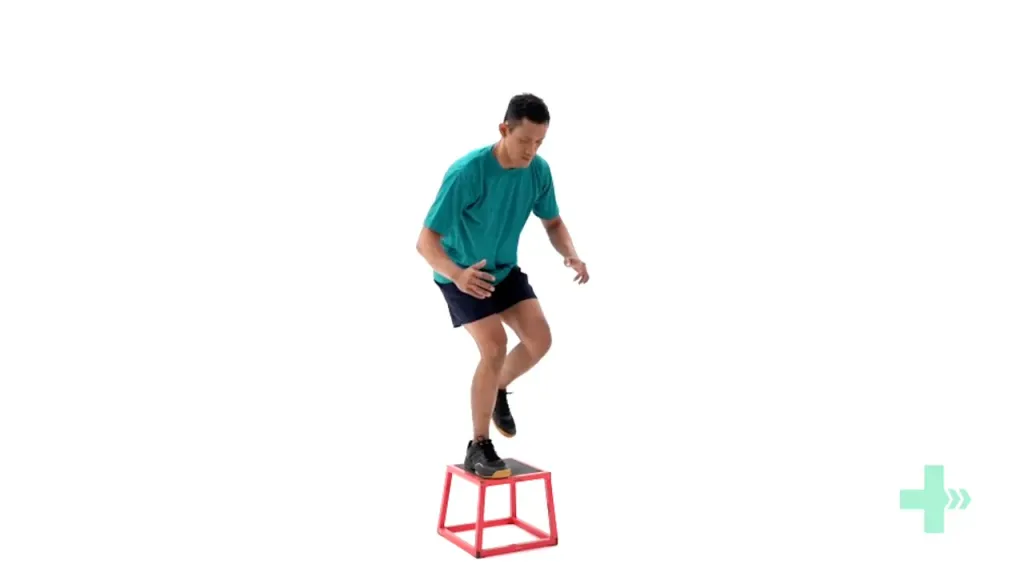
Plyometric training—often known as “jump training”—involves fast, explosive movements that take advantage of the stretch-shortening cycle (SSC) . This cycle happens when a muscle quickly lengthens (eccentric phase), briefly pauses (amortization phase), then shortens (concentric phase) to create powerful movement. These exercises help improve power, speed, and coordination , and they can range from low to high intensity depending on the goal.
Plyometrics are especially helpful in the final stages of rehab , when patients—particularly athletes—are transitioning back to dynamic, sport-specific tasks. They help build explosive power, which is essential for running, jumping, and quick directional changes. Think of plyometrics as the bridge between basic strengthening and real-world performance.
Is your patient ready?
Not everyone needs plyometrics, and they shouldn’t start too soon. Here’s what to check first:
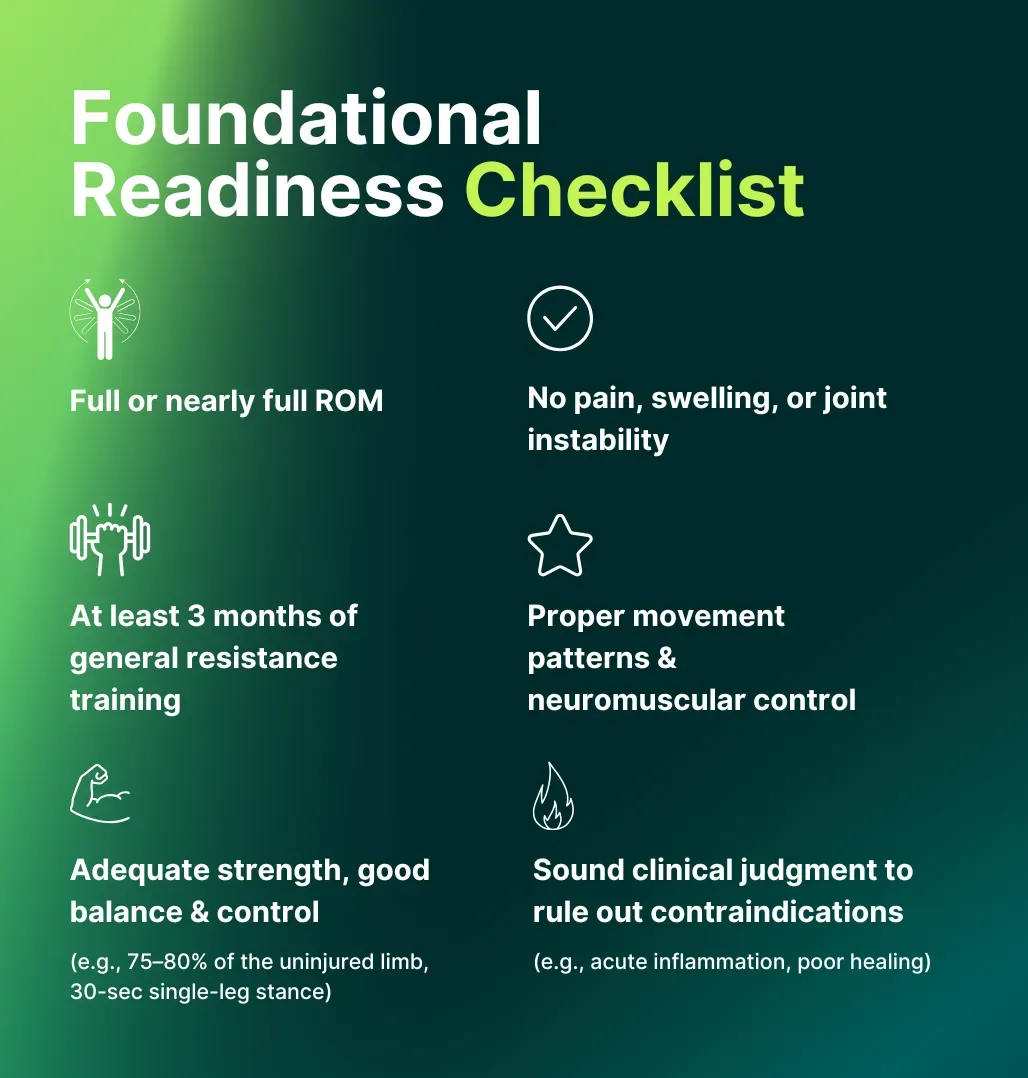
- Tissue Health : Pain, swelling, and inflammation should be minimal or gone.
- Range of Motion : The affected joint should have full (or nearly full) active and passive ROM.
- Strength & Control : Your patient should move well without compensations. While strength tests like squatting 1.5x bodyweight exist, they’re more relevant for healthy athletes. A solid foundation—usually 3+ months of general strength training—is more important.
- Balance : A 30-second single-leg stance (eyes open) is a useful but not definitive check.
- Functional Testing : Use a systematic screen (Functional Testing Algorithm) to assess strength, ROM, pain, balance, and readiness for low-level plyo drills.
- Contraindications : Avoid plyos in cases of joint instability, active pain or swelling, severe cartilage damage, OA, or certain spinal issues.
- Clinical Judgment : Ultimately, your judgment matters most—use it to guide safe progression.
Designing a Plyometric Program
Once a patient is ready, build a program that fits their needs and goals. Start small and gradually increase intensity over time.
- Start with a proper warm-up : Always prep the body before explosive movement.
- Integrate : Combine plyos with resistance and flexibility training, ideally within a periodized plan .
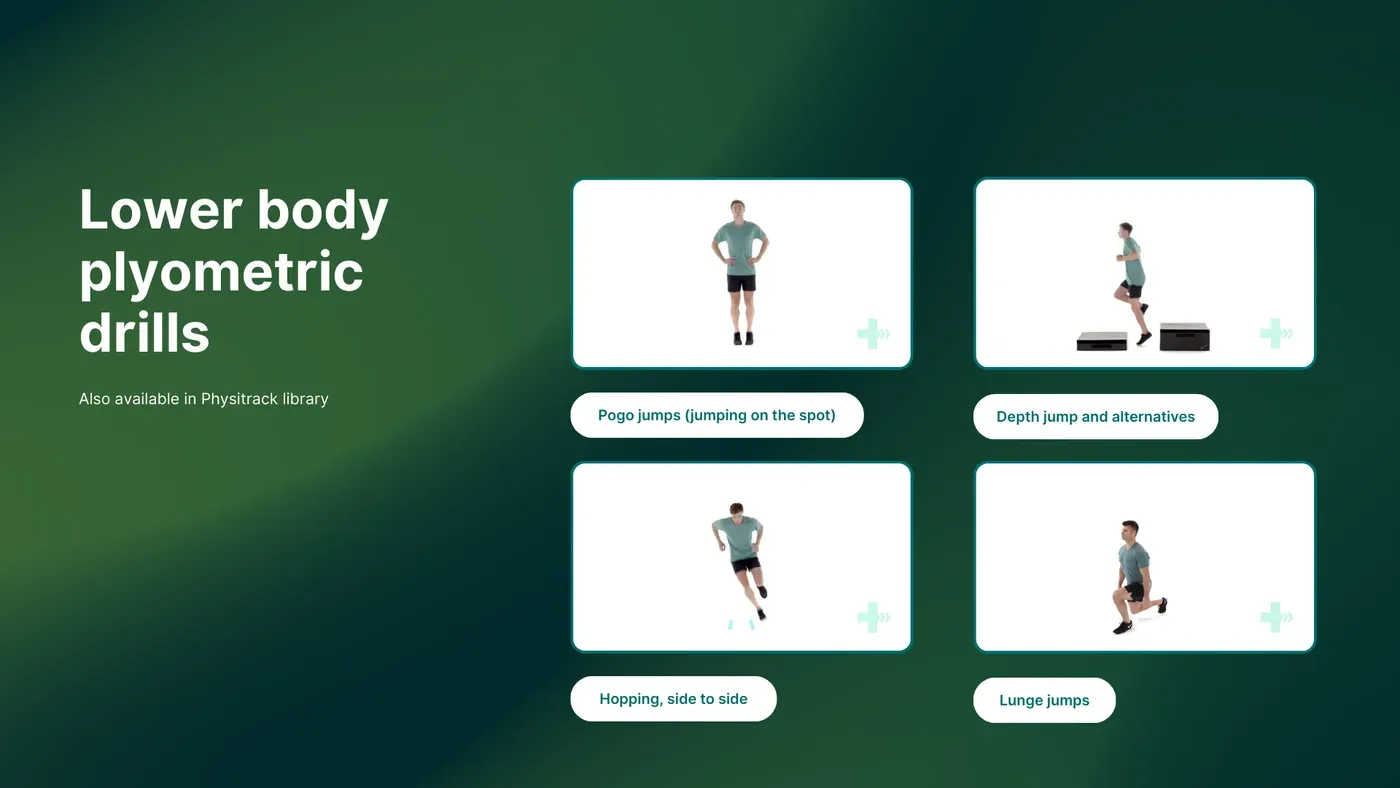
- Exercise choice : Pick drills that match the patient’s sport or activity (e.g., jumping for lower body, medicine ball throws for upper body).
- Intensity : Begin low. As patients advance, intensity (not just reps) becomes crucial—especially for engaging fast-twitch muscle fibers.
- Volume : For beginners, 40–60 foot contacts (or throws) per session is a good start.
- Frequency : 1–3 sessions per week is typical. Rest at least 48–72 hours between sessions, especially for high-intensity work.
- Tempo : Quick, explosive movement with minimal ground contact is the goal.
How plyometric training should be structured?
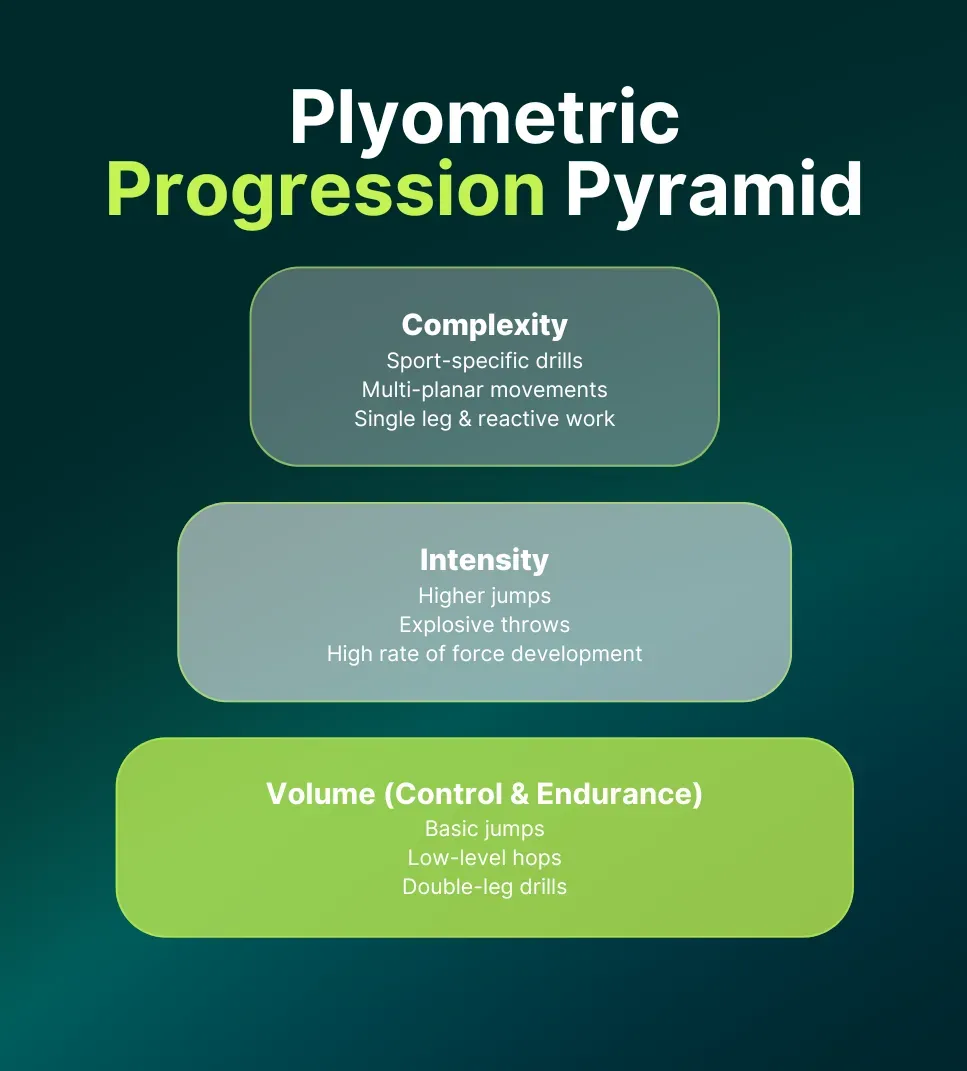
Start with basic movements
Like low jumps and double-leg hops to build motor control and muscular endurance.
Introduce more explosive movements
- higher effort drills once form is solid and the patient can tolerate more load.
Now you’re ready to:
Integrate sport-specific, multi-directional, and single-leg drills for return-to-play or high-level function.
Progression Tips
Plyometric progress should follow the principles of progressive overload . Start low, progress gradually, and always use your clinical judgment to guide safe, effective rehab.
- Adjust Variables : Tweak reps, sets, frequency, ROM, timing, movement complexity, or resistance.
- Order of Progression : Increase volume first to build endurance and control. Then raise intensity and complexity .
- Movement Complexity : Start simple (e.g., double-leg hops), then progress to more complex movements (e.g., single-leg, multidirectional, or sport-specific drills).
What to Monitor
Because plyometrics involve high forces, monitoring is critical :
- Technique : Watch form closely. Stop if fatigue leads to poor mechanics.
- Tissue Response : Check for pain or swelling post-session. Educate patients about normal soreness (DOMS).
- Recovery : Make sure there’s enough rest between sets and sessions.
- Clinical Oversight : Trust your instincts and adjust based on how your patient responds.
- Performance Testing : Use tests periodically to track progress and guide decision-making.
What Does the Research Say?
- Plyometric training can improve jump height, agility, strength, and speed .
- It’s particularly useful in sports like volleyball or combat sports where explosive movements are key.
- Training 2–3 times per week for 4–12 weeks showed benefits, especially for maximal strength and change-of-direction (COD) speed.
- However, there’s limited high-level evidence specifically for rehab patients, and many recommendations are based on experience rather than strict protocols.
Limitations to Keep in Mind
The current research often focuses on healthy athletes , with small sample sizes and short-term interventions. Plyos are usually one part of a larger rehab approach, and there are no universally accepted criteria for when to start them. That’s why clinical reasoning and individualized progression are so important.
References:
Amit Kumar Singh, Dr. Pravin Kumar. A narrative review on the effectiveness of plyometric training on volleyballers performance. Department of Physical Education, CT University, Ludhiana, Punjab, India. International Journal of Physical Education, Sports and Health 2023; 10(3): 89-93
Potach, David. (2004). Plyometric and Speed Training.
Davies, George & Riemann, Bryan. (2019). Current Concepts of Plyometric Exercises for the Lower Extremity. 10.1007/978-3-030-22361-8_13.
Abbas Asadi, Hamid Arazi, Warren B. Young, and Eduardo Sáez de Villarreal. The Effects of Plyometric Training on Change-of-Direction Ability: A Meta-Analysis. International Journal of Sports Physiology and Performance, 2016, 11, 563 -573. Human Kinetics. http://dx.doi.org/10.1123/ijspp.2015-0694
Davies G, Riemann BL, Manske R. CURRENT CONCEPTS OF PLYOMETRIC EXERCISE. Int J Sports Phys Ther. 2015 Nov;10(6):760-86. PMID: 26618058; PMCID: PMC4637913.
Chmielewski TL, Myer GD, Kauffman D, Tillman SM. Plyometric exercise in the rehabilitation of athletes: physiological responses and clinical application. J Orthop Sports Phys Ther. 2006 May;36(5):308-19. doi: 10.2519/jospt.2006.2013. PMID: 16715831.

Monika Chmiel
Clinical Content Manager