Beyond Hands-On vs. Hands-Off: Why MSK Care Is Shifting to the Biopsychosocial Model
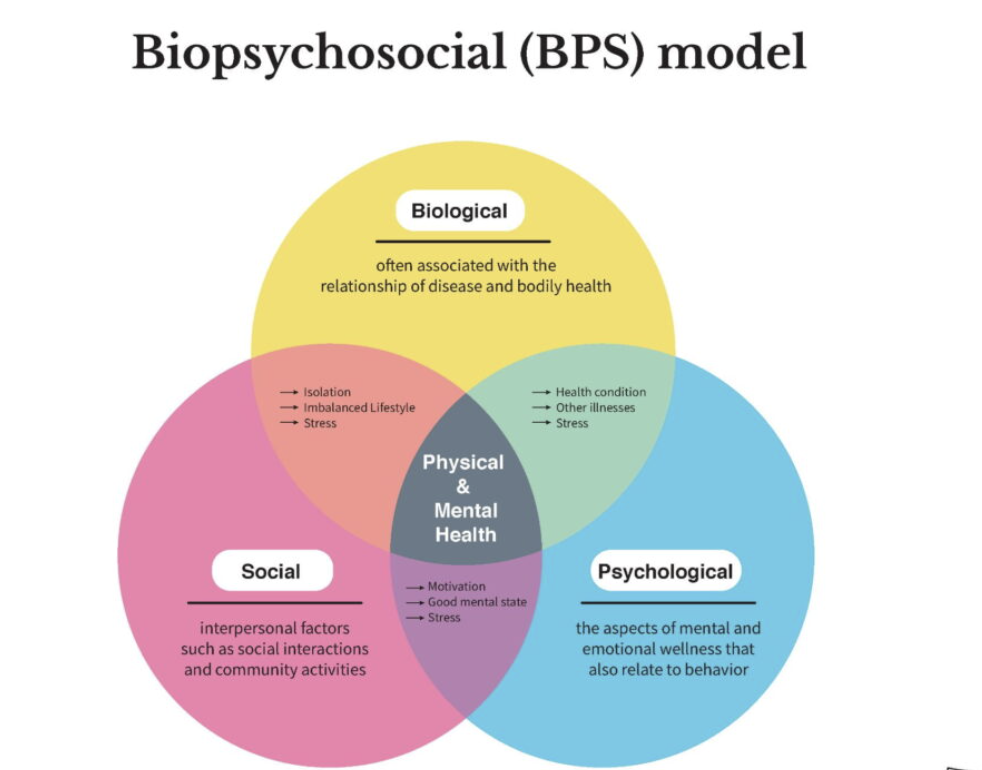
A 2025 editorial by Lewis, Mintken, and McDevitt in the Journal of Manual & Manipulative Therapy argues that physical therapy should stop debating hands-on versus hands-off technique and start treating lifestyle factors as central to musculoskeletal outcomes.
- Social determinants of health may account for up to 80 percent of health outcomes, leaving a modest share attributable to any single physical therapy intervention.
- Poor sleep raises inflammatory markers tied to musculoskeletal pain, and chronic stress dysregulates cortisol, which reduces collagen synthesis and weakens muscle.
- Meaningful disease-risk reduction needs roughly 3,600 MET-minutes per week, far above the 600 MET-minute minimum, and patients can reach it without a gym.
- The clinician's role shifts from fixer to facilitator, coaching patients through the modifiable factors that drive most of their results.
The hands-on vs. hands-off debate is the wrong question
Physical therapists have argued for decades over whether manual therapy works, and if it does, whether specific techniques matter. One camp defends hands-on treatment as central to practice. The other points to research showing that outcomes hold up with or without it. A 2025 editorial in the Journal of Manual & Manipulative Therapy by Chad Cook, Lewis, Mintken, and McDevitt argues that both camps are fighting over the wrong thing.
Their argument is that technique choice explains very little of what happens to a patient with musculoskeletal pain. Whether a clinician mobilizes a joint one way or another, the effect on long-term outcomes is small compared to how the patient sleeps, moves, and copes with stress in daily life. Time spent debating hands-on versus hands-off is time spent on a variable that barely moves the outcome.
The editorial frames the alternative as the biopsychosocial model. Pain and recovery come from biological factors, psychological factors, and social circumstances acting together, not from tissue mechanics alone. Under that model, a patient's sleep quality, anxiety level, physical activity dose, and social conditions carry more weight than the precise choice of manual technique. The rest of this article works through each of those factors and what the evidence says about them.
This is not a call to abandon manual therapy. A skilled mobilization can reduce pain in the moment, build a patient's confidence to move, and open a window for graded activity. The editorial demotes technique specificity as the central clinical question rather than dismissing the treatment. The question shifts from "which technique is best" to "what in this patient's life is driving their pain, and how do I help them change it."
Social determinants of health and the 80/20 split
Lewis, Mintken, and McDevitt point to a figure that reframes the whole debate. Social determinants of health may account for up to 80 percent of a person's health outcomes. Where someone sleeps, works, eats, and how much stress they carry drive most of what happens to their body over time. Any single physiotherapy intervention accounts for a much smaller share.
The clinical implication is direct. A clinician who treats only what happens on the table is working on a minority of the factors that decide whether a patient improves. Manual therapy, exercise prescription, and education all sit inside that smaller slice. They matter, but they compete for influence against sleep, activity, income, and psychological load that the patient carries into and out of the clinic.
That math justifies looking past the presenting complaint toward the patient's daily life. A stiff shoulder or an aching low back rarely exists in isolation. It sits alongside poor sleep, chronic stress, and long stretches of inactivity, each of which shapes pain and tissue health in ways a technique choice cannot override. Ignoring those factors leaves most of the outcome unaddressed.
The 80 percent figure is a ceiling drawn from population-level research on health outcomes, not a precise measure of any one patient in front of you. The editorial uses it to argue for attention, not to hand clinicians a formula. Some patients respond well to hands-on care alone. Most carry lifestyle factors that will limit their recovery regardless of what happens during a session.
The argument is not that physiotherapy fails to help. It is that the biggest levers usually sit outside the treatment room, in habits and circumstances the patient controls day to day. A clinician who screens for those factors and helps patients manage them works on the larger share of what determines their recovery. One who does not is optimizing a small fraction and hoping it carries the rest.
Sleep deprivation and inflammatory pain pathways
Poor sleep raises the inflammatory markers tied to musculoskeletal pain. When patients sleep too little, their bodies produce more pro-inflammatory cytokines such as interleukin-6 and C-reactive protein. Those same markers show up in chronic pain conditions and slow tissue recovery. A patient who sleeps five hours a night carries a higher inflammatory load than the same patient sleeping eight, and that load lowers pain thresholds and amplifies how strongly the nervous system registers a given stimulus.
The relationship runs in both directions. Pain disrupts sleep, and disrupted sleep worsens pain. A patient locked in that loop will plateau in rehab no matter how well the graded exercise plan is designed, because the underlying inflammatory state keeps resetting their baseline. Treating the lumbar spine while ignoring three months of four-hour nights addresses the smaller variable.
Sleep quality belongs in a standard musculoskeletal assessment, not in a wellness handout. Clinicians already ask about aggravating and easing factors, work demands, and activity levels. Sleep duration and quality sit in the same tier of clinical relevance, and they are modifiable. A patient can change their sleep behavior faster than they can rebuild a degenerated joint, which makes it one of the higher-leverage inputs a clinician can influence.
Asking about sleep also reframes the conversation for the patient. When a physical therapist connects a flare-up to a run of bad nights, the patient sees their pain as something they hold some control over rather than a fixed structural fault. That shift supports adherence and lowers the fear-driven avoidance that often keeps chronic pain patients deconditioned.
Chronic stress, cortisol, and tissue health
Chronic psychological stress dysregulates cortisol, and that disruption reaches the tissues physical therapists treat. Under normal conditions cortisol follows a daily rhythm that helps control inflammation. When stress becomes chronic, that rhythm flattens or stays elevated, and the resulting cortisol dysregulation is tied to systemic inflammation rather than the short-term anti-inflammatory effect a single stress response produces.
Elevated, poorly regulated cortisol also impairs collagen synthesis. Collagen is the structural protein in tendon, ligament, and skin, so reduced production slows the repair a patient needs after injury or during a loading program. A tendon rehab that stalls despite a sound exercise plan may reflect a physiological ceiling on tissue repair, not poor adherence.
The same mechanism contributes to muscle weakness. Sustained cortisol exposure promotes protein breakdown in muscle and blunts the anabolic response to loading, so a patient under chronic stress may build strength more slowly than their program predicts. Strength deficits that resist progressive loading can have a hormonal driver a physical exam will not reveal.
These mechanisms explain why psychological screening belongs next to physical exam findings rather than in a separate wellness conversation. Range of motion, strength testing, and palpation say nothing about a patient's cortisol state, yet chronic stress can throttle the inflammatory control, collagen production, and muscle adaptation those tests measure indirectly. A validated anxiety or stress measure gives you information the physical exam cannot, and it points to a modifiable factor you can address alongside the loading plan.
The MET-minute target and why most patients fall short
Physical activity guidelines set 600 MET-minutes per week as the floor, but the editorial by Lewis, Mintken, and McDevitt points to roughly 3600 MET-minutes per week as the level tied to meaningful reductions in disease risk. MET-minutes measure the intensity of an activity multiplied by the time spent doing it. The 600-minute minimum keeps a patient inside the guideline, yet it sits far below the dose that shifts cardiovascular, metabolic, and musculoskeletal outcomes. Most patients cluster near the floor or below it.
The gap looks smaller once you count everyday movement. A patient does not need a gym membership to reach 3600 MET-minutes. Brisk walking to work, cycling for transport, vacuuming, digging in the garden, and carrying shopping all accumulate MET-minutes across a week. A patient who walks 30 minutes most days and does regular housework and yard work can approach the higher target without any structured exercise session at all. Naming these activities as legitimate dose reframes what counts as treatment adherence.
Reaching the target depends on dose and consistency, which is where the home exercise program does the clinical work. A structured program lets you prescribe graded activity, set the intensity and frequency that add up to a weekly MET-minute goal, and track whether the patient actually completes it. Prescribing 3600 MET-minutes on paper means little without visibility into what the patient does between visits. Adherence tracking closes that loop and shows whether the prescribed dose is being met or whether the plan needs adjusting.
Graded exposure matters here too. A deconditioned patient in pain cannot jump to 3600 MET-minutes safely. You start below their current tolerance and build progressively, using the program to log each step and confirm the patient tolerates the increase before advancing. That pacing keeps the target realistic rather than aspirational, and it turns the number from a statistic into a treatment goal you can measure week over week.
Why manual therapy specificity matters less than assumed
Much of the appeal of manual therapy rests on technique specificity, the idea that a skilled clinician can locate and treat a precise spinal segment. Lewis, Mintken, and McDevitt argue this premise fails under scrutiny. No profession has reliably demonstrated the ability to palpate a specific spinal segment. Studies of inter-rater reliability show clinicians often disagree on which level they are contacting, and they cannot consistently identify the same segment twice.
If clinicians cannot reliably locate a target, the claim that a particular technique corrects a particular joint loses its foundation. A high-velocity thrust to "L4-L5" is unlikely to land where the clinician intends, and the biomechanical rationale behind segment-specific correction does not hold.
Manual therapy still helps many patients, but the benefit probably comes from something other than mechanical precision. The hands-on encounter delivers reassurance, reduces fear of movement, and gives patients confidence to load and use the painful area. Manual therapy also works as a form of graded exposure, showing a patient their spine can tolerate touch and pressure without harm.
This lines up with the biopsychosocial reframe from the opening argument. If the value of a manual technique lies in interaction, confidence, and graded exposure rather than in correcting a specific segment, then the choice between one technique and another is a small decision. What matters is how the clinician uses the encounter to change a patient's beliefs and behavior around movement.
Screening tools to add to intake
Three validated instruments turn lifestyle factors from clinical hunches into scored, trackable data, and each one takes minutes to complete at intake. Adding them to an existing form asks nothing more of a patient than a standard PROM does.
The Pittsburgh Sleep Quality Index measures sleep quality over the past month across seven components, including how long a patient takes to fall asleep, how often they wake, and how rested they feel. It produces a single global score, with higher numbers indicating worse sleep. A poor score flags a modifiable driver of inflammatory pain that a physical exam alone would miss. It also gives you a baseline to remeasure once a patient changes their sleep habits.
The GAD-7 screens for generalized anxiety using seven items scored from zero to three, for a maximum of 21. Scores of 5, 10, and 15 mark mild, moderate, and severe anxiety. Chronic anxiety feeds the cortisol dysregulation tied to systemic inflammation and reduced tissue repair, so a GAD-7 score sits logically alongside range-of-motion findings rather than in a separate wellness bucket. A high score tells you a referral or a conversation about stress belongs in the plan.
The International Physical Activity Questionnaire quantifies a patient's activity across walking, moderate, and vigorous intensity over the past seven days, then converts it into MET-minutes per week. That number tells you directly where a patient sits against the 600 MET-minute minimum and the 3600 target for meaningful disease-risk reduction. A patient logging 800 MET-minutes and one logging 3,500 need very different activity prescriptions, and the IPAQ makes that gap visible before you build a program.
None of these tools requires new software or a longer appointment. Scoring is quick, the instruments are free, and each one converts a vague concern into a number you can track over time. Start with one that maps to your most common patient presentations, then add the others as the intake settles into routine.
.png)

