

Step-by step guide to the running man exercise exercise
Maximize effectiveness: Tips for patients and practitioners
Step-by step guide to the running man exercise exercise
Maximize effectiveness: Tips for patients and practitioners

1. Step-by-step video on how to do the running man exercise

2. How to perform the running man exercise? Follow these instructions:
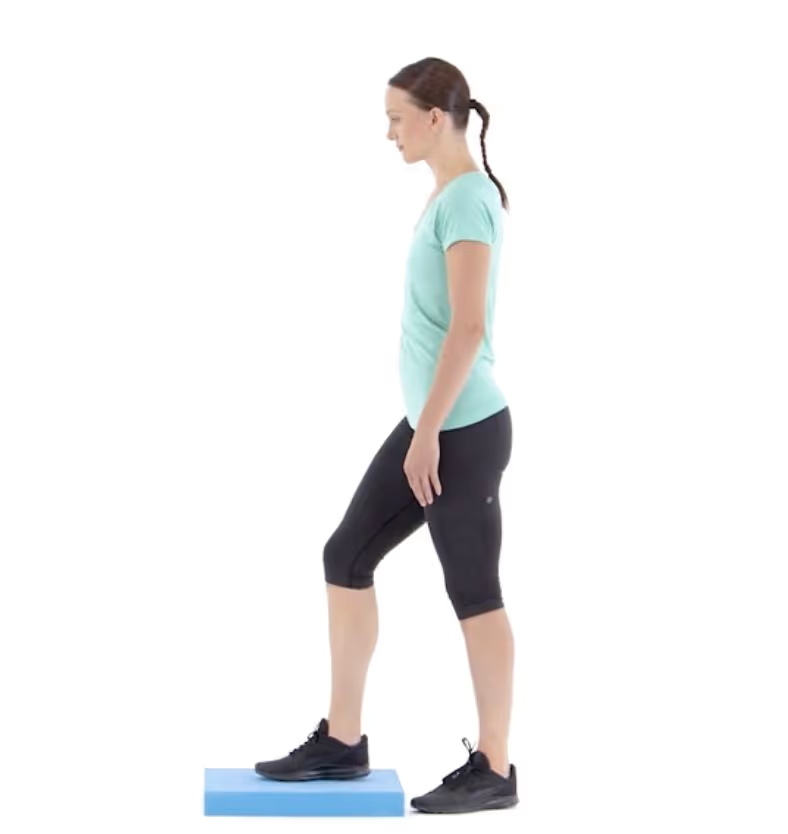
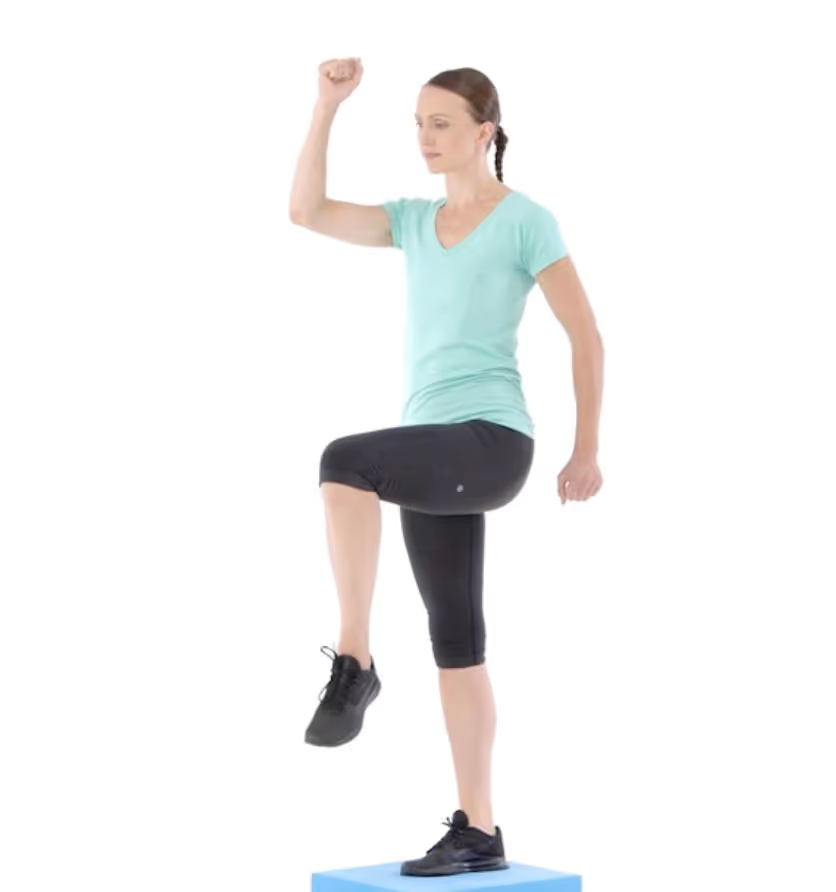
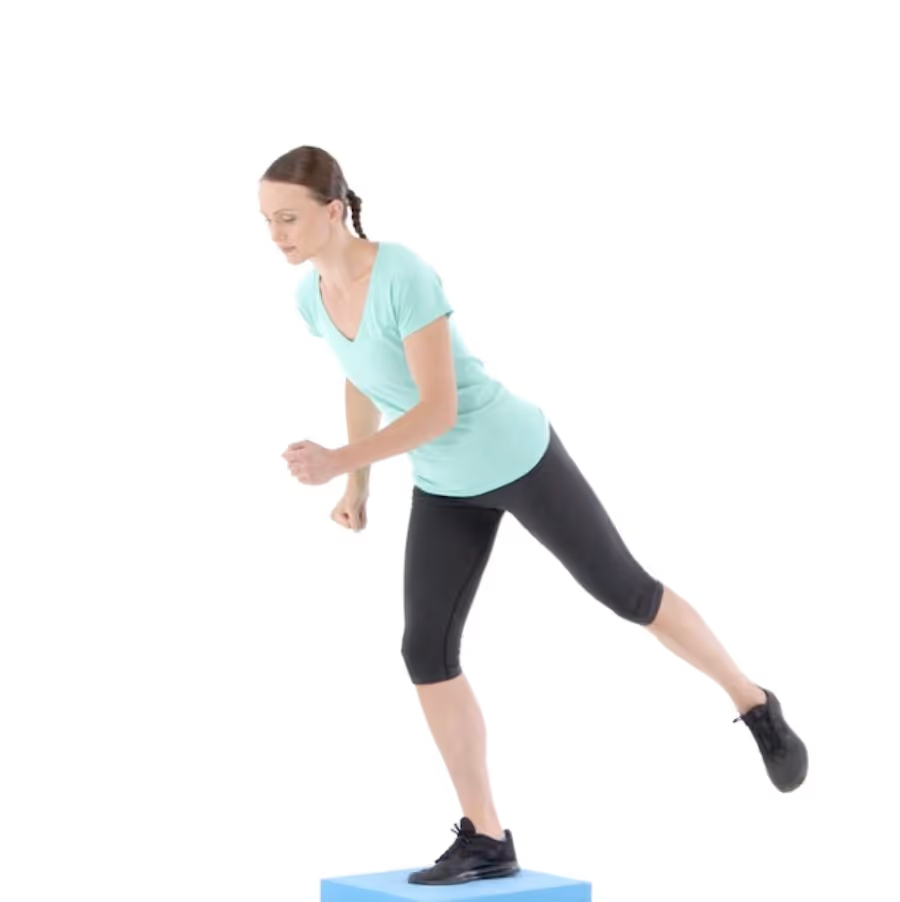
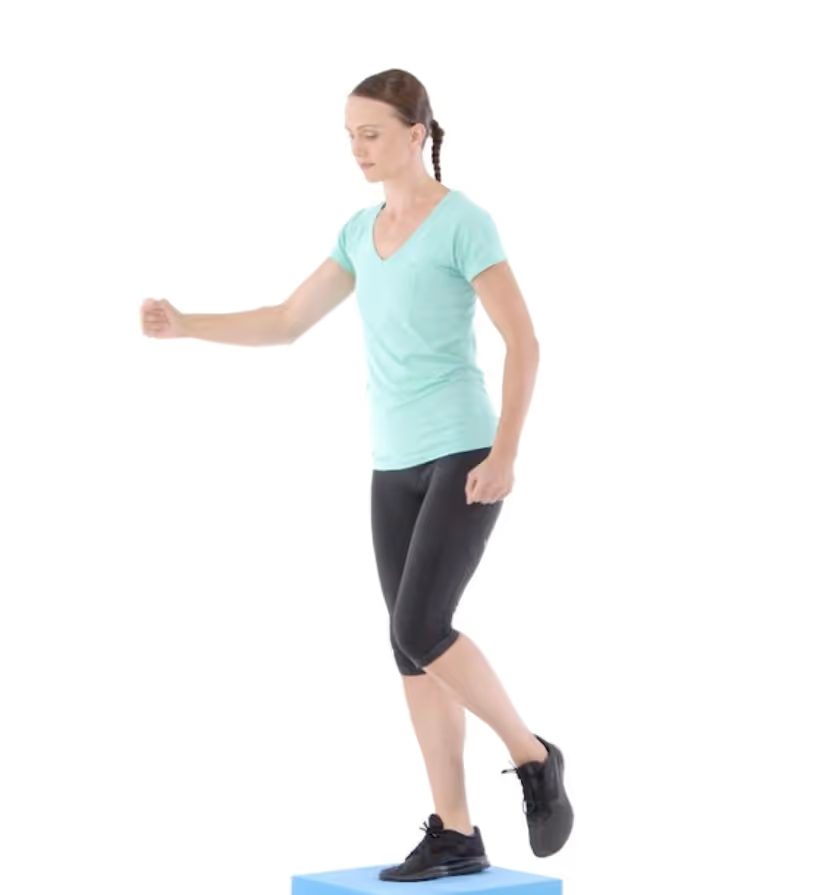

%20(1).avif)
3. About the running man exercise
- Exercise helps to tone the muscles of your upper and lower body
- Challenge your balance, coordination, and speed
- Increases your metabolism for calorie burn
- Improves your cardiovascular endurance
- Simple to do and can do nearly anywhere indoors or outdoors
4. List benefits of running man exercise
Here are some potential benefits of performing this exercise:
- Improved heart health, as running helps reduce bad cholesterol levels and increases good cholesterol.
- Improved respiratory health, as running increases lung capacity and can help strengthen the immune system.
- Improved metabolism, as running helps burn calories and lose extra weight.
- Reduced stress levels, as the regular exercise helps to reduce stress and help the body relax.
- Improved cognitive function, as running increases blood flow to the brain, which can result in improved memory, concentration, and creative thinking.
5. FAQ on running man exercise


The running man exercise targets the muscles of the glutes, quads, inner thighs, and calves. It also engages the core muscles and helps to improve balance and coordination.
The running man exercise should be done at least 3 times a week. However, if you are looking to increase your endurance, you can do it more often.
The correct form for the running man exercise is to start in a standing position with your feet shoulder-width apart. Then, move your right leg forward and your left leg back, keeping your hips level. From there, alternate your legs in a running motion while keeping your upper body still. Make sure you keep your back straight and your core engaged.
To make the running man exercise more challenging, you can try adding a jump or squat to each step, or increasing the speed of your movements. You can also add a weighted vest or ankle weights to increase the intensity.
When doing the running man exercise, it is important to take safety precautions to avoid injury. Start slowly and gradually increase your speed as you become more comfortable with the exercise. Make sure you have plenty of space around you to move freely. Wear appropriate footwear and clothing to ensure your safety and comfort. Warm up and cool down before and after the exercise to help prevent muscle strains. If you start to feel any pain or discomfort, stop the exercise and consult a medical professional.

