Branded App for Physiotherapy Clinics: Why UK Practices Choose Physitrack
TL;DR
- A branded physiotherapy app is a white-labelled version of a practice’s patient tools, carrying its own name and logo on iOS and Android instead of a generic third-party brand.
- NHS Trusts and private multi-branch practices use branded apps to reinforce recognition between appointments, support patient retention, and provide a consistent experience across services or locations.
- Rehab Guru centres its branded app on exercise delivery and practice branding. Physitrack adds 18,000+ exercise videos, adherence and PROMs tracking, 15+ languages, and EHR integrations including Epic, making it the stronger clinical fit for more complex services.
What a branded physiotherapy app actually is
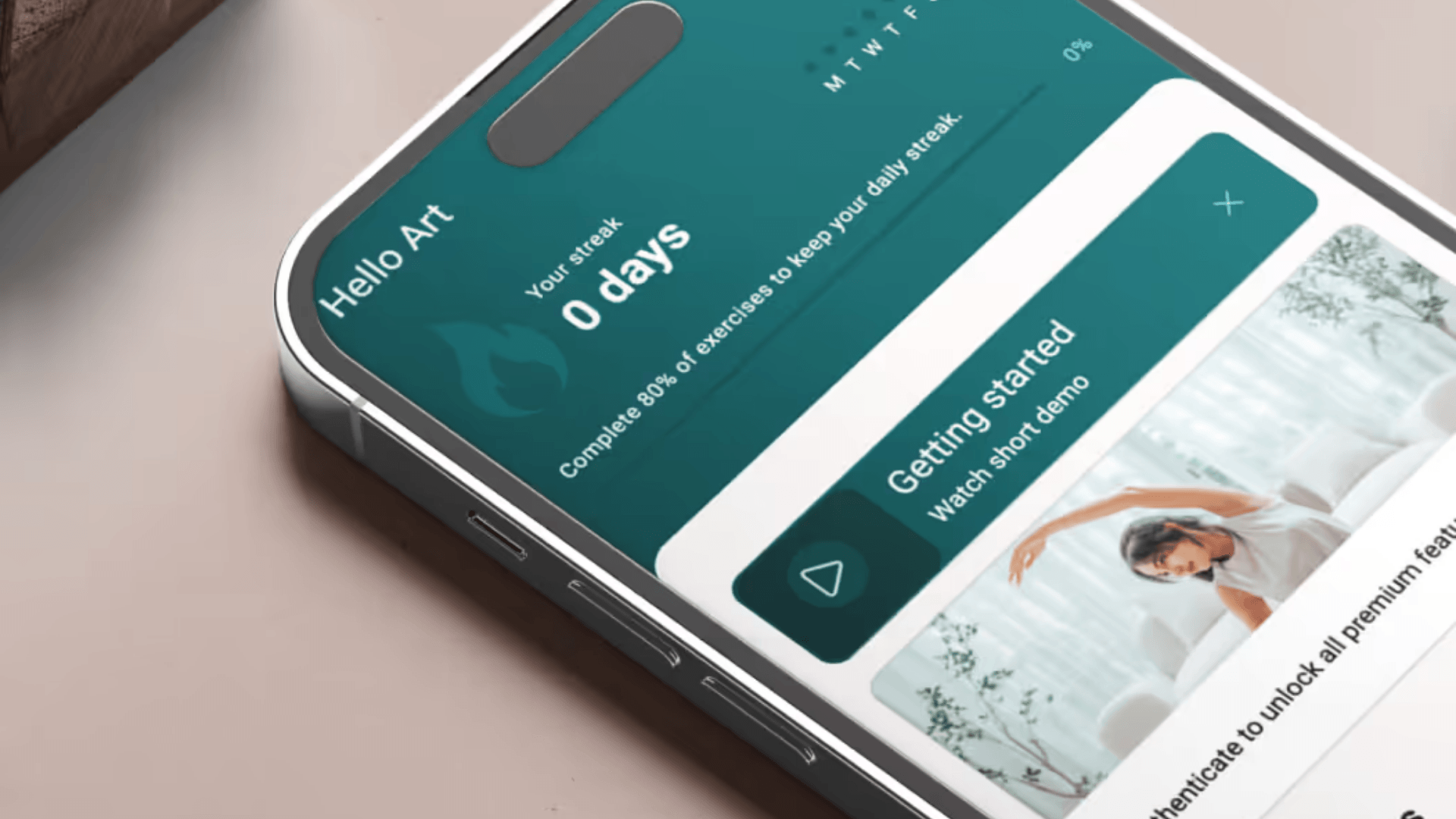
A branded physiotherapy app is a white-labelled version of a practice’s patient-facing software that carries the practice’s own name and logo on iOS and Android, rather than the identity of a generic third-party app. The software vendor develops and maintains the underlying technology, while patients experience the app as part of the practice or NHS service that prescribed their care.
A branded app sits within the broader physiotherapy software and home exercise programme category. Depending on the vendor and subscription tier, it may deliver prescribed exercises, record adherence, collect patient-reported outcome measures, support messaging, or provide video consultations. Branding alone does not determine which clinical functions the app includes.
A white-label app also differs from practice management software. It does not necessarily manage appointments, billing, or the main patient record. Instead, it provides a branded patient interface for rehabilitation tools and may connect with the practice’s existing EHR or management system.
Why UK practices invest in a branded app
A branded app keeps the practice visible between appointments. Patients see the same name, logo, and visual identity whenever they open their home exercise programme. That repeated recognition can strengthen continuity with the clinic and give patients a familiar route back to its services.
Private practices can use the app to support retention by keeping prescribed exercises, clinic information, and useful links in one patient-facing location. Jonathan Clark Physiotherapy uses Branded App Lite as a digital front door for five clinics, 20 staff, and around 1,000 patients each month. The app connects patients with booking, the practice website, and Google reviews across every location.
Multi-branch practices also gain a more consistent patient experience. Each clinic can use the same branded interface and exercise delivery model, rather than asking patients to navigate different tools depending on where they receive care. A common app also makes it easier for a growing practice to present each branch as part of one organisation.
NHS Trust services have a similar need for consistency across departments and sites. A shared patient-facing app can give patients one recognisable access point while clinicians prescribe programmes suited to their own service. Procurement leads can therefore assess branding alongside information governance, clinical oversight, interoperability, and reporting requirements.
Rehab Guru vs Physitrack: where the branded apps actually differ
Rehab Guru centres its branded app on exercise delivery and practice branding. Its wider software combines home exercise programme workflows with clinic management tools, which can suit a smaller UK practice seeking a relatively simple package. The confirmed library contains more than 6,000 exercises and 16,000 images.
Physitrack’s branded app runs on a broader clinical exercise platform. Clinicians can prescribe from more than 18,000 professionally filmed exercise videos, while PhysiApp records completed exercises, sets, repetitions, pain, and difficulty. Built-in PROMs and video consultations are available on higher branded app tiers.
Language and integration needs create a further distinction. Physitrack supports more than 15 languages, which helps NHS services and private clinics provide consistent programmes to diverse patient populations. The platform also offers more than 30 EHR and practice management integrations, including Epic, so practices can add exercise prescription without replacing their existing record or administration software. The available Rehab Guru information confirms a strong English-language product but does not establish comparable multilingual, telehealth, PROMs, or EHR integration depth.
Rehab Guru is best for smaller UK practices that prioritise branded exercise delivery and combined clinic management tools.
Physitrack is best for NHS services and private or multi-branch practices that need deeper clinical content, adherence and outcomes reporting, multilingual delivery, and integration with existing systems.
Physitrack vs Rehab Guru at a glance
The table separates branding capability from the clinical software beneath each patient app.
NHS-proven, not NHS-only
Physitrack has current NHS deployments across acute and community care, including MSK, paediatrics, occupational health, and primary care. Named deployments include Guy’s and St Thomas’, Newcastle upon Tyne Hospitals, Oxford University Hospitals, and Oxleas NHS Foundation Trust. Royal Free London and Mersey and West Lancashire Teaching Hospitals also use Physitrack across multiple departments.
Private healthcare use provides a separate measure of suitability. Bupa, Nuffield, and Circle use Physitrack, showing that the platform can support private physiotherapy services as well as NHS procurement requirements.
The branded app builds on the same clinical exercise, adherence, and outcome-tracking platform used in these settings. An NHS Trust can assess it around information governance, interoperability, reporting, and deployment across services. A multi-branch private practice can apply the same platform while giving patients a consistent app under its own name and visual identity.
Evaluating a branded app vendor: a practical framework
Use these five checks to compare branded app vendors on the clinical platform beneath the branding.
-
Exercise content depth. Review the number, quality, and clinical range of exercises, including whether videos receive regular updates. Ask the vendor to demonstrate content for several common and specialist caseloads.
-
Adherence tooling. Confirm what the app records beyond patient logins, such as completed sessions, prescribed sets and reps, pain scores, and PROMs. Ask the vendor to show the clinician-facing record for one patient journey.
-
Language coverage. Check whether translations cover the patient interface and exercise content rather than selected menus. Ask the vendor to identify exactly what patients can access in each supported language.
-
EHR compatibility. Establish whether the app connects with your current EHR or practice management software without replacing it. Ask the vendor to demonstrate a live integration and explain how patient data moves between platforms.
-
Clinical and regulatory credibility. Examine published clinical evidence, information governance, and current certification scope. Ask for valid ISO 27001 and ISO 13485 certificates, plus the vendor’s applicable UK or EU MDR status and supporting documentation.
See the branded app in context
A branded app can deliver only what its underlying clinical platform supports. UK practices should assess the app alongside their physiotherapy software and home exercise programme choices. Explore Physitrack’s branded app to see how Physitrack brings those elements together.
FAQs
What are the cost and contract basics for a Physitrack branded app?
Branded App Lite provides practice branding, the exercise library, and adherence tracking for up to 500 active patients. Physitrack offers Lite on a two-year contract and aims to launch the app within six weeks. Your practice should request a quote based on its patient volume and required features.
Can an NHS Trust use a branded app?
An NHS Trust can use a branded app to deliver a consistent patient experience across services and departments. Physitrack already supports NHS deployments across acute, community, MSK, paediatrics, occupational health, and primary care settings. Trusts can connect branded exercise delivery and outcome tracking with existing clinical and information-governance requirements.
How does a branded app differ from using PhysiApp unbranded?
PhysiApp is Physitrack’s standard patient app for receiving home exercise programmes, recording adherence, and communicating with clinicians. A branded app provides those patient-facing tools under your practice’s own name and logo on iOS and Android. Patients see your organisation’s identity whenever they access their rehabilitation programme.
How does Physitrack compare with the Rehab Guru app?
Rehab Guru focuses its branded app offering on exercise delivery and practice branding. Physitrack adds branding to a wider clinical platform with over 18,000 exercise videos, adherence tracking, PROMs on higher tiers, multilingual delivery, and EHR integrations including Epic. Rehab Guru suits smaller practices seeking straightforward delivery, while Physitrack suits NHS services and private clinics that need broader clinical infrastructure.