

Step-by step guide to the one arm db extension exercise
Maximize effectiveness: Tips for patients and practitioners
Step-by step guide to the one arm db extension exercise
Maximize effectiveness: Tips for patients and practitioners

1. Step-by-step video on how to do the one arm db extension exercise

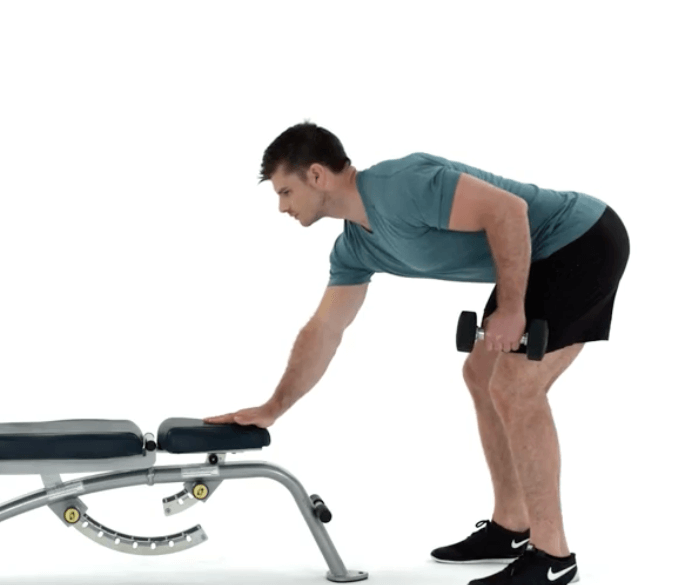
How to perform the One Arm Db Extension


%20(1).avif)
3. About the one arm db extension exercise
- Isolate the triceps muscle with this single-arm exercise
- Select a weight that allows you to keep a controlled tempo and a full range of motion
- Extend to full elbow extension and slowly return to starting position
4. Benefits of the one arm db extension exercise
Here are some potential benefits of performing this exercise:
- Improves unilateral strength and stability
- Enhances shoulder stability
- Increases core activation from the need to maintain balance
- Increases balance and coordination of the shoulder joint
5. FAQ on the one arm db extension exercise


The one arm dumbbell extension primarily works the triceps muscle. It also engages the shoulders, back, and core muscles for stability.
The weight you use for the one arm dumbbell extension should be based on your strength and fitness level. If you are a beginner, start with a light weight and gradually increase the weight as you become more comfortable and confident with the exercise. If you are an experienced lifter, you can use a heavier weight. Be sure to use a weight that allows you to complete the exercise with proper form.
The number of sets and reps you should do for the one arm dumbbell extension will depend on your fitness goals and current fitness level. Generally, a good starting point is 3 sets of 10-15 reps with a weight that you can comfortably lift for the entire set. As you become stronger, you can increase the weight and/or the number of reps.
1. Not using proper form: It's important to keep your back straight and your core engaged while doing the one arm dumbbell extension. 2. Going too heavy: It's easy to get carried away and use a weight that's too heavy. Start with a lighter weight and gradually increase the weight as you become more comfortable with the exercise. 3. Not keeping your elbow close to your body: Make sure to keep your elbow close to your body during the exercise to ensure you're targeting the correct muscles. 4. Not controlling the weight: Make sure to control the weight during the entire exercise, both on the way up and on the way down.

