Step-by step guide to the high kneeling exercise

Maximize effectiveness: Tips for patients and practitioners

Step-by step guide to the high kneeling exercise

Maximize effectiveness: Tips for patients and practitioners

video camera icon

1. Step-by-step video on how to do the high kneeling

Icon of a checkbox

2. How to perform the high kneeling? Follow these instructions:
Step 1
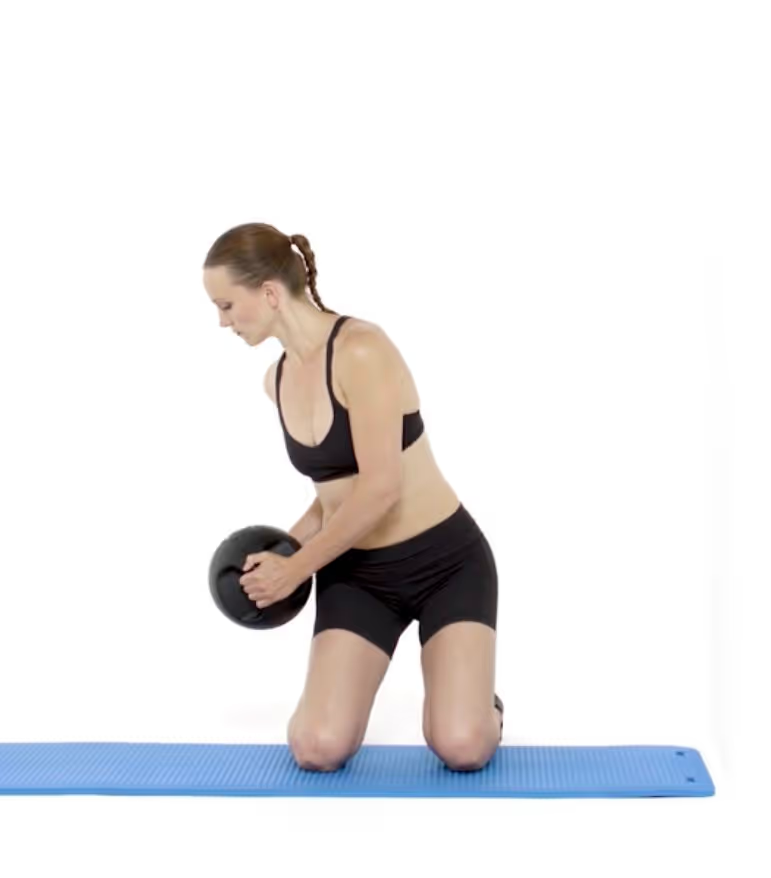
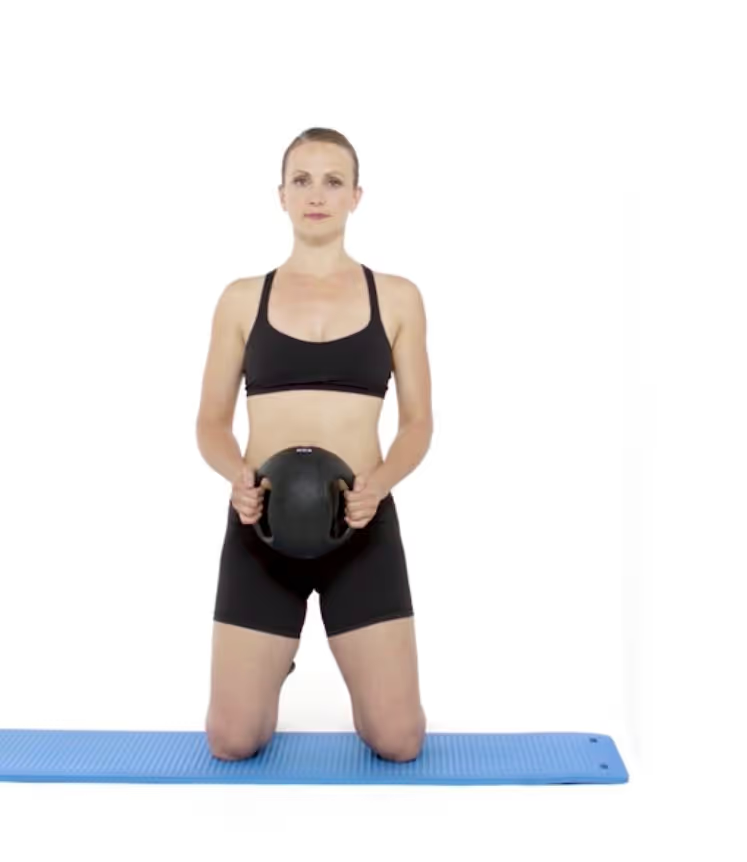
Begin by kneeling upright on the floor slightly further than an arm’s distance away from a wall to one side. Hold a medicine ball in both of your hands. Maintain a neutral spine and engage your deep abdominal muscles throughout this exercise.
Step 2
Simultaneously hinge at your hips to send your buttocks backwards and rotate at your trunk away from the wall, taking the medicine ball to your side.
Step 3
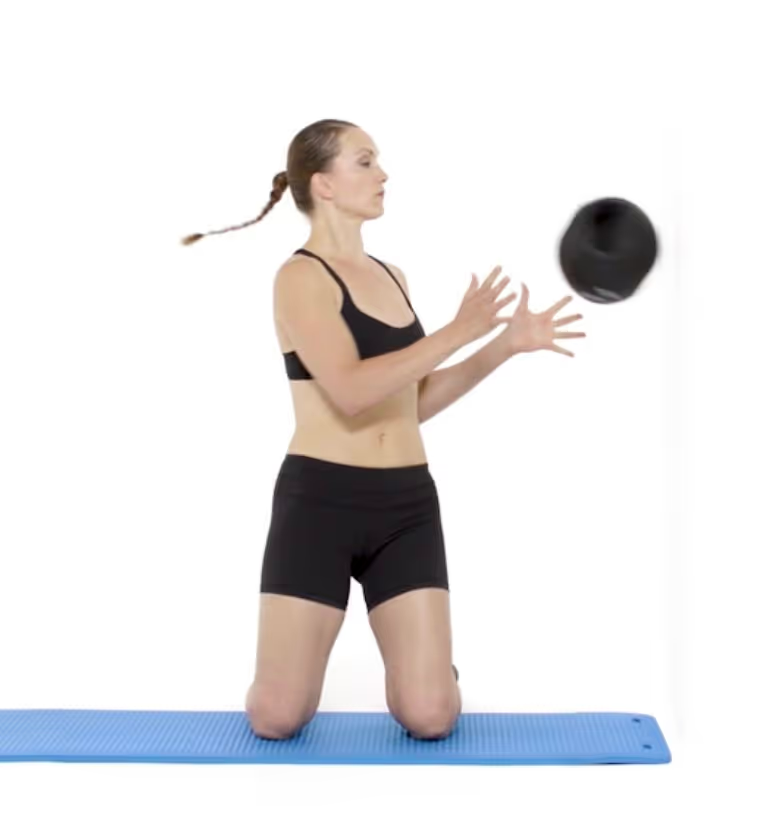
In an explosive motion, return to an upright kneeling position as you throw the medicine ball into the wall.
Step 4
Immediately catch the ball as it rebounds off the wall and repeat.
Step 5
Prescribe. Educate. Engage.

Unlock Physitrack - all in one platform for practitioners!
Start your 30-day free trial today.
Get Started
Various devices showing the Physitrack UI
Want to receive your exercise programs via app?

Refer your physiotherapist and start using PhysiApp!
Leave clinic details
Mobile devices showing the user interface of Phystrack
Icon of a checkbox

3. About the high kneeling

  • High kneeling hip extension is a useful exercise that helps strengthen the glutes, hamstrings, and cores.
  • It is often used as part of a warm-up to help with hip mobility and as an activation exercise prior to more dynamic movements.
  • Proper form and execution of the exercise is important to ensure you get the maximum benefit.
  • As the hip is the primary mover, be sure to keep it in a neutral position throughout the exercise.
Icon of a checkbox

4. List benefits of high kneeling

Here are some potential benefits of performing this exercise:

  • Improved balance and proprioception
  • Increased core stability
  • Enhanced hip mechanics
  • Improved posture
  • Reduced risk of injury
Icon of a checkbox

5. FAQ on high kneeling

What muscles are targeted with high kneeling hip abduction?
Plus iconMinus icon

High kneeling hip abduction primarily targets the gluteus medius and gluteus minimus muscles. Additionally, it can also work the tensor fasciae latae, sartorius, and rectus femoris muscles.

What are the benefits of doing high kneeling hip abduction?
Plus iconMinus icon

The benefits of doing high kneeling hip abduction include strengthening the gluteal muscles, improving hip stability, and improving balance and coordination. It can also help reduce the risk of hip and lower back injuries. Additionally, it can help improve posture and flexibility in the hips and lower back.

How often should I do high kneeling hip abduction?
Plus iconMinus icon

High kneeling hip abduction exercises should be done 2-3 times a week, with at least one day of rest in between each session. It is important to listen to your body and not overdo the exercises. If you experience any pain or discomfort, stop the exercise and consult your doctor or physical therapist.

Plus iconMinus icon

Plus iconMinus icon

Prescribe. Educate. Engage.

Unlock Physitrack - all in one platform for practitioners!
Start your 30-day free trial today.
Get Started
Various devices showing the Physitrack UI
Want to receive your exercise programs via app?

Refer your physiotherapist and start using PhysiApp!
Leave clinic details
Mobile devices showing the user interface of Phystrack

Thank you for using our exercises!

We would love to know just one thing about you to help us improve these pages

What do you currently use as the main form for assigning exercises to your patient?

Next
Thank you! Your submission has been received!
Oops! Something went wrong while submitting the form.
Thank you! Your submission has been received!
Oops! Something went wrong while submitting the form.