

Step-by step guide to the scapular retraction exercise
Maximize effectiveness: Tips for patients and practitioners
Step-by step guide to the scapular retraction exercise
Maximize effectiveness: Tips for patients and practitioners

1. Step-by-step video on how to do the scapular retraction exercise

How to perform the Scapular Retraction

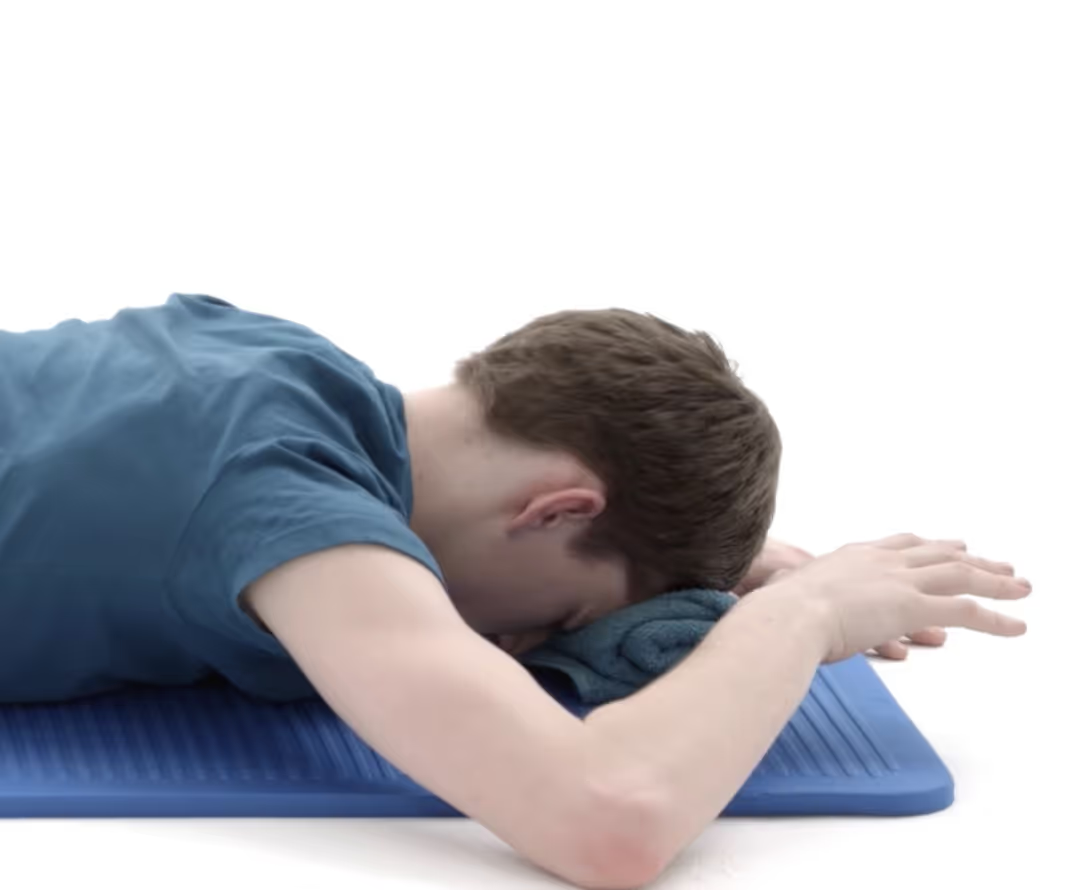

%20(1).avif)
3. About the scapular retraction exercise
- It is an exercise used to strengthen the muscles around the shoulder blades.
- Should be done with correct form and in a controlled way.
- Should be done slowly and with a full range of motion.
4. Benefits of the scapular retraction exercise
Here are some potential benefits of performing this exercise:
- Improved posture
- Increased muscular balance
- Decreased risk of shoulder injury
- Improved strength and coordination of the back muscles
5. FAQ on the scapular retraction exercise


The muscles involved in scapular retraction are the rhomboids, trapezius, and serratus anterior.
The frequency of scapular retraction exercises will depend on your individual needs and goals. Generally, it is recommended to do scapular retraction exercises at least 3-4 times per week. If you are just starting out, you may want to do them every other day. As you become more comfortable with the exercises, you can increase the frequency to daily or even multiple times per day.
Scapular retraction is a strengthening exercise that targets the muscles of the back and shoulders. It helps to improve posture and stability, as well as strengthen the muscles that support the shoulder blades. Additionally, it can help to reduce shoulder pain and improve shoulder mobility. It can also help to increase core strength and stability, improve balance, and reduce the risk of injury.
If you experience pain during scapular retraction, you should stop the exercise immediately and consult with a medical professional. Pain is your body's way of telling you something is wrong, so it is important to seek medical advice to ensure you are doing the exercise correctly and safely.

