Step-by step guide to the prone hangs exercise
Maximize effectiveness: Tips for patients and practitioners
1. Step-by-step on how to do prone hangs.
2. How to perform prone hangs. Follow these instructions.
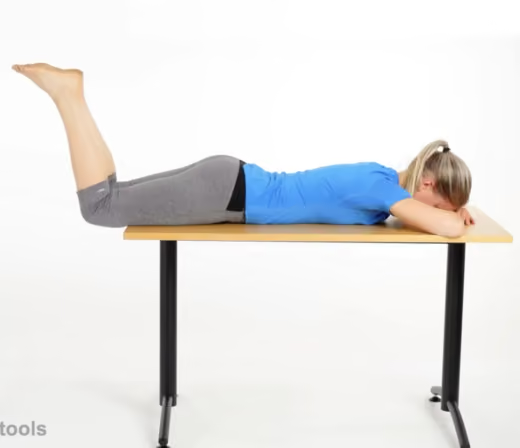
Step 1
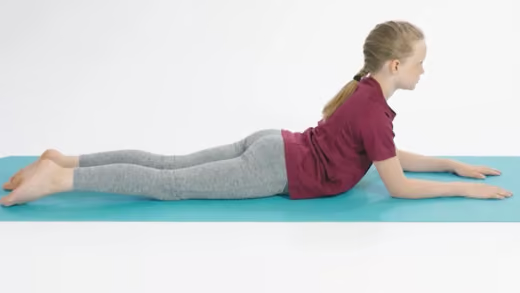
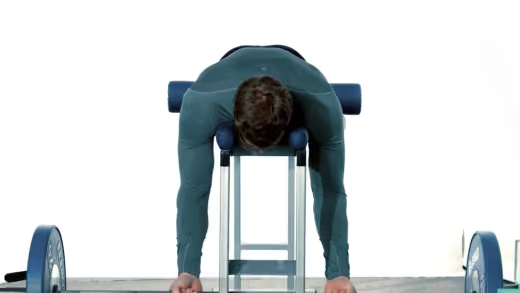
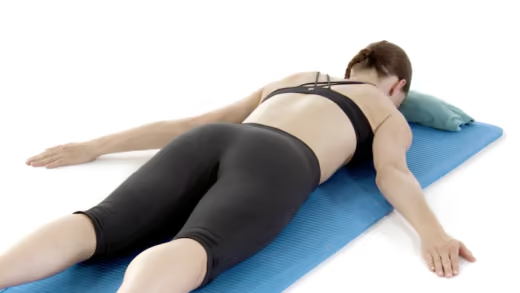
Lying face down on a table/bench with your feet and knees over the edge.
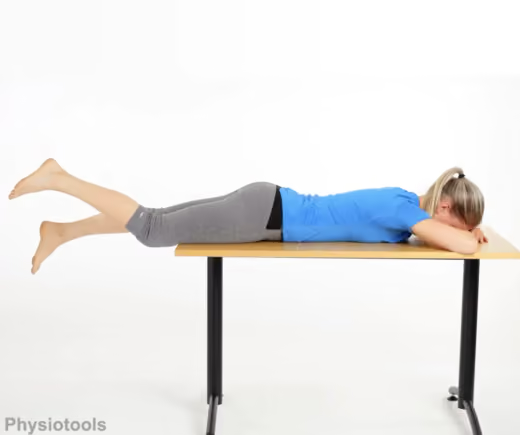
Step 2
Let the weight of your lower legs straighten your knees.
3. About prone hangs.
- Prone (face-down) hangs are a beneficial exercise to build muscle strength and improve flexibility in the upper body
- The elbows and shoulder blades should be slightly drawn back and downwards throughout the exercise
- A neutral neck is maintained to promote proper head/neck alignment
4. Benefits of the prone hangs exercise
Here are some potential benefits of performing this exercise:
- Strengthens the arms, shoulders, and core
- Supports shoulder injury prevention and rehab
- Promotes deep breathing and relaxation
- Stimulates lymphatic and circulatory systems
5. FAQ on prone hangs.
What muscles are targeted with prone hangs?
Prone hangs target the muscles in the back, such as the lats, rhomboids, and traps. They also work the core muscles, including the rectus abdominis, external obliques, and transverse abdominis. Additionally, the arms and shoulders are engaged, as well as the glutes and hamstrings.
How long should I hold a prone hang?
The length of time you should hold a prone hang will depend on your fitness level and goals. Generally, it is recommended to hold the hang for 10-20 seconds for beginners, and up to 60 seconds for more advanced practitioners.
What is the best way to progress with prone hangs?
The best way to progress with prone hangs is to start with a low weight and gradually increase the weight as you become stronger. It is important to use proper form and to keep your core engaged throughout the exercise. Additionally, it is recommended to rest between sets and to focus on proper breathing techniques.
What are the benefits of performing prone hangs?
Prone hangs are a great exercise for improving shoulder mobility and stability. They help to strengthen the shoulder muscles, improve posture, and reduce the risk of shoulder injuries. Prone hangs also help to stretch the chest and back muscles, which can help improve overall flexibility. Additionally, they can help to improve grip strength and can be used to develop core strength.