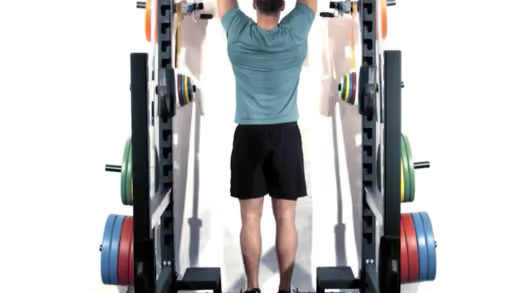
Step-by step guide to the hang snatch exercise
Maximize effectiveness: Tips for patients and practitioners
1. Step-by-step video on how to do the hang snatch
2. How to perform the hang snatch? Follow these instructions:
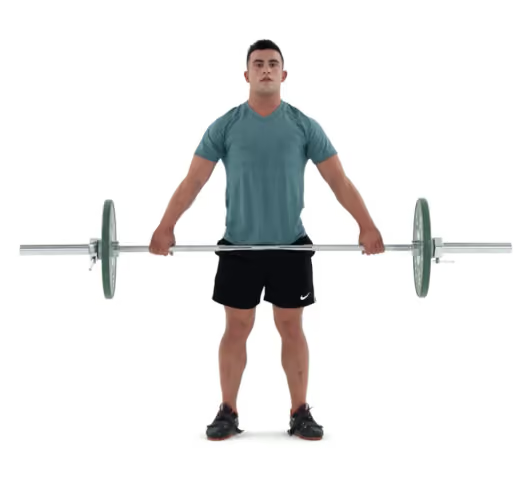
Step 1
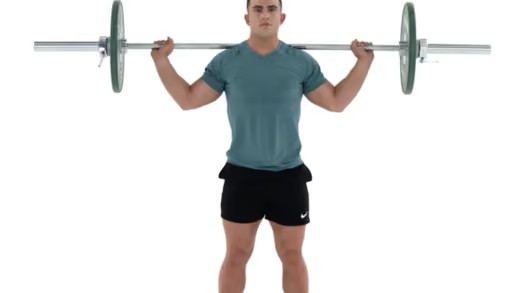
Stand with your feet shoulder-with apart, holding a barbell with a wide overhand grip.
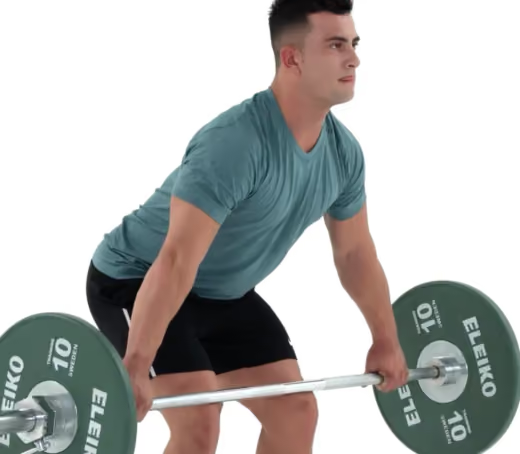
Step 2
Keeping your back flat and chest up, push your hips back and down to lower the weight to mid-thigh level, ensuring your shoulders remain in front of the bar.
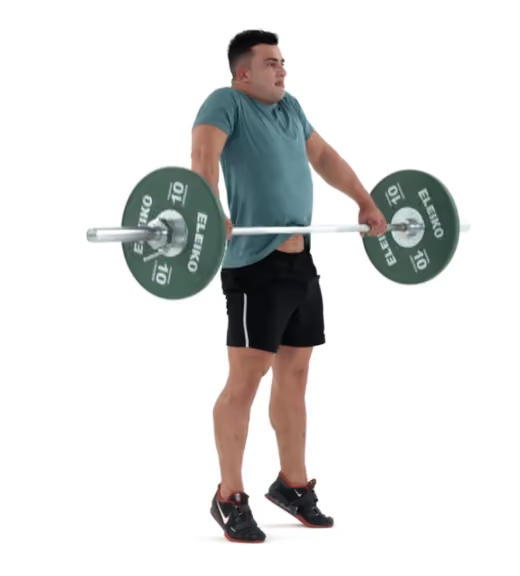
Step 3
In one explosive motion, keep the bar close to your body and extended your hips, knees and ankles as quickly as possible.
Hang snatch exercise is a complex, full body movement which strengthens the muscles of the posterior chain, increases functional strength and improves your balance.
3. About the hang snatch
- Hang snatch is an Olympic lifting exercise that works the full body
- You need a barbell, bumper plates, and an Olympic lifting platform
- You should begin the exercise by standing in an athletic stance, gripping the barbell just outside of the legs
- Ensure that the arms are straight and the back is tight for the duration of the lift
- Finish the exercise by driving the barbell overhead and “snatching” the barbell with your arms
4. List benefits of hang snatch
Here are some potential benefits of performing this exercise:
- Improved power, explosiveness and speed: The snatch is a highly technically demanding, multi-joint exercise that requires lifters to explosively move a load from a low to a high position. Hang snatches can help to develop power, explosiveness and speed.
- Improved coordination and balance: Because hang snatches require coordination and balance, performing them regularly can help to develop better neuromuscular control.
- Enhanced strength: Hang snatches involve the use of multiple muscle groups, as well as joint stability. This helps to develop strength that can be applied to other exercises, sports performance, and everyday activities.
- Increased mobility: Hang snatches require the lifter to move through multiple planes of motion. This helps to increase mobility and can decrease the risk of future injuries.
- Improved posture: Hang snatches involve exercises that help to strengthen the core, which in turn can help improve posture.
5. FAQ on hang snatch
What muscles does the hang snatch work?
The hang snatch works a variety of muscles, including the quadriceps, hamstrings, glutes, and core muscles. It also engages the shoulders, arms, and back muscles.
What is the correct form for the hang snatch?
The correct form for the hang snatch is to start with the barbell at hip level, with your feet slightly wider than shoulder-width apart, your back flat, and your chest up. Keep your arms straight and lift the barbell up to your shoulders while keeping your elbows high. As you reach the top, drop your hips and knees slightly and then explosively extend your hips, knees, and ankles to drive the barbell up and overhead. As you catch the barbell, drop into a full squat and stand up to complete the lift.
What is the best way to warm up for the hang snatch?
The best way to warm up for the hang snatch is to start with a dynamic warm-up that includes bodyweight exercises such as bodyweight squats, lunges, and push-ups. Then, move onto lighter weight snatches with a PVC pipe or empty barbell. Once you feel comfortable with the movement, gradually increase the weight until you reach the desired weight for your workout.
How long should I rest between sets of hang snatches?
It is recommended to rest for 1-2 minutes between sets of hang snatches. This allows your muscles to recover and prevents fatigue, which can lead to injury.