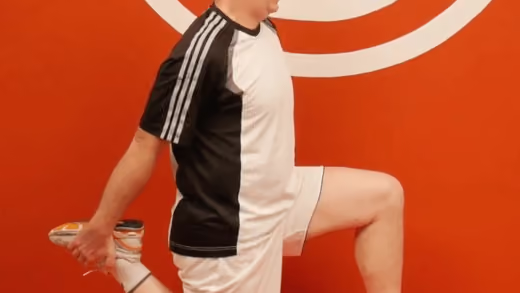
Step-by step guide to the high kneeling exercise
Maximize effectiveness: Tips for patients and practitioners
1. Step-by-step video on how to do the high kneeling
2. How to perform the high kneeling? Follow these instructions:
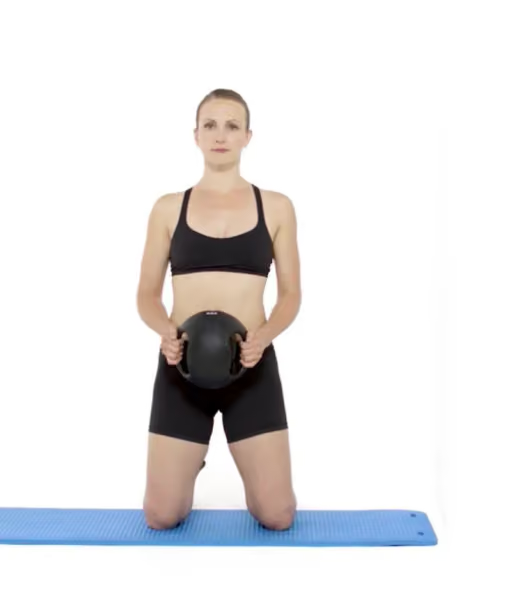
Step 1
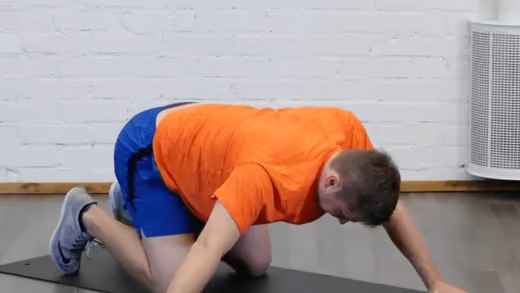
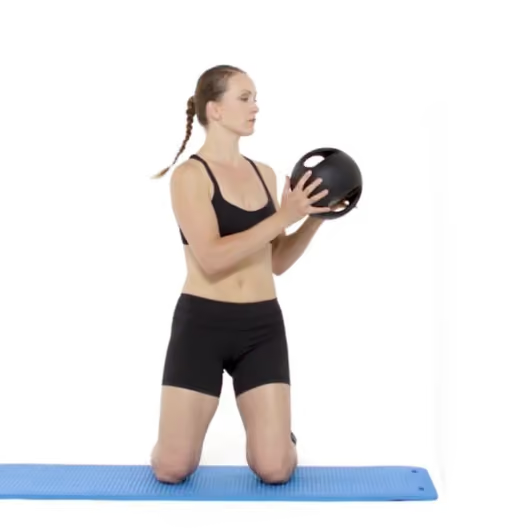
Begin by kneeling upright on the floor slightly further than an arm’s distance away from a wall to one side. Hold a medicine ball in both of your hands. Maintain a neutral spine and engage your deep abdominal muscles throughout this exercise.
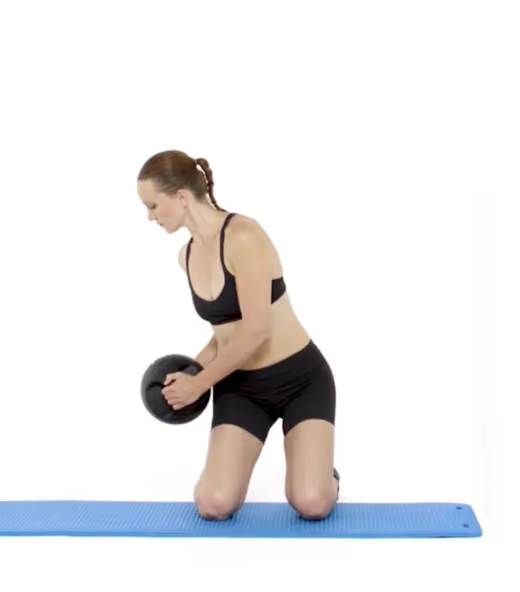
Step 2
Simultaneously hinge at your hips to send your buttocks backwards and rotate at your trunk away from the wall, taking the medicine ball to your side.
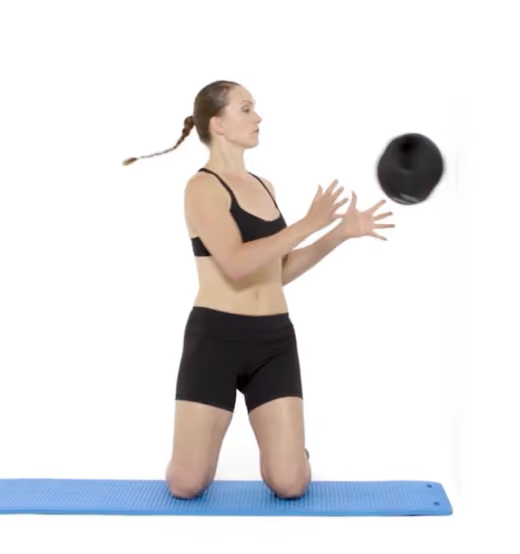
Step 3
In an explosive motion, return to an upright kneeling position as you throw the medicine ball into the wall.
Step 4
Immediately catch the ball as it rebounds off the wall and repeat.
Experience the full-body workout of the high kneeling exercise. Strengthen and tone your core, legs and upper body with this simple yet effective exercise.
3. About the high kneeling
- High kneeling hip extension is a useful exercise that helps strengthen the glutes, hamstrings, and cores.
- It is often used as part of a warm-up to help with hip mobility and as an activation exercise prior to more dynamic movements.
- Proper form and execution of the exercise is important to ensure you get the maximum benefit.
- As the hip is the primary mover, be sure to keep it in a neutral position throughout the exercise.
4. List benefits of high kneeling
Here are some potential benefits of performing this exercise:
- Improved balance and proprioception
- Increased core stability
- Enhanced hip mechanics
- Improved posture
- Reduced risk of injury
5. FAQ on high kneeling
What muscles are targeted with high kneeling hip abduction?
High kneeling hip abduction primarily targets the gluteus medius and gluteus minimus muscles. Additionally, it can also work the tensor fasciae latae, sartorius, and rectus femoris muscles.
What are the benefits of doing high kneeling hip abduction?
The benefits of doing high kneeling hip abduction include strengthening the gluteal muscles, improving hip stability, and improving balance and coordination. It can also help reduce the risk of hip and lower back injuries. Additionally, it can help improve posture and flexibility in the hips and lower back.
How often should I do high kneeling hip abduction?
High kneeling hip abduction exercises should be done 2-3 times a week, with at least one day of rest in between each session. It is important to listen to your body and not overdo the exercises. If you experience any pain or discomfort, stop the exercise and consult your doctor or physical therapist.