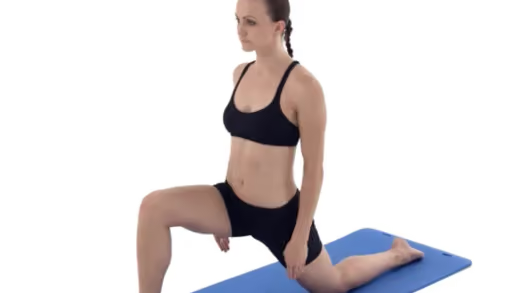
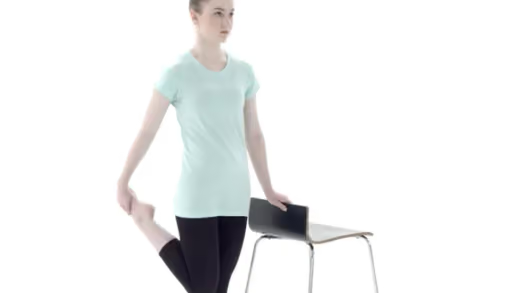
Step-by step guide to the kneeling hip flexor stretch exercise
Maximize effectiveness: Tips for patients and practitioners
1. Step-by-step video on how to do the kneeling hip flexor stretch
2. How to perform the kneeling hip flexor stretch? Follow these instructions:
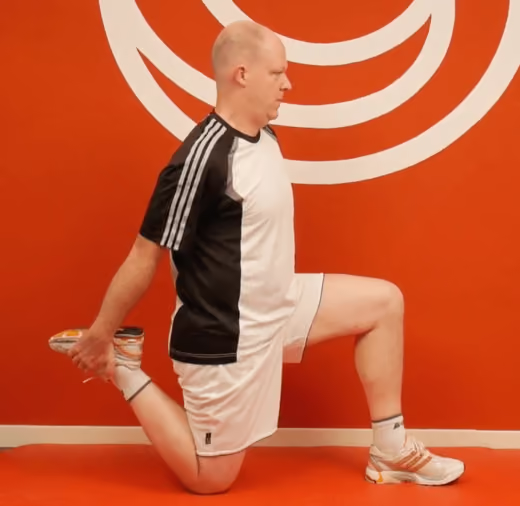
Step 1
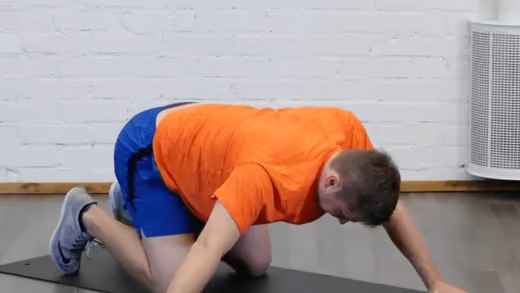
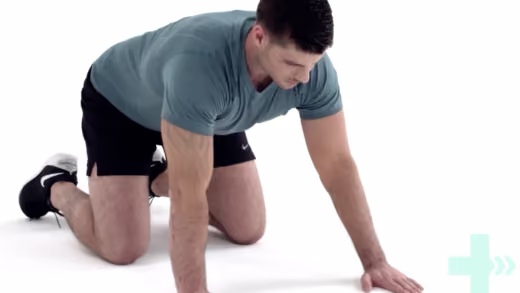
Start in a half kneeling position with one leg bent in front of you and the other leg kneeling on the ground.
Step 2
Grasp the ankle of the rear leg. Keeping your pelvis in a neutral position, pull your ankle towards your hips until you feel a stretch in the front of your thigh and hip flexors.
3. About the kneeling hip flexor stretch
- Targets and stretches the hip flexor muscles
- Push back and up on the hip of the bent knee while keeping the back straight
- Feel a mild to moderate stretch in the front of the hip
- Hold for 15-30 seconds, then repeat on the other side
4. List benefits of kneeling hip flexor stretch
Here are some potential benefits of performing this exercise:
- Improves flexibility in the hip flexors.
- Increases range of motion in the hips.
- Prevents and relieves lower back pain.
- Enhances posture by strengthening the core muscles.
- Improves circulation to the hip, knee, and ankle joints.
5. FAQ on kneeling hip flexor stretch
What muscles does the kneeling hip flexor stretch target?
The kneeling hip flexor stretch targets the iliopsoas muscles, which are the primary hip flexors. These muscles are located in the front of the hip and are responsible for flexing the hip joint.
How often should I do the kneeling hip flexor stretch?
It is recommended to do the kneeling hip flexor stretch at least two to three times per day. It is best to do the stretch after a workout or at the end of the day when your body is warm.
How long should I hold the kneeling hip flexor stretch?
It is recommended to hold the kneeling hip flexor stretch for 30 seconds to 1 minute.
What should I do if I feel discomfort while doing the kneeling hip flexor stretch?
If you feel any discomfort while doing the kneeling hip flexor stretch, stop the stretch and take a break. You can also try adjusting your position or using a different stretch to target the same muscles. If the discomfort persists, it is best to consult a doctor or physical therapist for further advice.