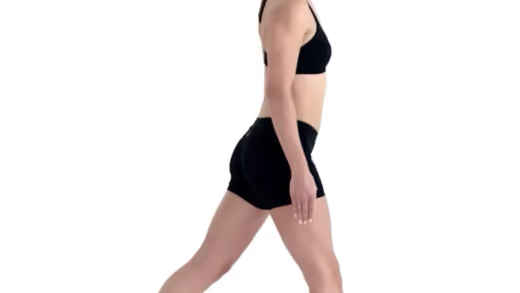
Step-by step guide to the alternating lunges exercise
Maximize effectiveness: Tips for patients and practitioners
1. Step-by-step video on how to do the alternating lunges
2. How to perform the alternating lunges? Follow these instructions:
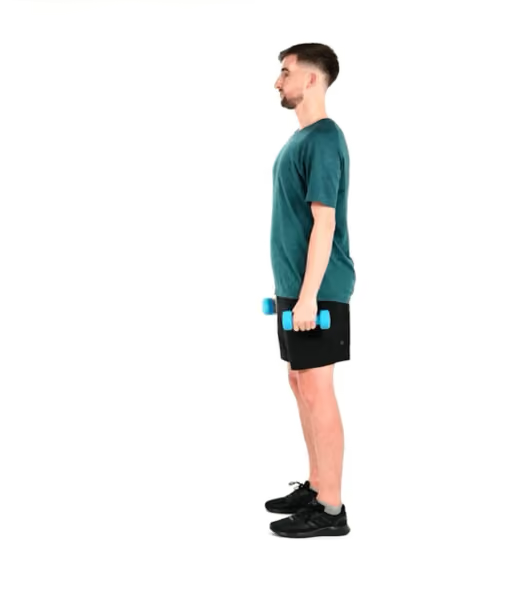
Step 1
Stand up straight holding a dumbbell in each of your hands with your elbows bent by your sides.
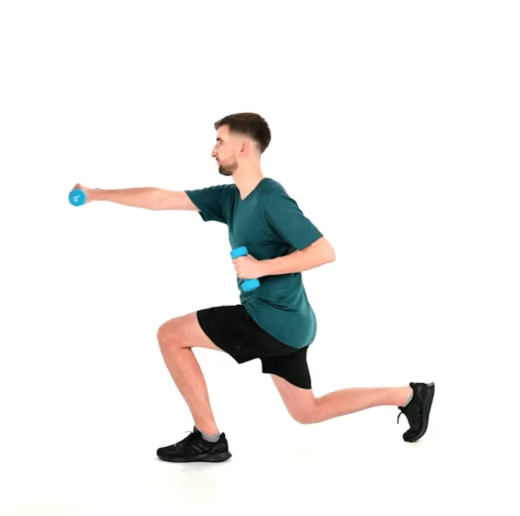
Step 2
Take a step forwards and simultaneously punch with your opposite hand.
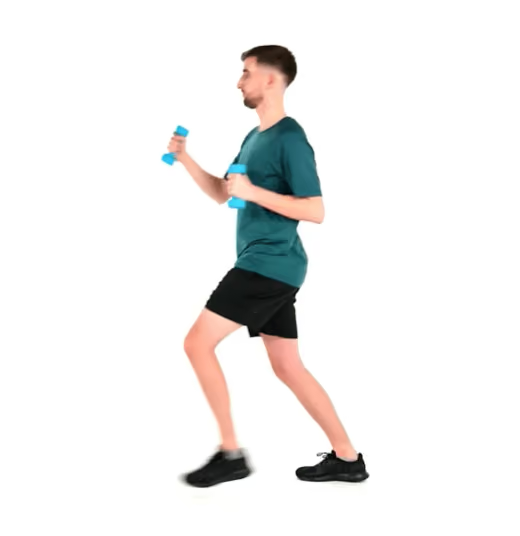
Step 3
Step back to the starting position and repeat with the other side.
alternating lunges exercise is a great way to target the muscles in your legs and glutes while also improving balance and coordination. It is a dynamic and effective lower-body move that tones and strengthens your legs.
3. About the alternating lunges
- Begin standing with your feet shoulder-width apart
- Engage your butt and core, and press into the heel of the forward foot to return to the starting position
- Step the other foot forward into a lunge and complete the move on the alternate leg
- Aim to perform 12-15 alternating lunges for three sets
4. List benefits of alternating lunges
Here are some potential benefits of performing this exercise:
- Increases endurance and strength in the lower body and core muscles
- Increases blood flow for better cardiovascular health
- Aids in posture and overall body alignment
- Improves coordination and agility
5. FAQ on alternating lunges
What muscles does alternating lunges target?
Alternating lunges target the muscles of the lower body, including the glutes, quads, hamstrings, and calves. Additionally, the core muscles are engaged as you balance and stabilize your body during the exercise.
What are the benefits of alternating lunges?
Alternating lunges are a great way to strengthen and tone the muscles in the lower body. They target the quadriceps, hamstrings, and glutes, as well as the core muscles. Lunges also help improve balance, coordination, and stability. Additionally, they can help increase flexibility and range of motion in the hips and legs.
Are alternating lunges suitable for beginners?
Yes, alternating lunges are suitable for beginners. However, it is important to start with a low intensity and gradually increase the intensity as your fitness level improves. It is also important to ensure proper form and technique when performing the exercise.