
Step-by-step guide to lifting and carrying

Maximize effectiveness: Tips for patients and practitioners

Step-by-step guide to lifting and carrying

Maximize effectiveness: Tips for patients and practitioners

video camera icon

1. Step-by-step how to do lifting and carrying

Icon of a checkbox

2. How to perform lifting and carrying. Follow these instructions.
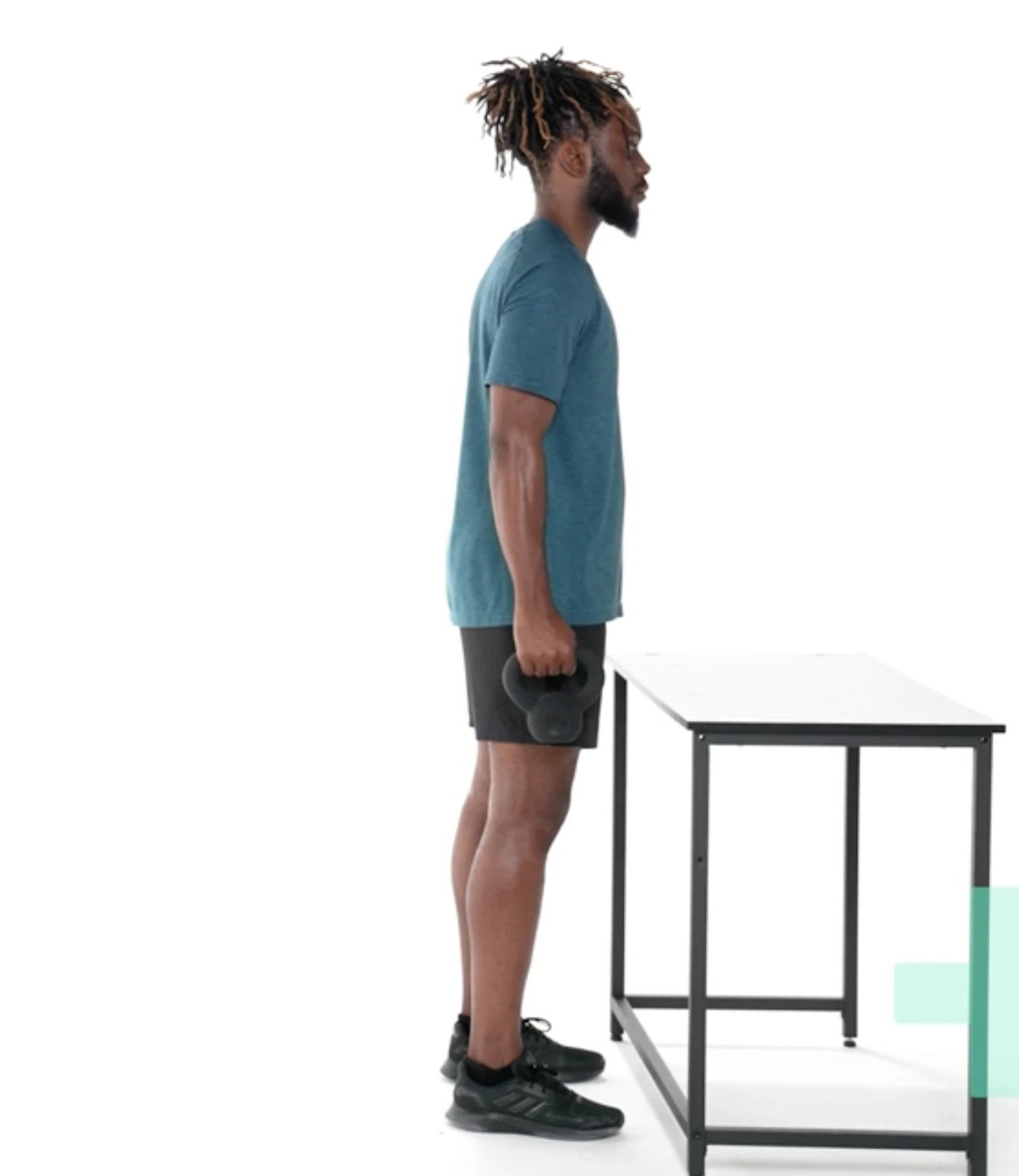
Step 1
Place two weights on a table. Pick up the weights and hold them naturally by your sides with your arms straight.
Step 2
Then walk a distance suggested by your practitioner away from the table whilst carrying the weights. Next, walk back to the table and place the weights down.
Step 3
Step 4
Step 5
Prescribe. Educate. Engage.

Unlock Physitrack - all in one platform for practitioners!
Start your 30-day free trial today.
Get Started
Various devices showing the Physitrack UI
Want to receive your exercise programs via app?

Refer your physiotherapist and start using PhysiApp!
Leave clinic details
Mobile devices showing the user interface of Phystrack
Icon of a checkbox

3. About lifting and carrying

Involves lifting and carrying objects for strength and functionality.Enhances overall body strength and coordination.Mimics real-world activities.

Icon of a checkbox

4. Benefits of lifting and carrying

Here are some potential benefits of performing this exercise:

Builds functional strength for daily activities.Enhances grip strength and forearm muscles.Engages core muscles for stability during lifting.

Icon of a checkbox

5. FAQ on lifting and carrying

How does lifting and carrying benefit the body?
Plus iconMinus icon

Lifting and carrying improve functional strength, coordination, and mimic real-world activities. It engages multiple muscle groups.

Can I incorporate lifting and carrying into my daily routine?
Plus iconMinus icon

Yes, carrying groceries, lifting children, or moving objects can be incorporated into daily activities for added physical activity.

Is there a specific lifting technique I should follow?
Plus iconMinus icon

Lift with your legs, keep the object close to your body, and engage your core for stability.

What precautions should be taken when lifting heavy objects?
Plus iconMinus icon

Avoid lifting objects that are too heavy; use proper lifting form, and consider seeking assistance for heavier loads.

Plus iconMinus icon

Prescribe. Educate. Engage.

Unlock Physitrack - all in one platform for practitioners!
Start your 30-day free trial today.
Get Started
Various devices showing the Physitrack UI
Want to receive your exercise programs via app?

Refer your physiotherapist and start using PhysiApp!
Leave clinic details
Mobile devices showing the user interface of Phystrack

Thank you for using our exercises!

We would love to know just one thing about you to help us improve these pages

What do you currently use as the main form for assigning exercises to your patient?

Next
Thank you! Your submission has been received!
Oops! Something went wrong while submitting the form.
Thank you! Your submission has been received!
Oops! Something went wrong while submitting the form.