Best Physical Therapy Apps for Patients in 2026
Resumo
- Patients searching for the best physical therapy app rarely need one universal winner. The right pick depends on whether a clinician is directing your care.
- If you are actively working with a prescribing physical therapist, PhysiApp by Physitrack is the strongest choice. It logs true adherence, including sets, reps, pain, and difficulty, and reports it back to your therapist.
- Self-guided mobility and injury-prevention apps serve a different job well. They give you independent access to general exercise content without a prescription.
- Simple rep-counters and reminder apps do the lightest work. They track streaks and nudge you, nothing more.
What a physical therapy app actually does
A physical therapy app puts your rehab or home exercise program on your phone, usually with video demonstrations, a schedule, and some way to track what you actually complete. The apps in this category split into three jobs, and knowing which one you need matters more than any overall ranking.
The first job is clinic-prescribed delivery, where a physical therapist builds your program and monitors your progress through the app. The second is self-guided injury prevention, where you pick your own routine from a general library without any clinician involved. The third is simple rep and reminder tracking, which logs sets and nudges you to do the work but delivers no program at all.
Searching for the single "best physical therapy app" leads most people wrong, because these three jobs serve different situations. If you are recovering under a therapist's care, a general mobility library cannot report your progress back to your provider. If you are managing your own fitness, a clinic-prescribed platform needs a prescribing clinician you may not have. The right app depends on whether a therapist is involved, how much structure you want, and whether anyone needs to see your results. The sections below sort each category so you can match the tool to your situation.
Clinic-prescribed exercise delivery
If you are recovering from surgery, an injury, or a flare-up under the guidance of a physical therapist, an app in this category fits your situation best. Clinician involvement here means your therapist builds the program, sees how you actually perform it, and adjusts it based on what you report. That feedback loop is what separates this tier from apps you download and manage on your own.
PhysiApp by Physitrack
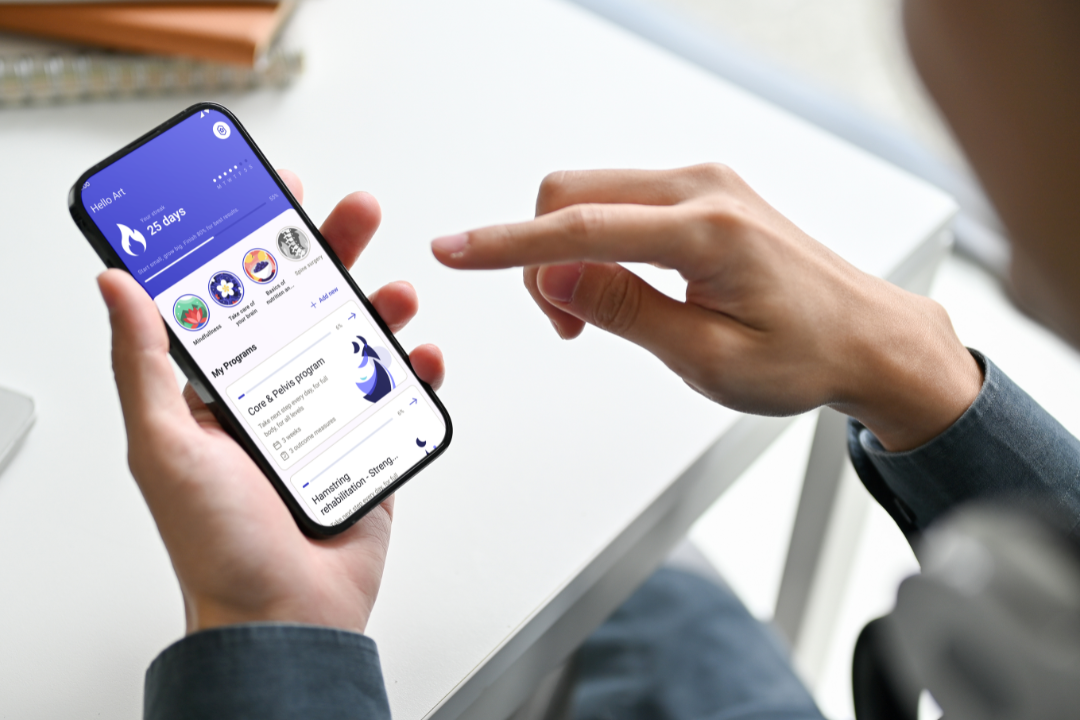
PhysiApp is the patient side of Physitrack, a patient engagement and exercise-prescription platform used by physical therapists to deliver home exercise programs. Your therapist assigns your exercises inside Physitrack, and you access them through PhysiApp on your phone or in a browser. Each exercise comes with a demonstration video, written instructions, and the exact sets, reps, and frequency your clinician prescribed. You cannot sign up on your own and start training. Access comes only through a prescribing clinician, which is precisely why the app fits patients in active treatment rather than people browsing for general workouts.
The feature that sets PhysiApp apart is true compliance tracking rather than simple login tracking. Many apps record whether you opened them. PhysiApp records whether you completed the work. You log each session as you finish it, mark the sets and reps you actually performed, and rate your pain and difficulty for that session. Your therapist sees that data at the session level, so they know not just that you showed up but how the program felt in your body. A patient reporting rising pain on a specific movement gives the clinician a concrete signal to change the plan before the next appointment.
Two-way communication runs on top of that tracking. You can message your therapist through the app with questions, and they can respond, adjust your program, or reassure you between visits. Self-guided apps cannot offer this because there is no clinician on the other end. The person reviewing your data is the same person responsible for your recovery, and that connection is the whole point of the clinic-prescribed tier.
Physitrack also supports patient-reported outcome measures, or PROMs, which are standardized questionnaires your clinician can send to track how your function and symptoms change over the course of treatment. Combined with the session logs, PROMs give your therapist a clearer picture of progress than either signal alone. The exercise content itself draws from a library of more than 18,000 exercises, so your program can be tailored to your specific condition rather than pulled from a short generic list.
PhysiApp carries real clinical credibility. Physitrack is used across major UK private clinic networks including Bupa, Nuffield, and Circle, and it is deployed within NHS Trusts as well, so the platform is NHS-proven without being NHS-only. On the patient side, PhysiApp holds approximately 4.9 stars on Google Play across more than 30,000 reviews. It supports 15 or more patient languages, which matters if English is not your first language. Worth stating plainly, PhysiApp is not an electronic medical record. It focuses on delivering your exercises, tracking your adherence, and keeping you connected to your clinician, not on managing your full medical file.
For patients, PhysiApp is free. The subscription sits with the clinic, so your cost is whatever your therapy provider charges for care. If you are already working with a physical therapist, ask whether they use Physitrack and can prescribe your program through PhysiApp.
Self-guided injury prevention apps
If no physical therapist has prescribed your program, you fall into this category. These apps let you work on mobility, stretching, and injury prevention on your own schedule without a referral or a clinician account. We judge them on the strengths that matter for independent use, which are how easy they are to start and how broad their exercise content is. The absence of clinician tracking is not a mark against them here, because these apps were never built to report back to a provider.
General mobility and injury-prevention apps
Consumer mobility and injury-prevention apps earn their place by removing every barrier between you and a routine. You download the app, pick a goal like hip mobility or lower-back care, and start moving within minutes. No prescription, no login from a clinic, and often a free tier that covers the basics. The content targets the general population rather than a specific diagnosis, so these apps suit anyone building a warm-up habit, easing everyday stiffness, or supplementing gym work.
The libraries in this category tend to be wide and generic. You get stretching routines, foam-rolling sequences, and follow-along videos organized by body region or activity. That breadth works well when your needs are common and you know roughly what you want to work on. The low price makes experimenting cheap, and many apps add streaks or scheduled sessions to keep you consistent.
The honest limit is that no clinician built or reviewed your program. The routines are designed for a broad audience, not for your specific injury, surgery, or movement restriction, so nothing accounts for pain you should avoid or a joint you should protect. Nothing you log flows back to a healthcare provider, which means there is no adherence data a physical therapist could use to adjust your plan. For general fitness and prevention, that tradeoff is reasonable. If you are recovering from an injury or operating under any clinical restriction, a self-guided app cannot substitute for a prescribed program.
Simple rep and reminder tracking apps
The lightest apps in this roundup do one job. They log what you did and remind you to do it again. They carry no video programs, no clinician oversight, and no clinical content, which is exactly why some people prefer them. If you already know your exercises and just want a place to record sets and get a nudge each morning, a simple tracker fits better than a full prescription platform you would never use to its potential. This tier suits people building a habit around movement they already understand, not people recovering from an injury under a clinician's guidance.
Rep-counters and reminder apps
Rep-counters and reminder apps strip physical therapy down to two actions. You log a set, and the app tracks your streak and pushes a reminder when you skip. Most let you name an exercise, enter sets and reps, and check it off once done. Some add simple charts so you can see how consistently you show up over a week or a month.
The strength here is speed. You download the app, add a few exercises, and start logging within a minute, with no account setup, no prescription, and no learning curve. For someone maintaining a known routine, that friction-free start is the whole appeal.
The honest limit is that these apps track behavior, not treatment. They show no video demonstration, so you have to already know correct form. They capture no pain or difficulty rating, so there is no signal when an exercise starts hurting. Nothing you log flows back to a clinician, because no clinician is connected. If your goal is recovery rather than routine, that missing feedback loop matters more than the convenience.
Comparing the three categories at a glance
The three categories serve different patients, and the table below sorts them by who they fit and how much a clinician stays involved.
PhysiApp is the only category here that connects you directly to a treating clinician and reports your progress back to them. The other two work independently, which is their point, so judge them on library breadth and simplicity rather than on tracking they were never built to do.
Choosing the right app for your situation
Your situation decides the category, not a leaderboard. Ask yourself one question first. Are you currently working with a physical therapist, or are you managing your own routine.
If you are under a PT's care and recovering from an injury or surgery, the clinic-prescribed tier fits you. Your program should match what your clinician planned, and your effort should report back to them. Ask your provider whether they prescribe through PhysiApp, since you access it only through a prescribing clinician anyway.
If you are managing general fitness or injury prevention on your own, choose between the two self-directed tiers based on what you actually need. Pick a self-guided mobility or exercise-library app when you want structured, video-guided routines and a broad catalog to pull from. Pick a simple rep-and-reminder app when you already know your exercises and just want a nudge to stay consistent.
Structure versus simplicity is the real trade-off in the self-directed world. Neither app talks to a clinician, so the only question is how much guidance you want built in.
Perguntas frequentes
Can I use a physical therapy app without a prescription? Yes, for self-guided and simple-tracking apps, which anyone can download and use to follow general mobility or exercise content. Clinic-prescribed apps like PhysiApp work differently, since a physical therapist assigns your program before you get access. You use PhysiApp when your clinician prescribes it, not on your own.
How does adherence tracking differ between these app categories? Self-guided and simple-tracking apps log your own activity, such as reps completed or a daily streak, with nothing sent to a clinician. PhysiApp records session-level completion, sets and reps, plus your pain and difficulty ratings, and reports that data back to your prescribing physical therapist. That reporting turns tracking into something your clinician can act on.
Is PhysiApp an electronic medical record? No. PhysiApp is a patient engagement and exercise-prescription app, focused on delivering your program, tracking adherence, and messaging your clinician. Your clinic keeps its own record system separately, so PhysiApp complements that record rather than replacing it.