Step-by step guide to the walking up stairs exercise
Maximize effectiveness: Tips for patients and practitioners
1. Step-by-step on how to do walking up stairs.
2. How to perform walking up stairs. Follow these instructions.
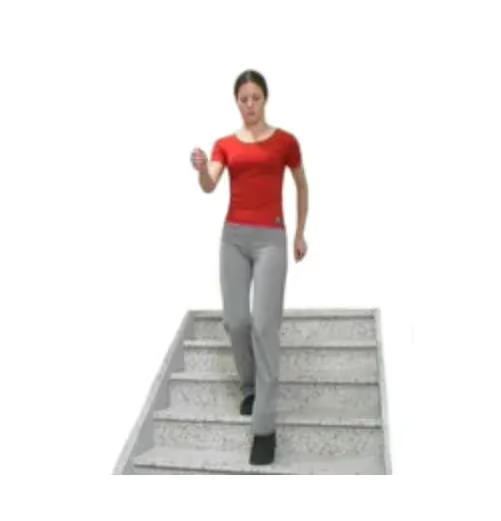
Step 1
Walk up and downstairs.
3. About walking up stairs.
- Improves cardio and helps with weight loss
- Increases heart rate and enhances breathing
- Strengthens leg and core muscles
- Leads to improved movement and stability
4. Benefits of the walking up stairs exercise
Here are some potential benefits of performing this exercise:
- Improved cardiovascular health
- Increased energy levels
- Improved balance and coordination
- Reduced risk of obesity, heart disease, and diabetes
5. FAQ on walking up stairs.
What type of shoes should I wear when walking up stairs?
It is best to wear shoes with good grip and support when walking up stairs. Shoes with a rubber sole and good arch support are ideal. Athletic shoes or walking shoes are also good options. Avoid wearing shoes with slippery soles or high heels.
How often should I walk up stairs?
The frequency of walking up stairs depends on your individual fitness level and goals. Generally, if you are looking to improve your cardiovascular fitness, it is recommended to walk up stairs at least 3-4 times a week. If you are looking to build strength and endurance, it is recommended to walk up stairs at least 5-6 times a week.
What is the best way to warm up before walking up stairs?
The best way to warm up before walking up stairs is to do some light stretching and dynamic movements such as jogging in place, high knees, butt kicks, and side shuffles. This will help to get your heart rate up and prepare your muscles for the activity.
What is the best way to cool down after walking up stairs?
The best way to cool down after walking up stairs is to slowly walk or jog in place for a few minutes to allow your heart rate to return to normal. You can also take deep breaths and stretch your muscles to help your body relax. Additionally, drinking some cold water can help cool you down and replenish lost fluids.