Step-by step guide to the thumb opposition exercise
Maximize effectiveness: Tips for patients and practitioners
1. Step-by-step video on how to do the thumb opposition
2. How to perform the thumb opposition? Follow these instructions:
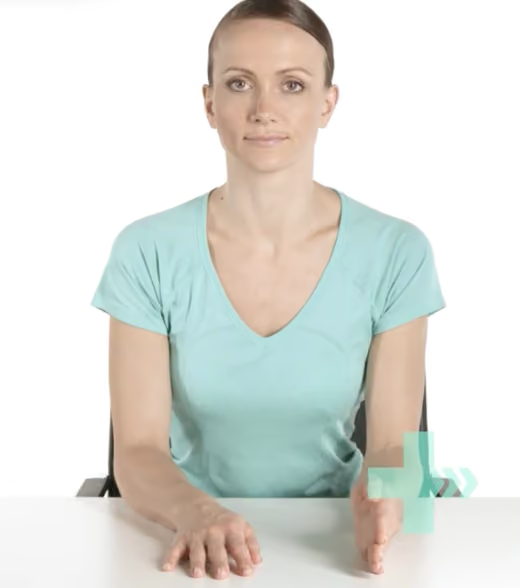
Step 1
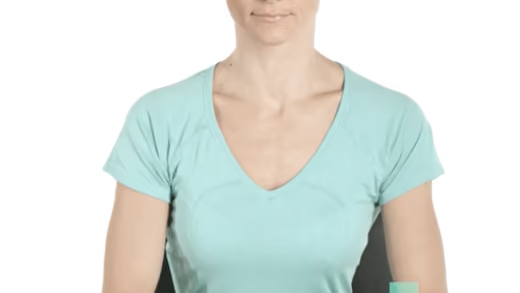
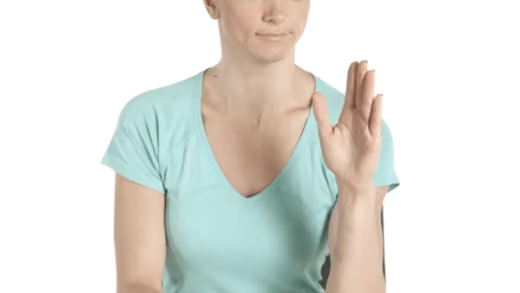
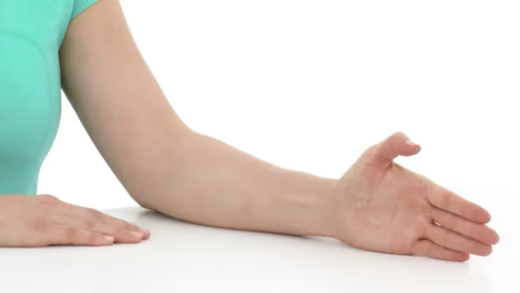
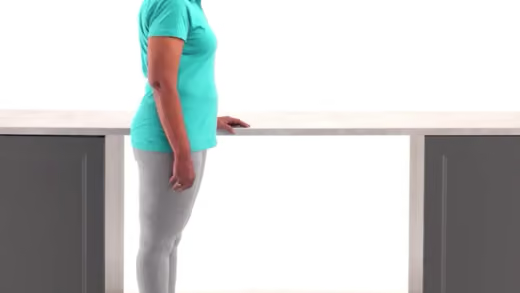
Sit upright in a chair. Place your affected arm on a table with your hand on it’s side.
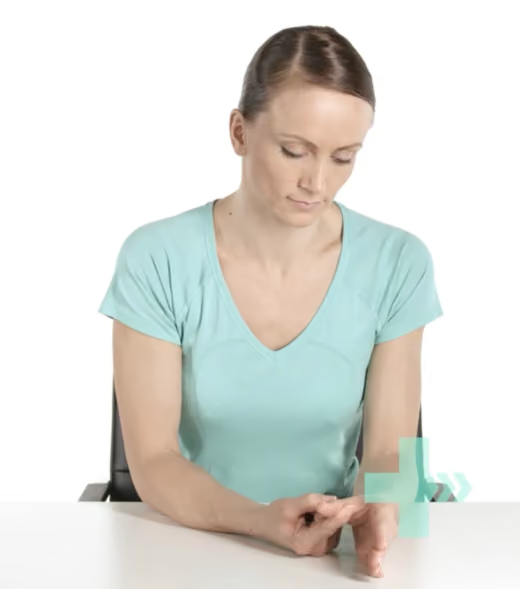
Step 2
Place a finger from your opposite hand between the knuckle and the end joints of your thumb.
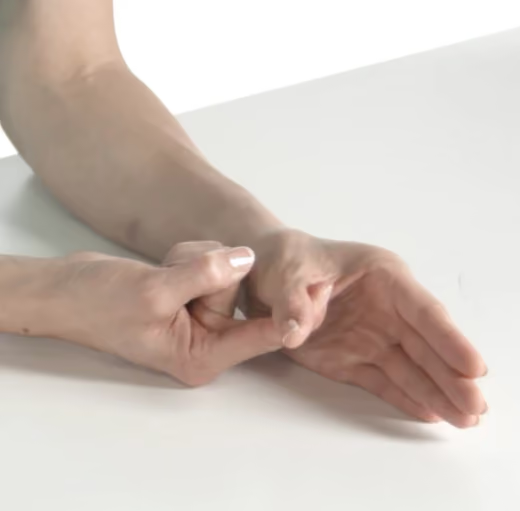
Step 3
Try to bring your thumb out and away from your index finger, and then towards the base of your little finger, using your opposite hand to resist the movement.
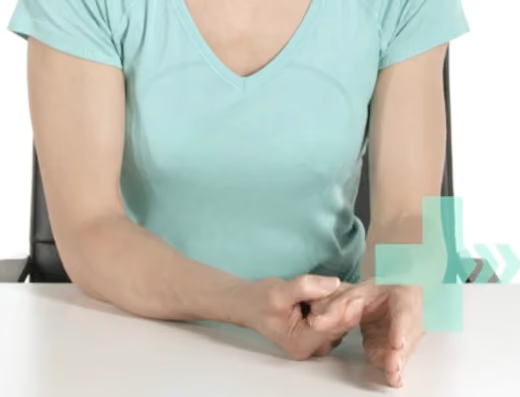
Step 4
Try to hold this position without moving.
Thumb opposition exercise strengthens the muscles found in the base of the thumb, helping to improve grip strength. This exercise involves interlocking your fingers and then attempting to press your thumb against each of your other fingers.
3. About the thumb opposition
- Is fairly simple to do
- Requires minimal resistance
- Moves your wrist and thumb through a full range of motion
- Improves finger strength and dexterity
- Can help people do everyday tasks such as opening jars or playing musical instruments with more ease.
4. List benefits of thumb opposition
Here are some potential benefits of performing this exercise:
- Improved dexterity and grip strength
- Improved sensory motor mapping for fine motor control
- Improved functional hand postures for activities of daily living
- Enhanced range of motion and coordination in the thumb
- Increased awareness of the relationship between the thumb and other fingers for improved control and accuracy when performing tasks
5. FAQ on thumb opposition
What is thumb opposition?
Thumb opposition is a hand movement that involves using the thumb to press against the other four fingers. It is used to increase dexterity and strength in the hand and can be used to perform various tasks such as picking up small objects, writing, and playing instruments.
What muscles does thumb opposition exercise?
Thumb opposition exercises target the muscles of the thumb, including the thenar muscles, the abductor pollicis longus, the flexor pollicis brevis, and the opponens pollicis.
What are the benefits of thumb opposition?
Thumb opposition is an important fine motor skill that is beneficial for a variety of activities. It helps to improve hand strength and dexterity, as well as coordination and balance. It can also help to improve fine motor skills such as writing, drawing, and cutting. In addition, thumb opposition helps to develop bilateral coordination, which is important for tasks such as buttoning, zipping, and tying shoes. Finally, thumb opposition can help to improve hand-eye coordination, which is essential for activities such as sports and playing musical instruments.
How often should I practice thumb opposition?
It is recommended that you practice thumb opposition exercises at least two or three times a week. However, if you are trying to improve your dexterity or strength, you can practice more often.
What is the correct form for thumb opposition?
The correct form for thumb opposition is to place your thumb on the opposite side of your palm, with the tip of your thumb facing the opposite direction.