Step-by-step guide to the thumb extension exercise
Maximize effectiveness: Tips for patients and practitioners
1. Step-by-step video on how to do the thumb extension.
2. How to perform the thumb extension? Follow these instructions.
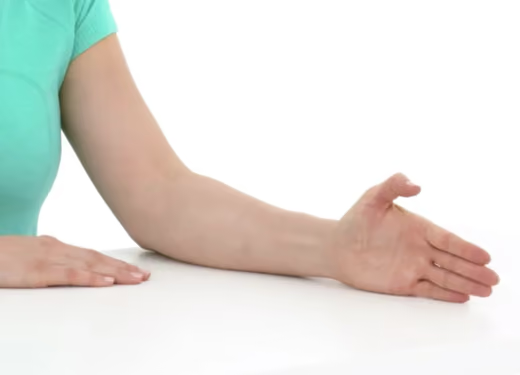
Step 1
Play Video Sit upright in a chair with your forearm and hand resting flat on the table. Your hand should rest along the little finger side with your palm facing directly inwards. Bend the tip of your thumb fully.
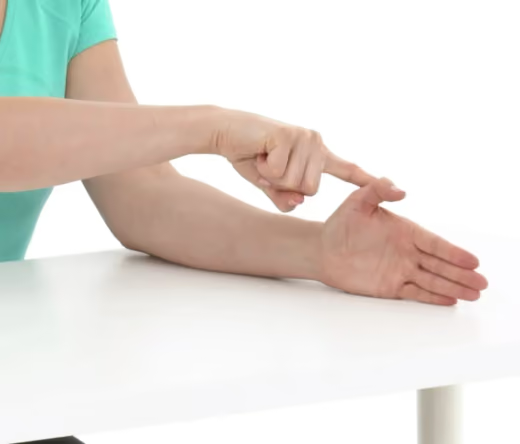
Step 2
Place a finger from your opposite hand on the back of your thumb between the knuckle and end joint of your thumb. Try to move your thumb away from you towards the outside, using your opposite hand to resist the movement.
3. About thumb extension.
- Pilates consists of a series of movements that challenge your core strength
- It works your abdominals, hips, and upper chest
- The Hundred is a great exercise for toning the entire body and improving core strength.
4. Benefits of thumb extension exercise.
Here are some potential benefits of performing this exercise:
- Strengthens core muscles
- Increases flexibility
- Enhances muscular control
- Supports spine health
FAQ on thumb extension
What is the purpose of thumb extension exercises?
The purpose of thumb extension exercises is to improve the strength and range of motion of the thumb. These exercises can help to reduce pain and stiffness in the thumb joint, as well as improve grip strength and dexterity.
What muscles are used during thumb extension exercises?
The muscles used during thumb extension exercises are the extensor pollicis longus and the extensor pollicis brevis.
How often should I perform thumb extension exercises?
It is recommended to perform thumb extension exercises at least 3 times a week. However, if you are experiencing pain or discomfort, it is best to consult with a physical therapist to determine the best frequency and intensity of exercises for you.
What are the benefits of thumb extension exercises?
The benefits of thumb extension exercises include improved range of motion, increased strength and stability in the thumb, improved grip strength, and improved dexterity. Additionally, these exercises can help reduce the risk of thumb injuries and can help alleviate pain associated with thumb arthritis.