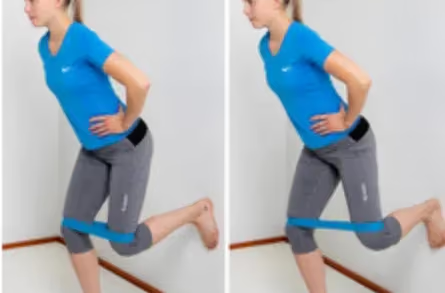
Step-by step guide to the resisted ankle inversion exercise
Maximize effectiveness: Tips for patients and practitioners
1. Step-by-step on how to do resisted ankle inversion.
2. How to perform resisted ankle inversion exercise. Follow these instructions.
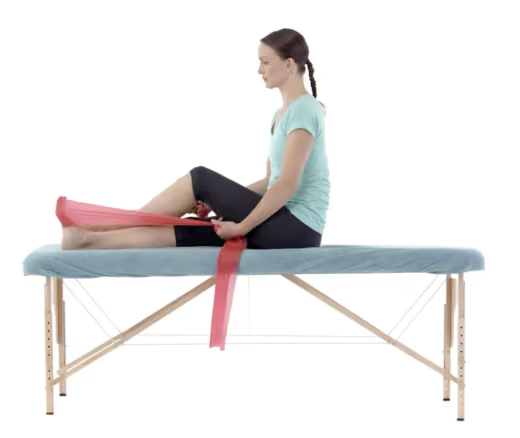
Step 1
Sit up with your legs straight out in front of you. Loop a resistance band around your foot to be exercised, holding the ends in each hand. Place your other foot inside the loop and cross if over the front of your other shin.
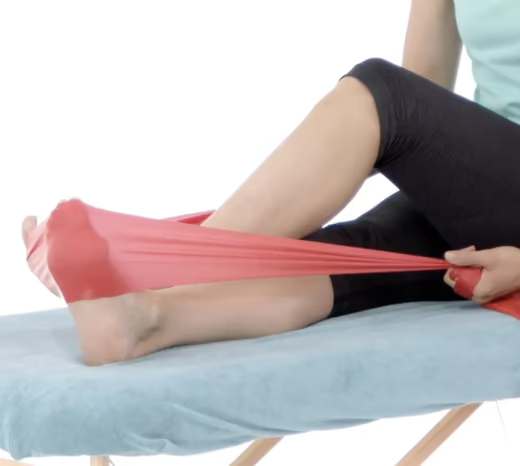
Step 2
Press this foot into the resistance band, creating some tension in the band between both feet.
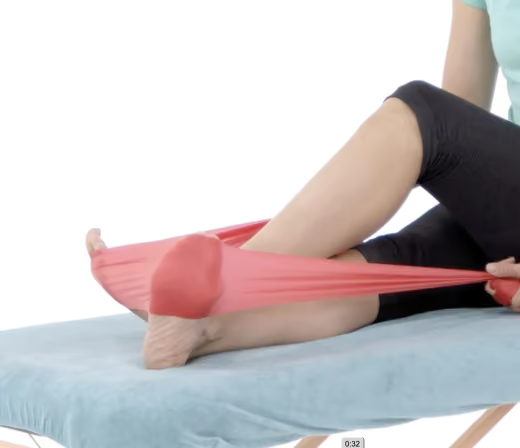
Step 3
Keeping your upper foot still, turn your lower foot inwards against the resistance of the band.
3. About resisted ankle inversion exercise.
- Resisted ankle inversion is an exercise of the foot and ankle to improve strength and coordination
- This exercise will help to improve balance, agility, and coordination
- It is also important for injury prevention of the ankle and foot, as well as helping to improve performance
- It should be performed slowly and with control, with a focus on technique and form
4. Benefits of the resisted ankle inversion exercise
Here are some potential benefits of performing this exercise:
- Strengthens the ankle musculature to reduce the risk of ankle injury.
- Increases circulation to the ankle joint and surrounding muscles.
- Helps reduce swelling and inflammation of the ankle joints.
- Enhances and coordination for sports specific activities.
5. FAQ on resisted ankle inversion exercise.
What is resisted ankle inversion?
Resisted ankle inversion is an exercise used to strengthen the muscles and ligaments of the ankle. It involves standing on one foot and resisting the inward movement of the other foot. The exercise can be performed with a band, cable machine, or other resistance device. The goal is to strengthen the muscles and ligaments that support the ankle joint and reduce the risk of ankle sprains.
What muscles does resisted ankle inversion target?
Resisted ankle inversion targets the muscles of the lower leg, including the tibialis anterior, peroneus longus and brevis, and the gastrocnemius.
How often should I perform resisted ankle inversion?
It is recommended that you perform resisted ankle inversion exercises two to three times per week. Make sure to take a day off in between each session to allow your muscles to rest and recover.
What safety precautions should I take when performing resisted ankle inversion?
When performing resisted ankle inversion, it is important to take safety precautions to avoid injury. First, make sure to warm up the muscles and joints of the ankle before beginning the exercise. Next, use a resistance band or other form of resistance that is appropriate for your fitness level. Make sure to keep the resistance band securely in place and do not stretch it too far. Finally, it is important to keep the ankle in a neutral position and avoid any sudden, jerky movements.