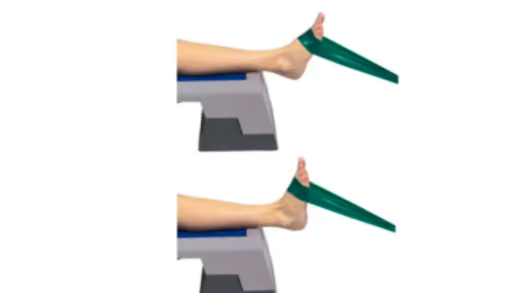
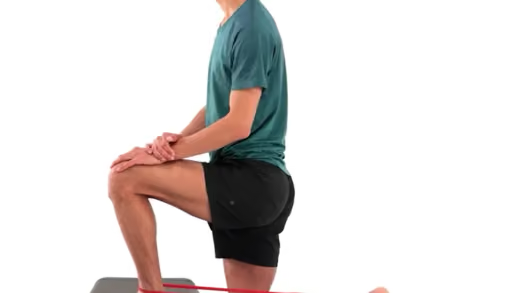
Step-by step guide to the ankle eversion exercise
Maximize effectiveness: Tips for patients and practitioners
1. Step-by-step video on how to do the ankle eversion
2. How to perform the ankle eversion? Follow these instructions:
Step 1
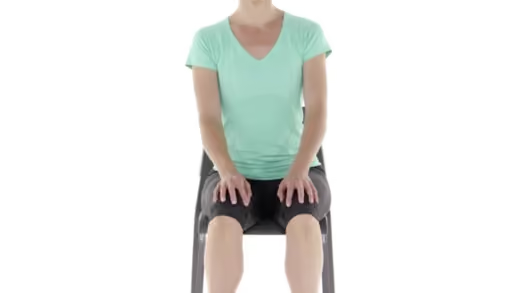
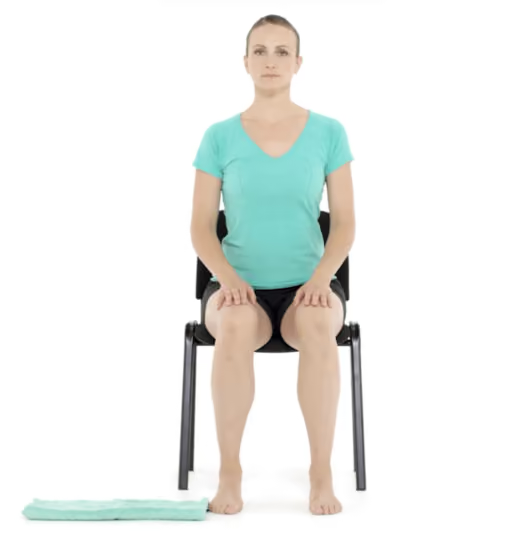
Sit upright in a chair with your feet hip’s width apart, flat on the floor. Place a towel on the floor to the outside of your affected foot.
Step 2
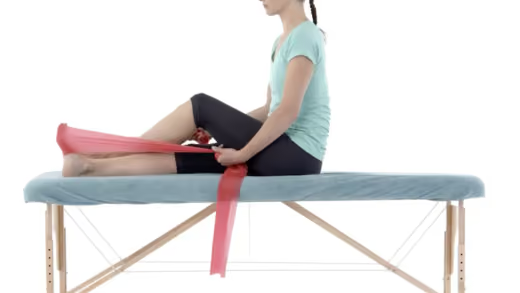
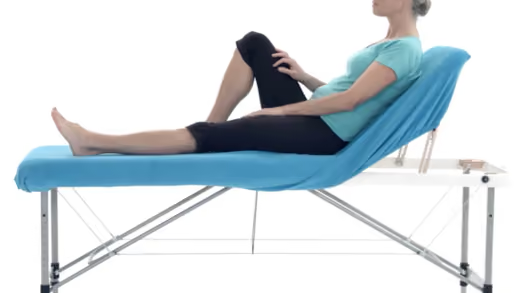
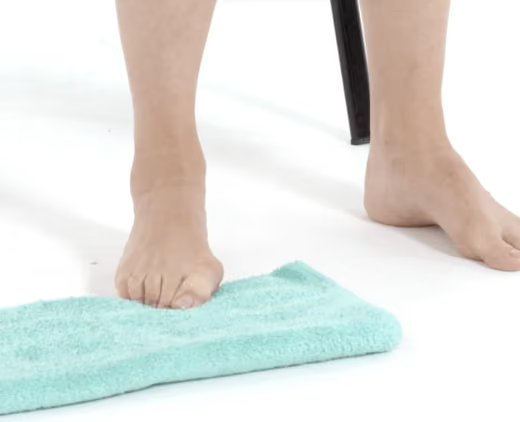
Keeping your heel on the floor and your leg stable, grasp and pull the towel towards your centre with your affected foot. Repeat until the entire towel has been pulled between your feet. Repeat in the opposite direction.
Strengthen weak ankles and improve stability with ankle eversion exercises. Focus on maintaining control and proper form, working slowly and deliberately to engage the muscles and ligaments that support your ankles.
3. About the ankle eversion
- Improves ankle strength and balance
- Improves shock absorbtion and decreases the risk of injury
- Improves the range of motion in the lower leg muscles
- Can help to avoid re-injury in recovering ankles
4. List benefits of ankle eversion
Here are some potential benefits of performing this exercise:
- Strengthens the ankles, calves, and feet muscles.
- Improves stability and balance.
- Prevents the risk of falls resulting from weak ankles.
- Enhances overall athleticism and performance.
5. FAQ on ankle eversion
What is ankle eversion?
Ankle eversion is a movement of the foot in which the sole of the foot is turned outward. It is the opposite of inversion, which is the turning of the sole of the foot inward. Ankle eversion is important for maintaining balance and stability when walking, running, and other activities.
What muscles are involved in ankle eversion?
The muscles involved in ankle eversion are the peroneus longus, peroneus brevis, and peroneus tertius.
What are the benefits of performing ankle eversion exercises?
The benefits of performing ankle eversion exercises include: 1. Strengthening the muscles and ligaments that support the ankle joint, which helps to reduce the risk of ankle sprains. 2. Improving balance and coordination. 3. Increasing range of motion in the ankle joint, which can help improve overall mobility. 4. Improving proprioception, which is the body’s ability to sense where it is in space. 5. Reducing pain and discomfort associated with ankle instability.
How often should I do ankle eversion exercises?
It is recommended that ankle eversion exercises be done 2-3 times per week. However, it is important to listen to your body and adjust the frequency and intensity of the exercises accordingly. If you experience any pain or discomfort during the exercises, it is best to reduce the intensity or frequency.