Step-by step guide to the labyrinthine reflex exercise
Maximize effectiveness: Tips for patients and practitioners
1. Step-by-step video on how to do the labyrinthine reflex
2. How to perform the labyrinthine reflex? Follow these instructions:
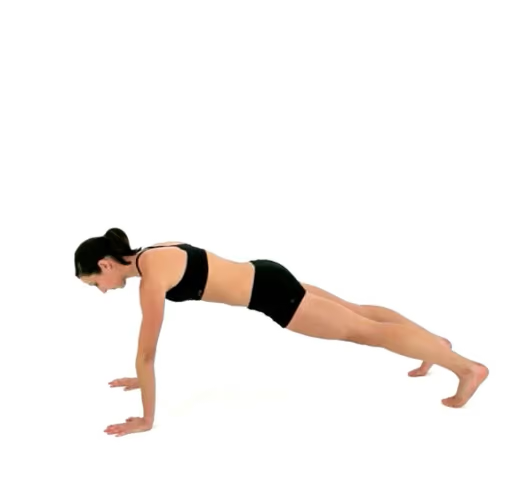
Step 1
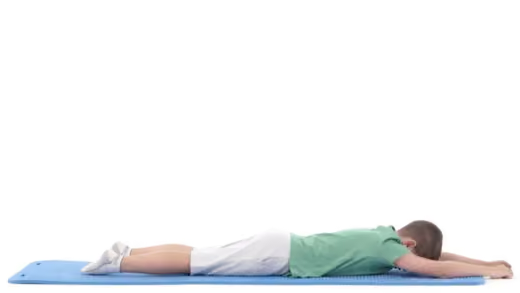
Start in a press-up position with a straight line from your head to your feet.
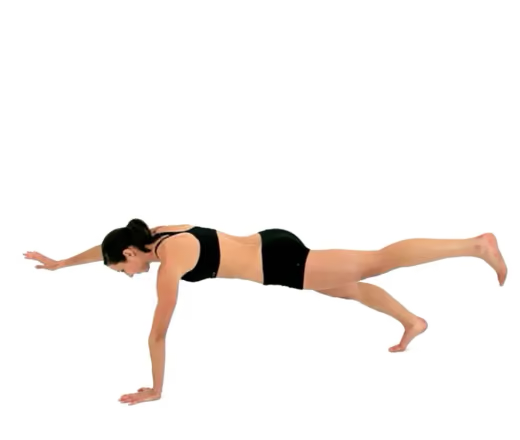
Step 2
Keeping the body still throughout the movement, lift your opposite arm with your opposite leg.
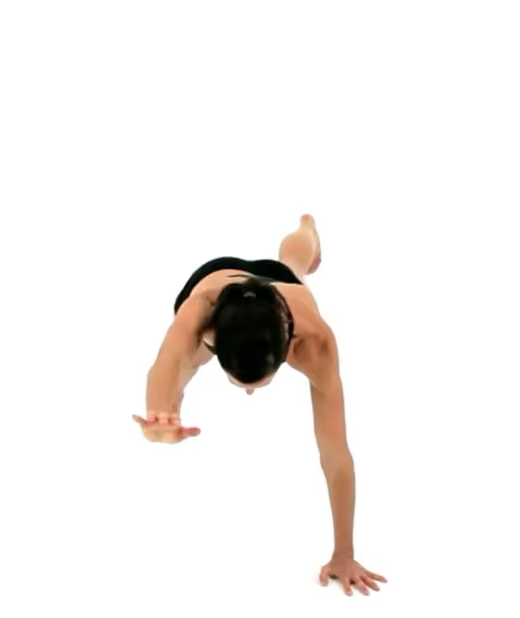
Step 3
Repeat using the other opposite arm and leg. Try to keep your body as still as possible throughout this exercise.
Doing a labyrinthine reflex exercise can help sharpen your coordination and concentration abilities. It challenges your spatial awareness and encourages creative thinking. Give it a try and see how your mind and body respond.
3. About the labyrinthine reflex
- Labyrinthine Reflexes help the body adapt to balance challenges
- Exercises are used to restore muscle memory and flexibility
- You can develop coordination, balance, strength and posture
- You can perform exercises using weights, medicine balls or body weight
4. List benefits of labyrinthine reflex
Here are some potential benefits of performing this exercise:
- Improved coordination and balance
- Increased physical strength
- Improved body awareness
- Increased mental focus
- Improved focus on breath and breath control
5. FAQ on labyrinthine reflex
What muscles are involved in the labyrinthine reflex?
The labyrinthine reflex involves the contraction of the extraocular muscles, the sternocleidomastoid muscle, the tensor tympani muscle, and the tensor veli palatini muscle.
How often should the labyrinthine reflex be practiced?
The labyrinthine reflex should be practiced as often as possible, preferably at least once a day. It is important to practice regularly to ensure the reflex is properly integrated into the body's motor system.
What are the benefits of the labyrinthine reflex?
The labyrinthine reflex is a reflex that helps maintain balance and orientation in the body. It is a reflex that is triggered when the head is moved or tilted in a certain direction. The benefits of the labyrinthine reflex include improved balance and coordination, better posture, and improved spatial awareness. Additionally, the labyrinthine reflex can help reduce the risk of falls, dizziness, and vertigo.
How long does it take to master the labyrinthine reflex?
It depends on the individual and how much time and effort they are willing to put into mastering the labyrinthine reflex. Generally, it can take anywhere from a few weeks to several months to become proficient in this reflex.