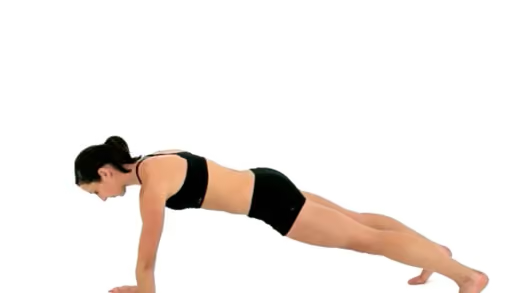
Step-by step guide to the tonic labyrinthine reflex exercise
Maximize effectiveness: Tips for patients and practitioners
1. Step-by-step video on how to do the tonic labyrinthine reflex
2. How to perform the tonic labyrinthine reflex? Follow these instructions:
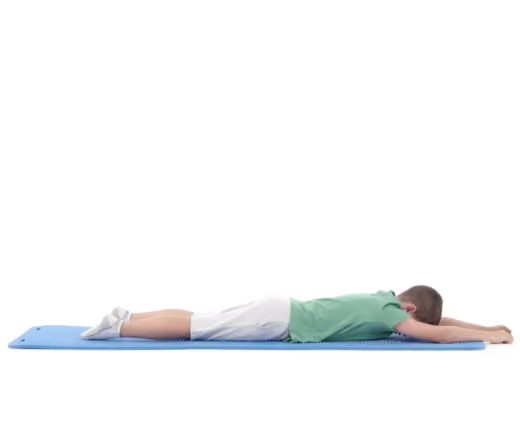
Step 1
Lie on your tummy with your arms stretched out over your head and your legs straight.
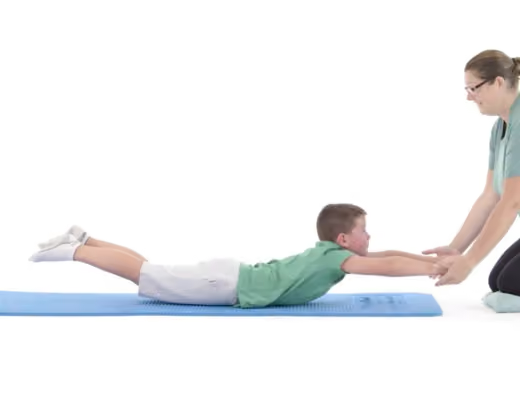
Step 2
Lift your arms, head, and chest up off the floor. Lift your legs up at the same time.
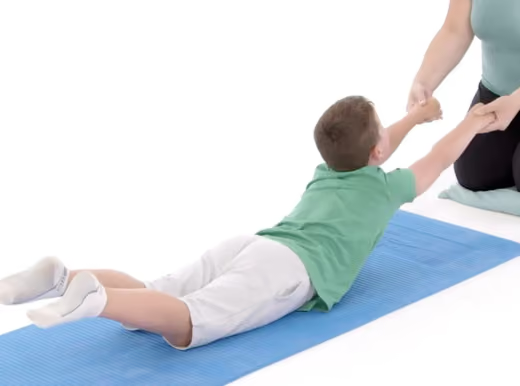
Step 3
If you are unable to do this, you can ask for help in lifting your arms up.
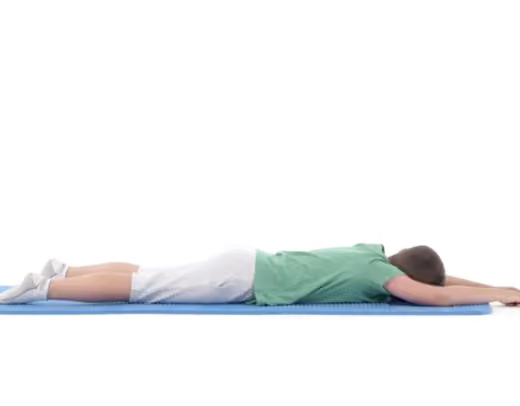
Step 4
Slowly lower back to the ground.
The tonic labyrinthine reflex exercise is a series of coordinated movements used to improve balance and coordination. This exercise stimulates the body's natural reflexes to help improve posture, balance, joint mobility, strength, and stability. Performed slowly and systematically, this exercise has the potential to bring about lasting improvements to overall mobility.
3. About the tonic labyrinthine reflex
- Tonic labyrinthine reflex is a primitive reflex seen in infants.
- It is a response to head and body position in which the newborn holds its head up and straightens its limbs.
- It helps infants develop balance and stability and can be reactivated later in life with exercise.
- It can be used in rehab and is important for trunk activation and support of posture.
4. List benefits of tonic labyrinthine reflex
Here are some potential benefits of performing this exercise:
- Improved balance and coordination
- Increased range of motion
- Enhanced overall body awareness
- Improved neurodevelopmental sequence
- Reduced physical tension and improved relaxation
5. FAQ on tonic labyrinthine reflex
What is the Tonic Labyrinthine Reflex?
The Tonic Labyrinthine Reflex (TLR) is a primitive reflex that is present in newborn babies and is responsible for helping them maintain balance and posture. It is triggered by stimulation of the labyrinthine system, which is made up of the inner ear and the vestibular nerve. The TLR is responsible for helping babies learn to roll over, sit up, and crawl.
What are the benefits of the Tonic Labyrinthine Reflex?
The Tonic Labyrinthine Reflex (TLR) is a reflexive movement pattern that helps to develop and maintain postural control, balance, coordination, and motor planning. It is believed to be the foundation of all other reflexive movements. Benefits of the TLR include improved postural control, improved balance, improved coordination, improved motor planning, improved concentration, improved sensory integration, and improved overall physical development.
What are the signs of an abnormal Tonic Labyrinthine Reflex?
The signs of an abnormal Tonic Labyrinthine Reflex (TLR) include: • Poor head and trunk control • Poor midline orientation • Poor ability to maintain balance • Poor ability to transition between positions • Poor ability to maintain symmetrical postures • Poor ability to maintain postural alignment • Poor ability to maintain head control • Poor ability to maintain eye contact • Poor ability to maintain midline orientation • Poor ability to maintain symmetrical postures while moving • Poor ability to maintain postural alignment while moving • Poor ability to maintain head control while moving • Poor ability to maintain eye contact while moving • Poor ability to maintain midline orientation while moving