Step-by step guide to the eccentric heel drops exercise
Maximize effectiveness: Tips for patients and practitioners
1. Step-by-step video on how to do the eccentric heel drops
2. How to perform the eccentric heel drops? Follow these instructions:
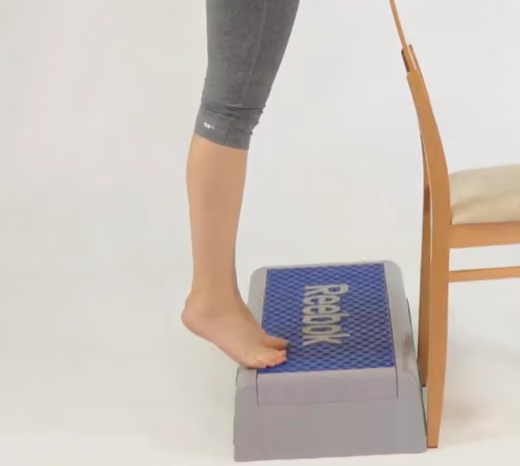
Step 1
Place a step in front of a wall, or close to a rail for support and stand up straight on the step. Keeping your knees straight, rise up onto the balls of your feet.
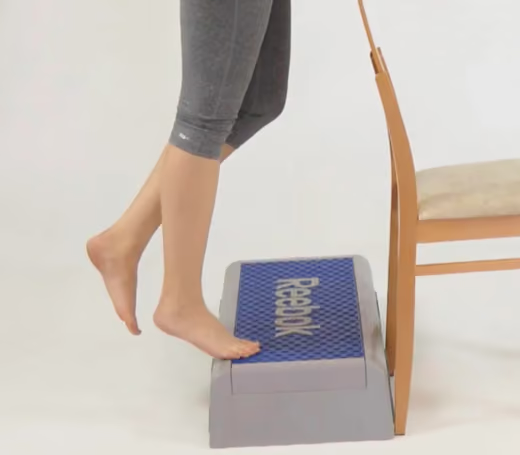
Step 2
Next, transfer all of your weight onto your affected leg and lift the other behind you.
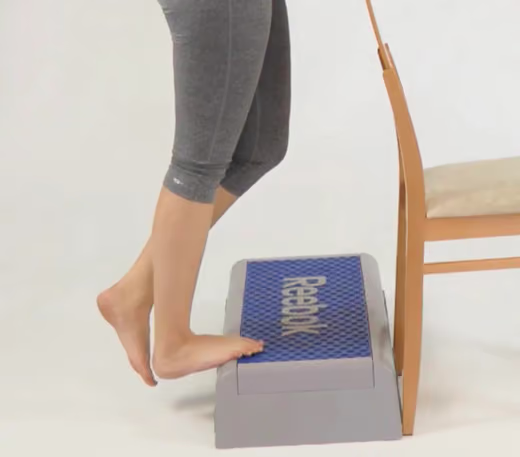
Step 3
Slowly control the movement as you lower your heel back down.
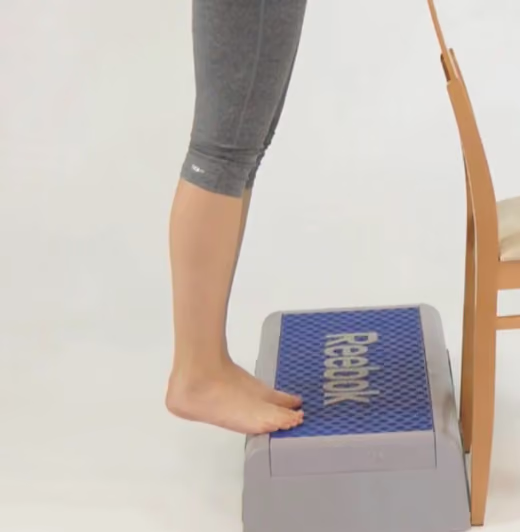
Step 4
Place your other leg back on the step and push up through both to return to the top of the movement.
The eccentric heel drops exercise is an excellent strength and stability movement for the lower limb. It challenges the entire leg, creating stability and building strength in the muscles of the glutes, calves and hamstrings.
3. About the eccentric heel drops
- Targets your calf muscles
- Increases flexibility & range of motion in the ankle
- Activates & strengthens the muscles to help prevent injuries
- Performed by slowly lowering the heel down below the toes and then slowly rising back up
- Improves balance & coordination
4. List benefits of eccentric heel drops
Here are some potential benefits of performing this exercise:
- Strengthen tendons and ligaments in the ankle and foot
- Increase mobility in the ankle and foot
- Improve balance and proprioception
- Enhance overall running performance
- Reduce the risk of injury to the ankle and foot region.
5. FAQ on eccentric heel drops
How often should I perform eccentric heel drops?
Eccentric heel drops should be performed two to three times per week, with at least one full day of rest between sessions. It is important to start with a light weight and gradually increase the weight as you become more comfortable with the exercise.
How do I perform eccentric heel drops correctly?
To perform eccentric heel drops correctly, start by standing on a step or platform with your toes on the edge. Lower your heel below the step, then raise your body back up to the starting position. Make sure to keep your body straight and your knee slightly bent throughout the exercise. Focus on controlling the lowering portion of the exercise and use your calf muscles to raise your body back up.
What are the potential risks associated with eccentric heel drops?
The potential risks associated with eccentric heel drops include: 1. Injury to the Achilles tendon: The eccentric heel drop exercise places a large amount of stress on the Achilles tendon, which can lead to tendonitis or even rupture if not done properly. 2. Lower back pain: This exercise can put a lot of strain on the lower back muscles, which can lead to pain and discomfort. 3. Improper form: If the exercise is not done correctly, it can lead to improper form and incorrect muscle recruitment, which can lead to injury. 4. Joint pain: The eccentric heel drop exercise can put a lot of strain on the joints, which can lead to pain and discomfort.
What are the benefits of eccentric heel drops?
Eccentric heel drops are a great exercise for strengthening the calf muscles, which can help reduce the risk of injury, improve balance, and increase power and speed. They can also help to improve flexibility, which can help with range of motion and reduce the risk of injury. Additionally, eccentric heel drops can help to improve posture and reduce the risk of developing plantar fasciitis.