Step-by step guide to the heel step exercise
Maximize effectiveness: Tips for patients and practitioners
1. Step-by-step video on how to do the heel step
2. How to perform the heel step? Follow these instructions:
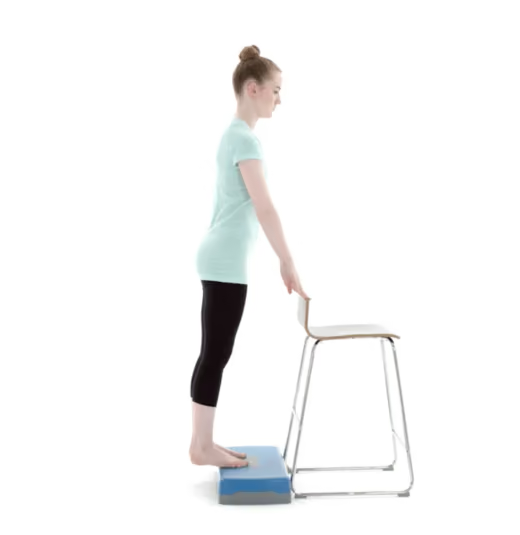
Step 1
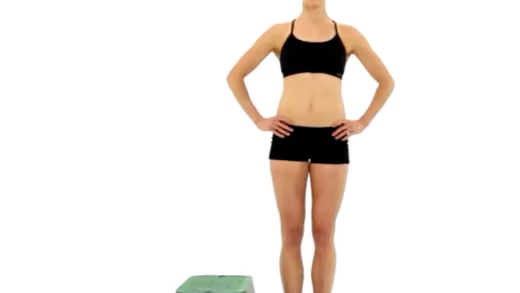
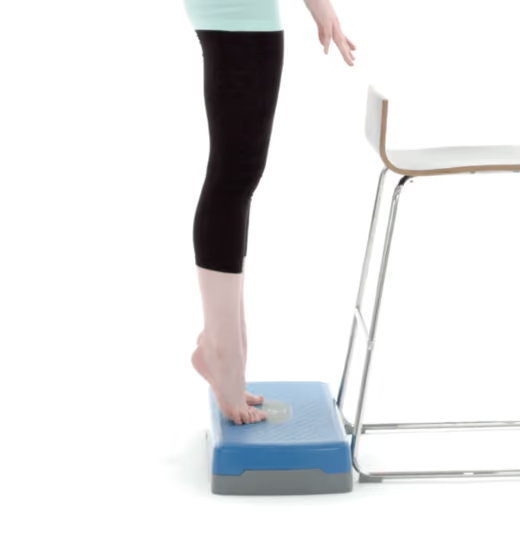
Stand up straight on a step, holding onto a supportive surface. Walk your feet back so that your heels are off the edge of the step.
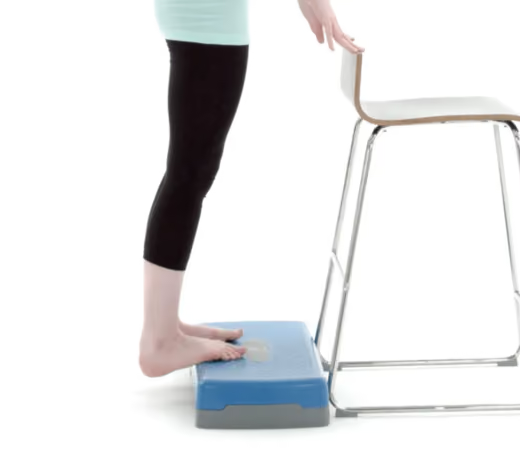
Step 2
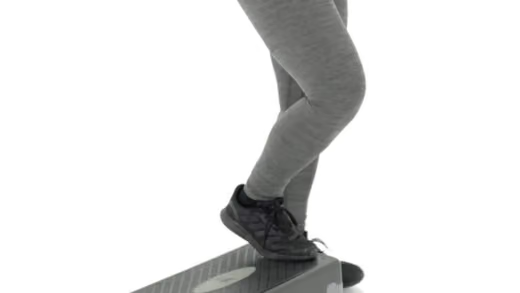
Keeping your knees straight, drop your heels down as far as you can.
Step 3
Then raise your heels up as high as you can.
3. About the heel step
- Targets the quads, hamstrings, and glutes
- Increases hip hinging strength
- Builds lower body balance
- Can help reduce injury risk
4. List benefits of heel step
Here are some potential benefits of performing this exercise:
- Improves balance
- Builds single-leg strength
- Strengthens the muscles of the lower body, including the glutes, quads and hamstrings
- Improves functional movment for daily activities
5. FAQ on heel step
What muscles are targeted when doing heel step ups?
Heel step ups target the glutes, quads, and hamstrings.
How many repetitions should I do for heel step ups?
The number of repetitions will depend on your fitness level and goals. Generally, if you are a beginner, start with 8-12 repetitions per set and gradually increase the number of repetitions as you become stronger. If you are an experienced exerciser, aim for 12-15 repetitions per set.
What is the difference between heel step ups and regular step ups?
Heel step ups are a variation of regular step ups that require you to step up onto a platform with your heel first. This variation of the exercise requires more balance and stability, as well as more control of the movement. It also works the muscles in the lower body differently than regular step ups, as it activates the glutes more and puts more emphasis on the posterior muscles.
What are the benefits of heel step ups?
Heel step ups are a great exercise for strengthening the lower body and improving balance. Benefits include increased strength in the glutes, hamstrings, and calves, improved balance and coordination, improved posture, and increased stability. They can also help to reduce the risk of injury by strengthening the muscles and tendons around the knee joint.