Step-by step guide to the eagle arms exercise
Maximize effectiveness: Tips for patients and practitioners
1. Step-by-step video on how to do the eagle arms
2. How to perform the eagle arms? Follow these instructions:
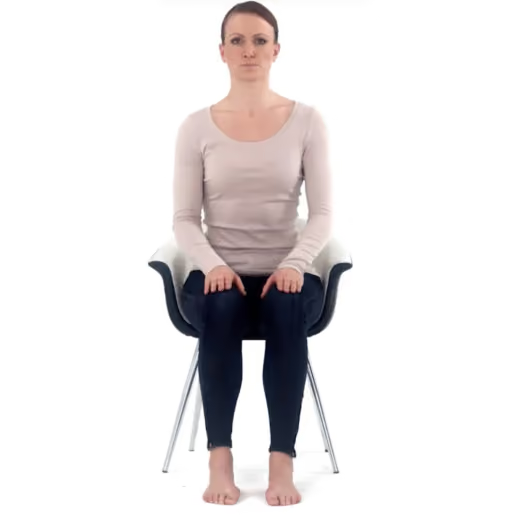
Step 1
Start in a seated position.
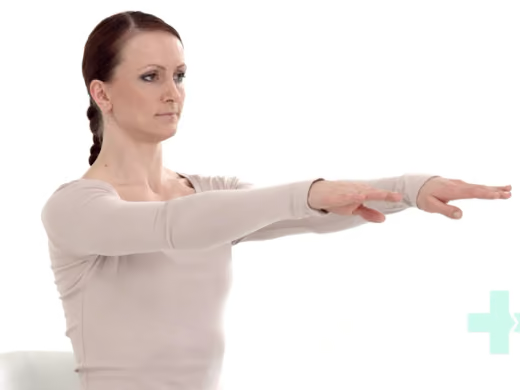
Step 2
Extend your arms out to the front at shoulder height.

Step 3
Cross your right arm over your left arm.
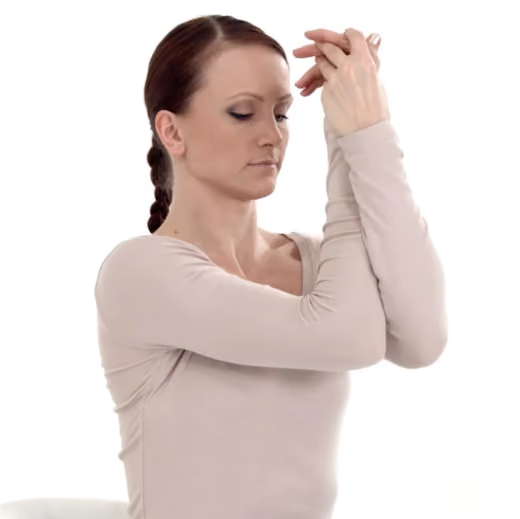
Step 4
Bend your elbows to a 90 degree angle and twist your palms inwards against each other.
Eagle arms exercise is a great way to stretch the shoulders and upper back. Through the dynamic movements, it helps increase flexibility and promote better range of motion. Perfect for all levels, it works to help open up tight chest muscles or improve upper body posture.
3. About the eagle arms
- Improves shoulder stability and posture by strengthening the muscles of the shoulders
- Targets the muscles of the rotator cuff and lats
- Helps to protect the shoulder joint
- Uses bodyweight and can be done with or without a band or weights
- Is a great exercise to do when looking to build upper body strength
4. List benefits of eagle arms
Here are some potential benefits of performing this exercise:
- Increases shoulder flexibility and mobility
- Strengthens shoulder and core muscles
- Improves posture
- Increases muscular coordination
- Enhances balance and stability
5. FAQ on eagle arms
What muscles are used when doing eagle arms?
The muscles used when doing eagle arms are primarily the deltoids, biceps, triceps, and the rotator cuff muscles.
What is the correct form for eagle arms?
The correct form for eagle arms is to keep your elbows bent at a 90-degree angle and your hands in a “V” shape. Your palms should be facing down and your thumbs should be pointing towards each other.
What is the best way to warm up before doing eagle arms?
The best way to warm up before doing eagle arms is to do some dynamic stretching. This can include arm circles, shoulder shrugs, and torso twists. Additionally, you could do some light jogging or jumping jacks to get your heart rate up. Finally, do some light resistance exercises like bicep curls and tricep kickbacks to get your muscles ready for the eagle arms.
How often should I do eagle arms?
It is recommended to do eagle arms at least 2-3 times per week as part of your regular exercise routine. However, if you are looking to increase your strength and flexibility, you may want to do eagle arms more often.
What are the potential risks associated with eagle arms?
The potential risks associated with eagle arms include shoulder and elbow injuries, rotator cuff tears, bursitis, and tendonitis. Additionally, improper form or lifting too much weight can lead to muscle strain, joint pain, and a decrease in range of motion.