Step-by step guide to the crutches exercise
Maximize effectiveness: Tips for patients and practitioners
1. Step-by-step video on how to do the crutches
2. How to perform the crutches? Follow these instructions:
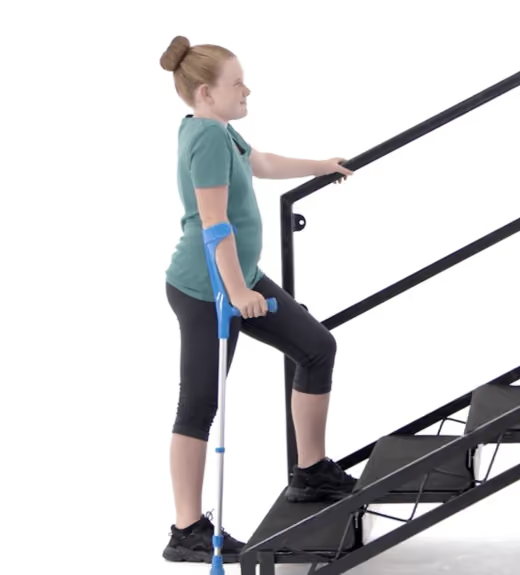
Step 1
Walking up stairs: Stand at the bottom of the stairs. Push through the crutch and rail and step your unaffected leg on to the first step.
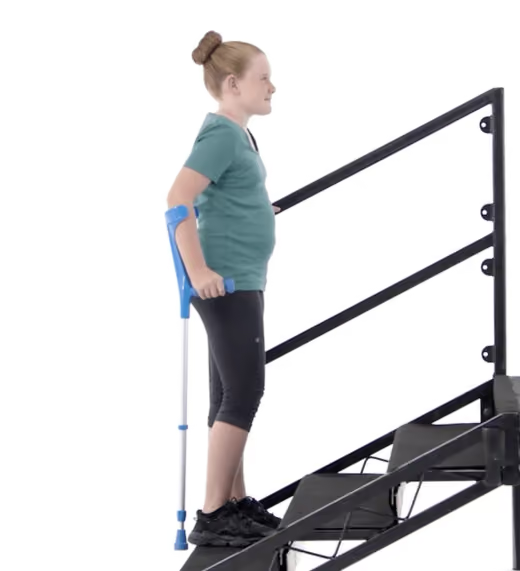
Step 2
Then bring your affected leg onto the same step. Finally, lift the crutch up to the same step. Repeat the pattern until you get to the top.
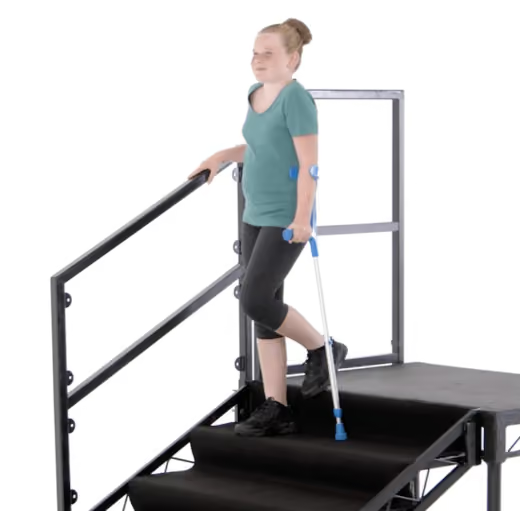
Step 3
Walking down: Stand at the top of the stairs. Take your crutch down to the first step. Step you affect leg down to the same step. Finally, bring your unaffected leg down onto the same step.
Using crutches can help strengthen the muscles in your arms and shoulders. It also helps with balance and coordination, which is essential for activities like walking or running. Try doing a few simple crutches exercises each day to improve your fitness levels.
3. About the crutches
- Support the user's body weight while keeping them off their injured leg
- Provide an alternate means by which a user can move around without putting weight on an injured leg
- Ensure the crutches are the correct height for the user
- Select crutches with grips that are suitable for the user's hand size
- Regularly inspect and maintain crutches to make sure they are working properly
4. List benefits of crutches
Here are some potential benefits of performing this exercise:
- Improved cardiovascular health
- Strengthened lower-body muscles
- Improved stability
- Improved coordination
- Reduced risk of joint injuries
5. FAQ on crutches
What type of crutches should I use?
The type of crutches that you should use will depend on your individual needs and the type of injury or condition you are dealing with. It is important to consult with your doctor or physical therapist to determine the best type of crutches for you. Generally, there are three types of crutches: axillary (armpit) crutches, forearm crutches, and gait-training crutches.
How do I adjust crutches for my height?
To adjust crutches for your height, you should first measure the distance from your armpit to the floor. Once you have this measurement, you can adjust the crutches to the correct height by loosening the locking nut and adjusting the crutch height accordingly. Once the desired height is reached, you should tighten the locking nut to secure the crutches in place.
How do I use crutches correctly?
To use crutches correctly, make sure you are standing up straight and hold the crutches on the side of your body opposite of the injured leg. Place the crutches about one foot in front of you and move the crutches forward while taking a step with your good leg. Make sure to keep your elbows bent and your arms close to your body. When going up and down stairs, always lead with your good leg and follow with the crutches.
Are there any safety tips to consider when using crutches?
Yes, there are several safety tips to consider when using crutches. Make sure to adjust the crutches to the correct height for your body, and use the crutches on even surfaces. Always keep your hands on the handgrips, and take small steps when walking. When going up or down stairs, always keep the crutches on the same step as the stronger leg. Finally, make sure to take frequent breaks when using crutches to avoid fatigue and injury.