Step-by step guide to the balance exercises on stability surface exercise
Maximize effectiveness: Tips for patients and practitioners
1. Step-by-step on how to do balance exercises on stability surface.
2. How to perform balance exercises on stability surface. Follow these instructions.
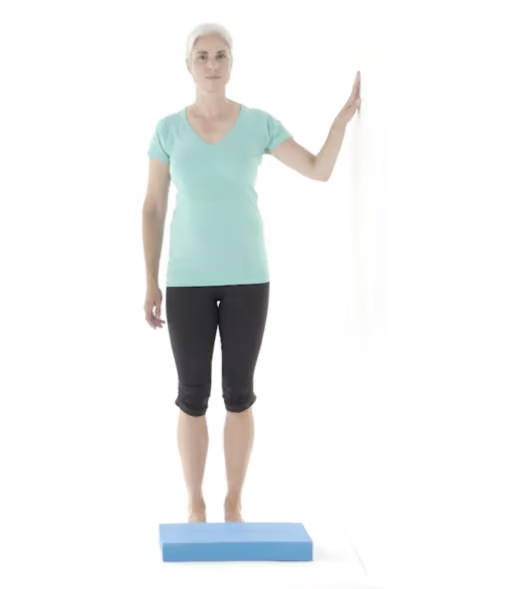
Step 1
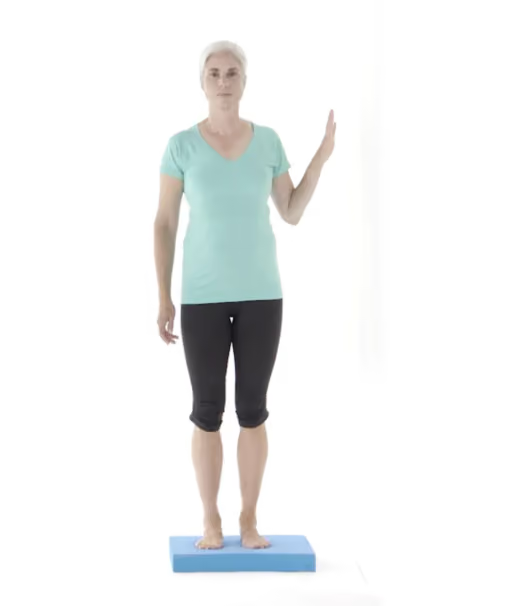
Place a balance pad on the floor near a wall or solid object. Hold onto the supporting surface as you place one foot, then the other, on the balance pad.
Step 2
Get your balance, then try to take your hand away from the support. Aim to stand as still as possible, allowing your feet and legs to keep your balance.
3. About balance exercises on stability surface.
- Improves balance and coordination
- Increases joint mobility and muscular reaction time
- Enhances posture and stability
- Decreases risk of injury from falls and instability
4. Benefits of the balance exercises on stability surface exercise
Here are some potential benefits of performing this exercise:
- Improve balance and coordination
- Reduce your risk of falls
- Strengthen your leg muscles
- Increase range of motion in joints
5. FAQ on balance exercises on stability surface.
What is the proper form for balance exercises on a stability surface?
The proper form for balance exercises on a stability surface is to stand with your feet hip-width apart and your core engaged. Keep your head up and your eyes focused on a spot in front of you. Shift your weight slightly from one foot to the other and hold for 10-30 seconds. You can also do single-leg balance exercises, such as standing on one foot and lifting the other off the ground.
How often should I do balance exercises on a stability surface?
The frequency of balance exercises on a stability surface depends on the individual and their goals. Generally, it is recommended to do balance exercises at least twice a week, but you can adjust the frequency and intensity as needed.
What muscles do balance exercises on a stability surface target?
Balance exercises on a stability surface target the core muscles, including the abdominal muscles, hip muscles, and lower back muscles. Additionally, balance exercises can also target the muscles of the lower body, such as the quadriceps, hamstrings, and calf muscles.
What are the benefits of doing balance exercises on a stability surface?
The benefits of doing balance exercises on a stability surface include improved coordination, increased core strength, improved posture, improved agility, and improved overall balance. Additionally, balance exercises on a stability surface can help reduce the risk of falls and improve overall physical health.