Step-by-step guide to the standing march exercise
Maximize effectiveness: Tips for patients and practitioners
1. Step-by-step video on how to do the standing march.
2. How to perform the standing march? Follow these instructions.
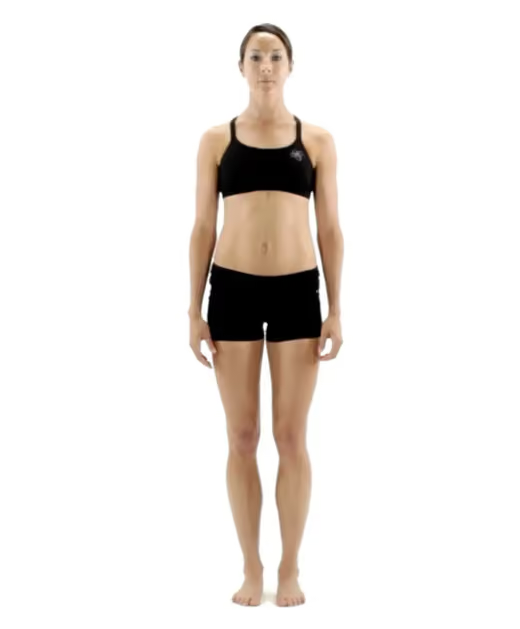
Step 1
Hold on to a wall for balance. March on the spot, bending alternate knees up towards your chest.
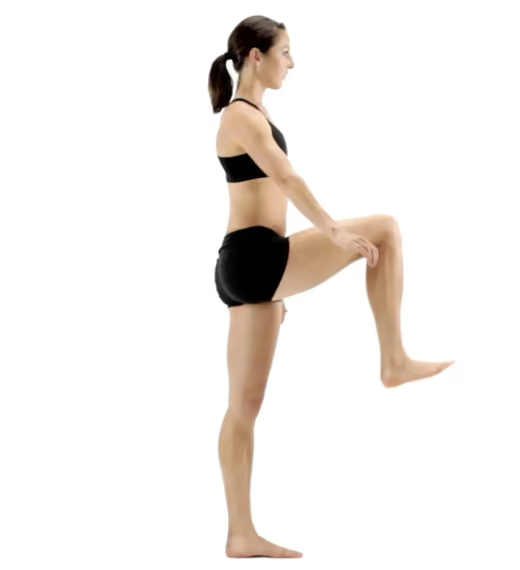
Step 2
Make sure you keep your body straight throughout the movement.
3. About the standing march.
- Uses both strength and cardiovascular endurance
- Can be done at home with no equipment
- Focuses on glutes, quads and hamstrings
- Excellent form of low impact cardio
4. Benefits of standing march exercise.
Here are some potential benefits of performing this exercise:
- Improved balance and coordination
- Strengthened and toned muscles
- Increased heart rate and metabolism for weight loss
- Improved posture and core strength
FAQ on standing march exercise
What muscles does the standing march exercise target?
The standing march exercise targets the muscles in the lower body, including the glutes, quadriceps, hamstrings, and calves.
How often should I do the standing march exercise?
It is recommended to do the standing march exercise 2-3 times per week. However, it is best to consult with a physician before beginning any exercise program.
Is the standing march exercise suitable for all fitness levels?
Yes, the standing march exercise is suitable for all fitness levels. It is a low-impact exercise that can be modified to suit any fitness level. For those who are just starting out, it can be done at a slower pace with fewer repetitions. For those who are more advanced, it can be done at a faster pace with more repetitions.
What are the benefits of the standing march exercise?
The standing march exercise is a great way to improve balance, coordination, and overall strength. It also helps to strengthen the core, improve posture, and increase flexibility. Additionally, it can help to improve circulation and reduce the risk of injury.