Step-by-step guide to battle ropes in standing
Maximize effectiveness: Tips for patients and practitioners
1. Step-by-step how to do battle ropes in standing
2. How to perform battle ropes in standing. Follow these instructions.

Step 1
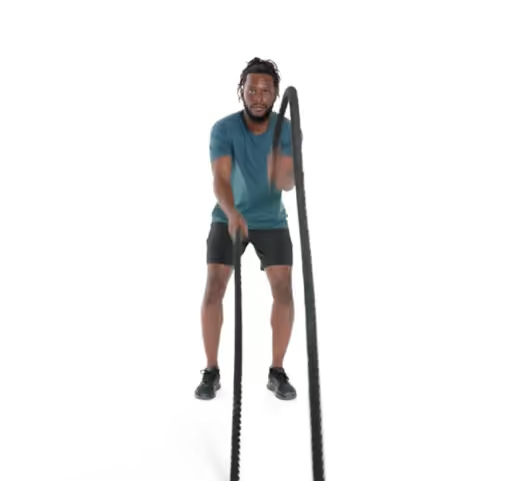
Secure the middle of a rope around a sturdy object. Start in standing facing the rope attachment and hold one end in each hand.
Step 2
Start shaking the rope up and down, one hand at a time. Try to continue for as long as advised.
3. About battle ropes in standing
Standing workout using battle ropes for full-body engagement.Improves cardiovascular health and strength.Enhances endurance and burns calories.
4. Benefits of battle ropes in standing
Here are some potential benefits of performing this exercise:
Boosts cardiovascular endurance and stamina.Engages the entire body for a full-body workout.Improves grip strength and arm endurance.
5. FAQ on battle ropes in standing
What are the benefits of using battle ropes?
Battle ropes improve cardiovascular health, strength, and endurance. They engage multiple muscle groups for a full-body workout.
Can I use battle ropes for high-intensity workouts?
Yes, battle ropes are excellent for high-intensity interval training (HIIT) workouts.
Are battle ropes suitable for beginners?
Yes, beginners can start with lighter ropes and simpler movements, gradually progressing to more challenging exercises.
How long should a battle ropes session last?
Aim for 15-30 minutes, adjusting intensity and duration based on fitness levels and goals.