Step-by step guide to the reverse plank exercise
Maximize effectiveness: Tips for patients and practitioners
1. Step-by-step video on how to do the reverse plank exercise
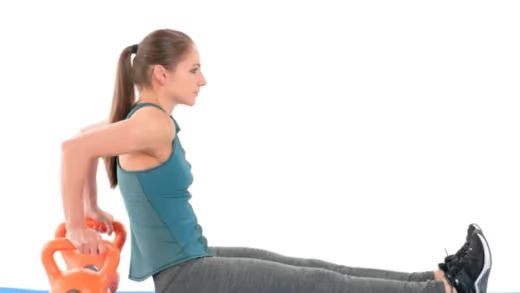
How to perform the Reverse Plank
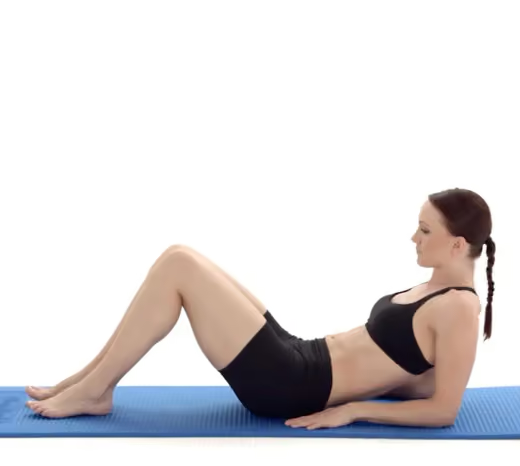
Step 1
Lie on your back with your knees bent, your chin tucked in and your weight supported on both forearms.
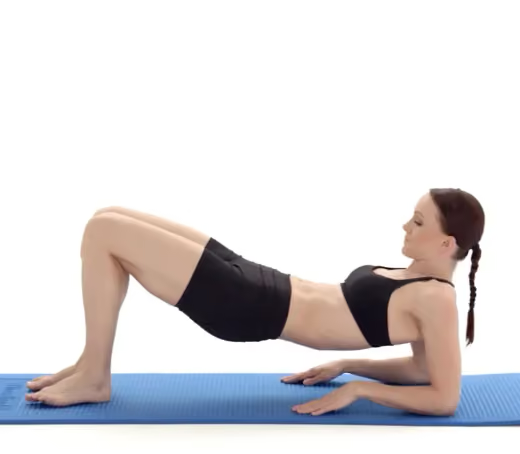
Step 2
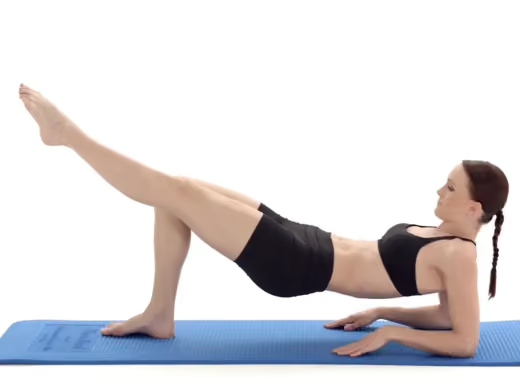
Push your pelvis upwards, until your thighs are in line with your spine.
Step 3
Hold this position briefly and lift one, straightening the leg out and keeping both knees at the same height.
3. About the reverse plank exercise
- Tones your back, shoulders, and legs
- Improves flexibility in your hips
- Helps prevent back pain
- Relieves stress and tension in your body
4. Benefits of the reverse plank exercise
Here are some potential benefits of performing this exercise:
- Improved core strength and stability
- Improved posture
- Greater balance and coordination
- Reduces stress and tension in the lower back and shoulders
5. FAQ on the reverse plank exercise
What muscles does the reverse plank work?
The reverse plank exercise primarily works the glutes, hamstrings, and core muscles. It also engages the shoulders, arms, and back muscles to a lesser extent.
What are the benefits of the reverse plank?
The reverse plank is a great exercise for strengthening the core, glutes, and hamstrings. It also helps to improve posture, balance, and stability. Additionally, the reverse plank can help to increase flexibility in the lower back and hips, as well as improve coordination and body awareness.
How long should I hold the reverse plank?
The reverse plank should be held for at least 30 seconds. However, if you are able to hold the plank for longer, you should aim for 1-2 minutes.
What are the risks associated with the reverse plank?
The reverse plank can put a lot of strain on the lower back, shoulders, and neck. If done incorrectly, it can lead to muscle strain, joint pain, and even injury. Additionally, if the plank is held for too long, it can lead to fatigue and overexertion. It is important to make sure that proper form is used when performing the reverse plank and to stop if any pain or discomfort is felt.