Step-by step guide to the postural drainage exercise
Maximize effectiveness: Tips for patients and practitioners
1. Step-by-step video on how to do the postural drainage exercise
How to perform the Postural Drainage
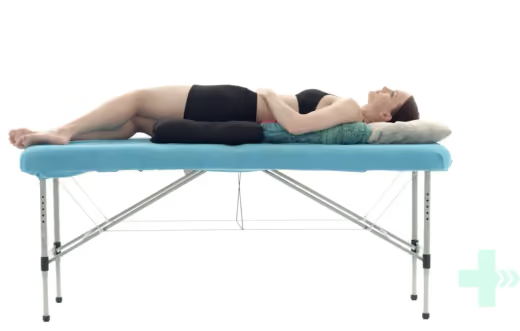
Step 1
Lie on your back with a pillow under your head.
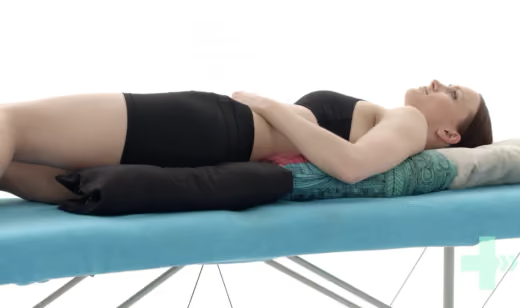
Step 2
You should put pillows under your left shoulder, chest and back. You should feel yourself slightly rotated to the right.
Step 3
Relax in this position.
3. About the postural drainage exercise
- Postural drainage reduces chest congestion and allows patients to clear deep mucus better.
4. Benefits of the postural drainage exercise
Here are some potential benefits of performing this exercise:
- Reduced chest pain and tightness due to inflammation.
- Improved breathing and oxygenation.
- Improved overall respiratory health and well-being.
5. FAQ on the postural drainage exercise
What are the benefits of postural drainage?
Postural drainage is a type of physical therapy that can help clear mucus from the lungs. It can be used to treat a variety of respiratory conditions, including bronchitis, pneumonia, and cystic fibrosis. The main benefits of postural drainage are: 1. Improved lung function: Postural drainage helps to clear mucus from the lungs, allowing for better oxygenation of the blood and improved lung function. 2. Reduced risk of infection: By clearing mucus from the lungs, postural drainage can reduce the risk of infection in people with respiratory conditions. 3. Improved breathing: Postural drainage can help improve breathing by allowing for better airflow in the lungs. 4. Reduced symptoms: Postural drainage can help reduce symptoms such as coughing, shortness of breath, and wheezing.
How often should postural drainage be done?
Postural drainage should be done at least once a day, but it can be done more often if needed. It is important to follow your doctor's instructions for how often to do postural drainage.
What should I do after postural drainage?
After postural drainage, it is important to rest and allow your body to recover. You may also need to perform breathing exercises or other activities to help clear your lungs. Additionally, it is important to drink plenty of fluids to help thin mucus and keep your body hydrated.