Step-by step guide to the plantar flexion exercise
Maximize effectiveness: Tips for patients and practitioners
1. Step-by-step video on how to do the plantar flexion exercise
How to perform the Plantar Flexion
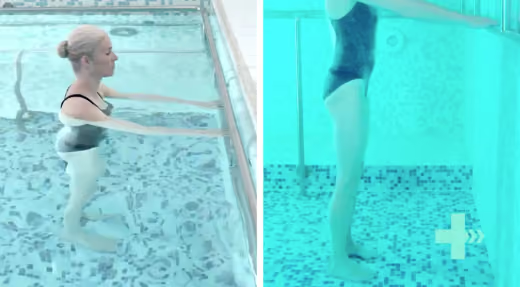
Step 1
Stand up straight in the water at a depth instructed by your therapist, holding onto the poolside.
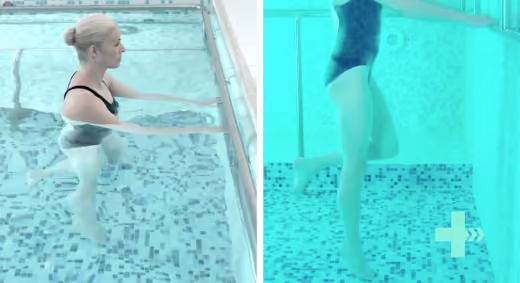
Step 2
Stand on one leg. Keep your back and leg straight Push up onto your tiptoes.
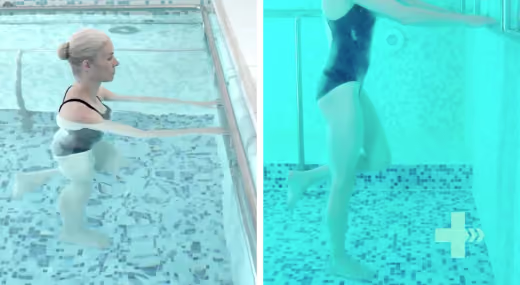
Step 3
Return to the start position.
3. About the plantar flexion exercise
- Plantar flexion is a movement where the foot is pointed downwards.
- It strengthens the calf muscles.
- It helps improve ankle stability and balance.
- It can be beneficial for people suffering from tendonitis, ankle sprains, and plantar fasciitis.
4. Benefits of the plantar flexion exercise
Here are some potential benefits of performing this exercise:
- Strengthens the calf muscles, ankles, and Achilles tendon.
- Reduces risk of injury around the ankle and feet.
- Improves circulation and flexibility in the lower body.
- Enhances performance in activities such as running, cycling, and jumping.
5. FAQ on the plantar flexion exercise
What muscles does plantar flexion target?
Plantar flexion targets the muscles in the lower leg, specifically the calf muscles (gastrocnemius and soleus) and the tibialis posterior.
What are the benefits of performing plantar flexion exercises?
Performing plantar flexion exercises can help to strengthen the calf muscles, improve balance and stability, and reduce the risk of ankle injuries. Additionally, it can improve the range of motion in the ankle joint, as well as help to improve posture and reduce lower back pain.
How can I increase the difficulty of plantar flexion exercises?
There are several ways to increase the difficulty of plantar flexion exercises. You can add resistance by using ankle weights or a resistance band, increase the number of repetitions, increase the duration of the exercise, or add a single-leg component. You can also increase the range of motion by doing a calf stretch before the exercise.