Step-by step guide to the shoulder flexion and extension exercise
Maximize effectiveness: Tips for patients and practitioners
1. Step-by-step video on how to do the shoulder flexion and extension exercise
How to perform the Shoulder Flexion And Extension
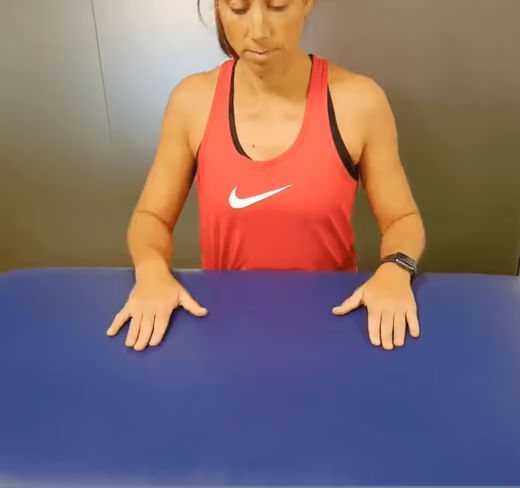
Step 1
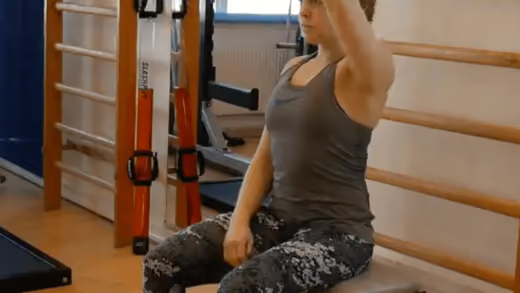
Begin sitting at a desk or table that is elbow height. Place your hands on the table.
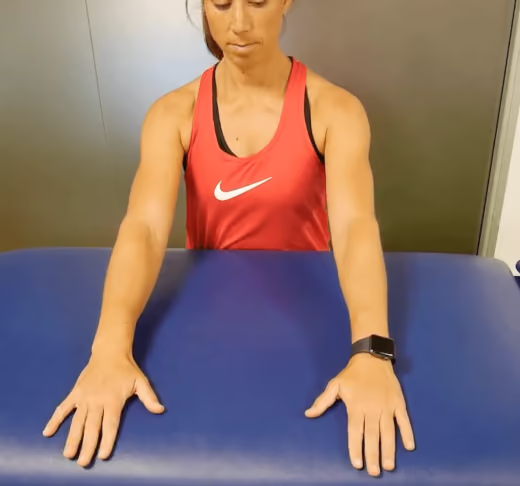
Step 2
Slide your hands forward to straighten your arms, keeping shoulders away from your ears. Return to the start by sliding hands back towards you.
3. About the shoulder flexion and extension exercise
- Increases mobility in the shoulder region
- Develops stability in the shoulder joint
- Improves efficiency and range of motion in shoulder-related activities
- Improves posture and reduces shoulder and neck pain
4. Benefits of the shoulder flexion and extension exercise
Here are some potential benefits of performing this exercise:
- Improved range of motion in the shoulder joint
- Increased shoulder stability and control
- Increased coordination, efficiency of movement, and power
- Improved posture by aiding in the maintaining of proper thoracic spine positioning
5. FAQ on the shoulder flexion and extension exercise
What muscles are used in shoulder flexion and extension?
The primary muscles used in shoulder flexion and extension are the deltoids and the pectoralis major. The deltoids are responsible for the movement of the arm away from the body, while the pectoralis major is responsible for the movement of the arm towards the body. Additionally, the trapezius, latissimus dorsi, and triceps muscles also assist in shoulder flexion and extension.
What is the correct form for shoulder flexion and extension?
The correct form for shoulder flexion and extension is to keep your elbows close to your body and your arms at a 90-degree angle. Keep your back straight and your head up. Flex your shoulders by bringing your arms up and back, and then extend your shoulders by pushing your arms forward and down.
How often should shoulder flexion and extension be done?
Shoulder flexion and extension exercises should be done at least twice a day. It is important to perform these exercises consistently to maintain flexibility and strength in the shoulder joint.
What are the benefits of shoulder flexion and extension?
The benefits of shoulder flexion and extension are numerous. Flexion and extension exercises can help to improve range of motion, strengthen the shoulder muscles, and reduce the risk of shoulder injuries. They can also help to improve posture, increase circulation, and reduce joint stiffness. Additionally, shoulder flexion and extension exercises can help to improve balance and coordination.