Step-by step guide to the medial deltoid exercise
Maximize effectiveness: Tips for patients and practitioners
1. Step-by-step video on how to do the medial deltoid exercise
How to perform the Medial Deltoid
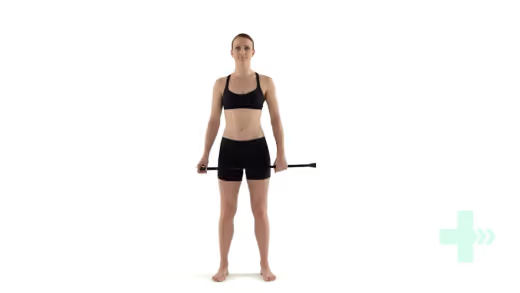
Step 1
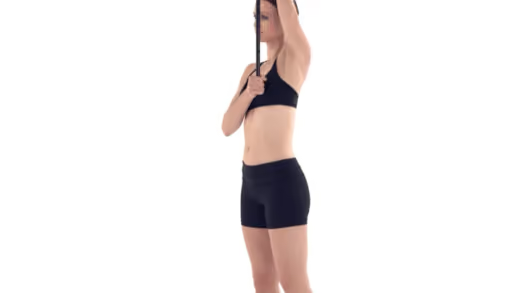
Stand straight holding a broom-stick or rod in both hands.
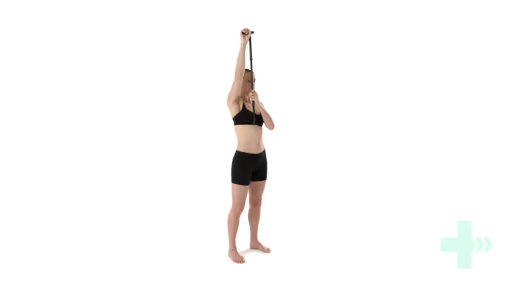
Step 2
Lift your symptomatic arm up as far as you can using your good arm to drive the movement. Do not allow your shoulder to hunch.

Step 3
Remove the support of the stick and slowly lower your arm back down to the side, keeping your elbow bent and your hand close to your face.
3. About the medial deltoid exercise
- Stretches and strengthens the medial deltoid muscle
- Improves shoulder ROM and flexibility
- Use of free weights or machine provide resistance
4. Benefits of the medial deltoid exercise
Here are some potential benefits of performing this exercise:
- Increased activation of the medial deltoid helps maintain shoulder stability
- Promotes better posture
- Improves shoulder and upper back mobility
- Enhances overall athletic performance by helping with muscle balance and control
5. FAQ on the medial deltoid exercise
What muscles does the medial deltoid raise exercise target?
The medial deltoid raise exercise targets the medial deltoid muscle, which is located in the shoulder. This muscle is responsible for shoulder abduction, or the movement of lifting the arm away from the body.
How many sets and repetitions should I do for the medial deltoid raise?
The number of sets and repetitions you should do for the medial deltoid raise will depend on your fitness level and goals. Generally, it is recommended to start with 2-3 sets of 8-12 repetitions. As you get stronger, you can increase the number of sets and repetitions.
Is the medial deltoid raise suitable for all fitness levels?
No, the medial deltoid raise is not suitable for all fitness levels. It is an advanced exercise that requires a certain level of strength and stability. Beginners should focus on basic exercises such as shoulder presses and lateral raises before attempting the medial deltoid raise.
Is there any risk of injury associated with the medial deltoid raise?
Yes, there is a risk of injury associated with the medial deltoid raise. Possible injuries include shoulder impingement, rotator cuff strain, and shoulder tendonitis. It is important to use proper form and technique when performing this exercise to reduce the risk of injury.