Step-by step guide to the hamstring stretch exercise
Maximize effectiveness: Tips for patients and practitioners
1. Step-by-step video on how to do the hamstring stretch
2. How to perform the hamstring stretch? Follow these instructions:
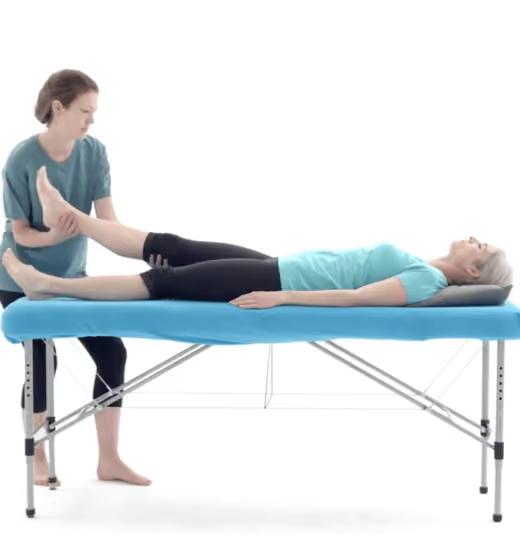
Step 1
Lie on your back with your legs straight. Ask your assistant to place one hand under your knee and the other under your ankle.
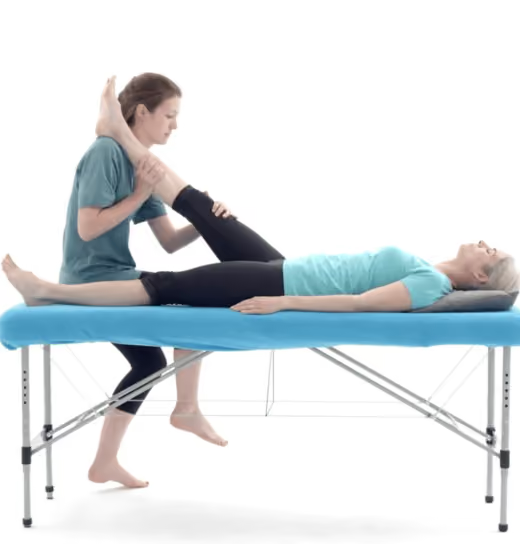
Step 2
Keep your leg relaxed as the assistant elevates the leg and keeps the knee straight.
3. About the hamstring stretch
- Targets the back of the upper and lower leg
- Helps reduce lower back and knee pain
- Aids flexibility and range of motion
- Easy to do anywhere with minimal space
- Helps to prevent injury by strengthening hamstring muscles
4. List benefits of hamstring stretch
Here are some potential benefits of performing this exercise:
- Increased hamstring flexibility
- Improved lower body strength
- Reduced risk of lower back injury
- Improved posture
- Improved circulation in the hamstrings
5. FAQ on hamstring stretch
What is the best way to do a hamstring stretch?
The best way to do a hamstring stretch is to start by lying on your back with both legs extended. Bend one leg and bring your heel toward your butt. Reach for your ankle with both hands and gently pull your leg toward your chest until you feel a comfortable stretch in the back of your thigh. Hold the stretch for 30 seconds and then switch legs.
How often should I do a hamstring stretch?
It is recommended that you do a hamstring stretch at least 2-3 times a week for best results. However, if you are more active, you may want to increase the frequency of your hamstring stretches to every other day.
What muscles are targeted when doing a hamstring stretch?
When doing a hamstring stretch, the muscles targeted are the hamstrings, which are located in the back of the thigh.
How long should I hold a hamstring stretch?
It is recommended to hold a hamstring stretch for at least 30 seconds. However, if you are able to hold the stretch longer, it is beneficial to do so.
What are the risks of doing a hamstring stretch?
The main risk of doing a hamstring stretch is that you could strain or tear the muscle if you stretch too far or too quickly. Other risks include lower back pain, sciatica, and nerve damage. It is important to always stretch slowly and gently to avoid injury.