Step-by step guide to the back against wall exercise
Maximize effectiveness: Tips for patients and practitioners
1. Step-by-step video on how to do the back against wall
2. How to perform the back against wall? Follow these instructions:
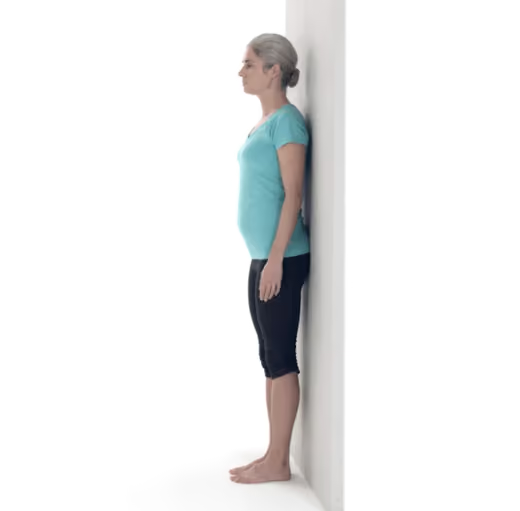
Step 1
Stand with your back against a wall. Your buttocks should be touching the wall.
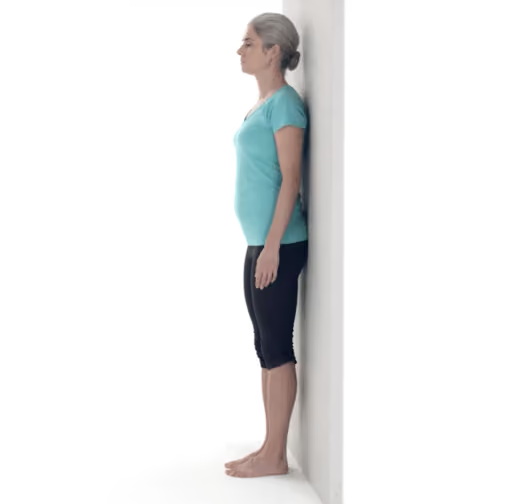
Step 2
Lean your upper back against the wall, ensuring you do not arch your lower back too much.

Step 3
Attempt to flatten your shoulder blades against the wall, and finally bring your head to the wall if you can. Hold this position.
Doing the back against wall exercise can help strengthen the chest and right shoulder, reduce pain and improve posture. It activates core muscles and helps improve mobility.
3. About the back against wall
- Engage core muscles for increased stability
- Keep feet slightly apart on the floor and evenly balanced
- Keep hips and chest pressed against the wall
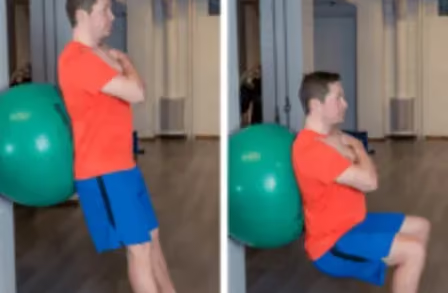
- Bend the knees and slide forward until the thighs are parallel to the floor
4. List benefits of back against wall
Here are some potential benefits of performing this exercise:
- Improved posture: Doing exercises against a wall can help you to maintain proper posture.
- Increased flexibility: Exercises with your back against a wall require more flexibility than regular exercises.
- Reduced stress: Sitting or standing with your back against a wall for a few minutes can help to relax and reduce stress.
- Improved balance: Exercising back against a wall can help to improve balance as you need to adjust yourself continuously to keep steady in the otherwise unstable position.
5. FAQ on back against wall
What muscles does this exercise target?
This depends on the exercise. Generally, exercises that involve bending or extending the arms will target the biceps and triceps, while exercises that involve pushing or pulling will target the chest, back, and shoulder muscles.
How often should I perform this exercise?
The frequency with which you should perform an exercise depends on your individual goals and fitness level. Generally, it is recommended that you perform the exercise 2-3 times per week for best results. If you are a beginner, you may want to start with 1-2 times per week and gradually increase the frequency as your fitness level improves.
What is the correct form for this exercise?
The correct form for this exercise will depend on the type of exercise and the instructions given. It is important to read the instructions carefully and follow them in order to ensure that you are performing the exercise correctly.
What modifications can I make to this exercise?
You can modify this exercise in many different ways. For example, you can increase or decrease the intensity, the number of repetitions, the amount of weight used, the speed of the exercise, or the rest periods between sets. You can also add different variations of the exercise, such as using a stability ball or resistance bands to increase the challenge. Additionally, you can combine this exercise with other exercises to create a full-body workout.