Step-by step guide to the adductions exercise
Maximize effectiveness: Tips for patients and practitioners
1. Step-by-step video on how to do the adductions
2. How to perform the adductions? Follow these instructions:
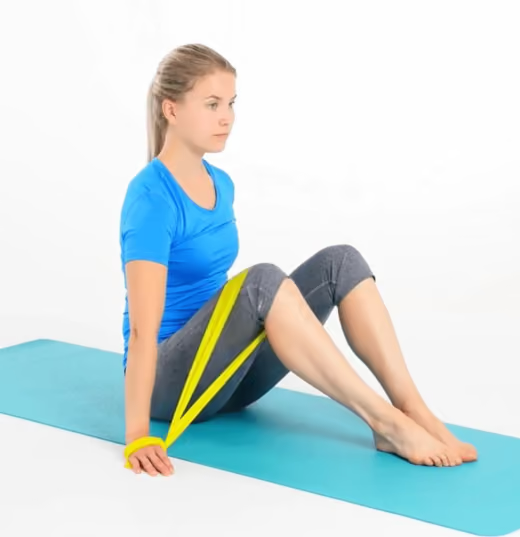
Step 1
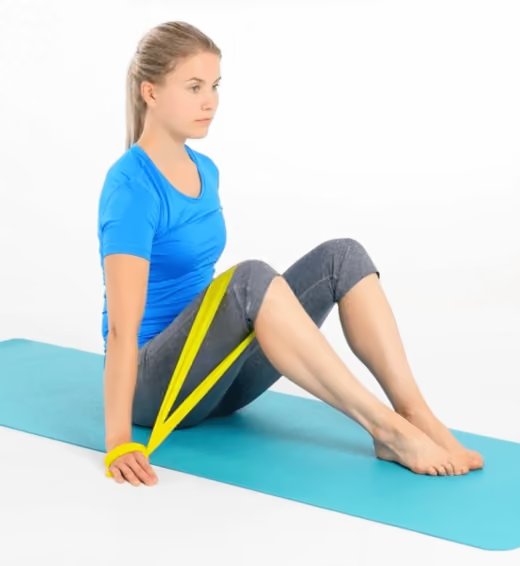
Start by sitting on the floor with your legs bent and feet flat on the floor. Have an exercise band looped around the one knee and using the same side hand secure the ends of the band on the floor next to you.
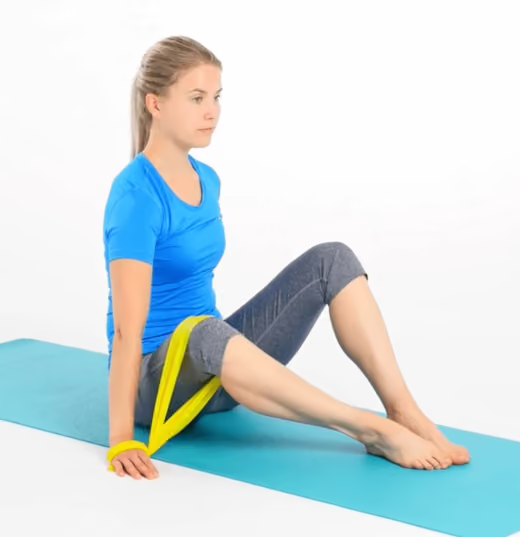
Step 2
Let the knee drop to the side and take the slack off the band.
Step 3
Against the resistance from the band adduct your thigh and bring the knee towards the midline. In a controlled manner let the knee open back to the side and repeat.
Performing adductions can help you achieve stronger legs, increased joint stability, and better range of motion. Executing this exercise regularly will help you reap the benefits of improved muscular strength and performance.
3. About the adductions
- Adductions can help improve hip strength.
- The exercise primarily works the hips but also targets other muscles like the inner thigh, glutes and abdomen.
- Start with a lighter weight and gradually increase the amount of resistance as your strength and endurance increases.
- Ensure correct form throughout the movement and do not slump the back or allow the leg to sway away from the body.
4. List benefits of adductions
Here are some potential benefits of performing this exercise:
- Improved posture
- Increased hip abduction strength
- Increased ankle stability
- Improved stability in the knees and hips, reducing risk of injury
5. FAQ on adductions
What muscles are involved in adductions?
The primary muscles involved in adduction are the adductor muscles, which include the adductor magnus, adductor longus, adductor brevis, gracilis, and pectineus.
What is the best way to perform adductions?
The best way to perform adductions is to start with a light weight and gradually increase the weight as you become more comfortable with the exercise. It is important to use proper form and to focus on using the correct muscles. Make sure to keep your back straight and your core engaged throughout the exercise. Additionally, it is important to perform the exercise slowly and with control to ensure you are getting the most out of the exercise.
What are the benefits of adductions?
The main benefit of adductions is that they help to strengthen and tone the inner thigh muscles. Adductions also help to improve balance and stability, and can help to reduce the risk of injury in the hip and knee joints. Additionally, adductions can help to improve posture and can help to reduce lower back pain.
How often should I do adductions?
Adductions should be done two to three times a week, with at least one day of rest in between workouts. Start with one set of 10-15 repetitions and gradually increase the number of sets and repetitions as your strength and endurance improve.