

Step-by step guide to the peterson step up exercise
Maximize effectiveness: Tips for patients and practitioners
Step-by step guide to the peterson step up exercise
Maximize effectiveness: Tips for patients and practitioners

1. Step-by-step video on how to do the peterson step up

2. How to perform the peterson step up? Follow these instructions:


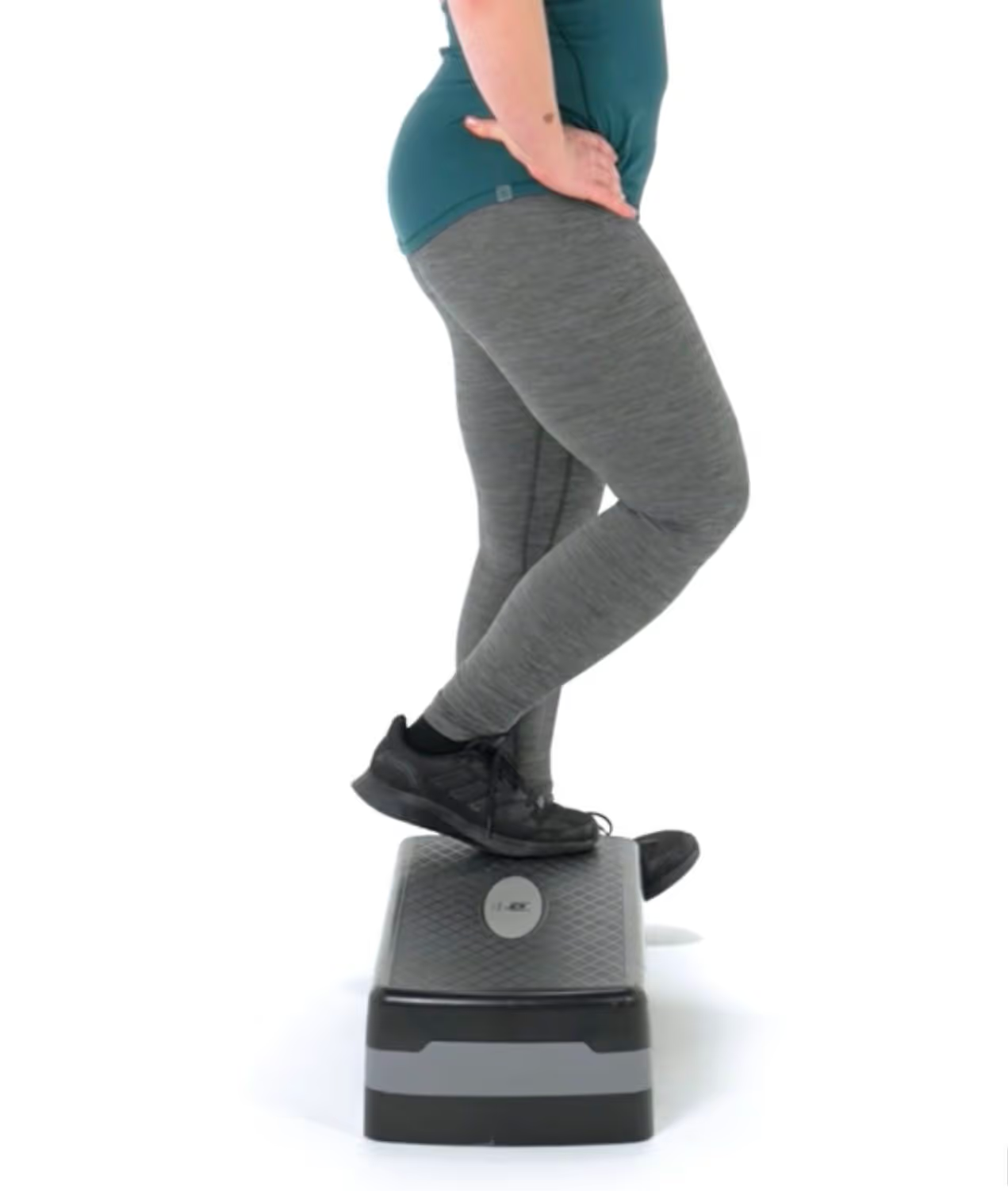

%20(1).avif)
3. About the peterson step up
- Improves lower body strength and power
- Sculpts the glutes, quads and hamstrings
- Increases calf flexibility
- Increases core and hip stability
- Enhances balance and overall coordination
4. List benefits of peterson step up
Here are some potential benefits of performing this exercise:
- Improved overall strength in the legs, hips and core
- Increased power and explosiveness
- Improved balance and coordination
- Enhanced sports performance
- Reduced risk of injury to the lower body
5. FAQ on peterson step up


The Peterson Step Up exercise is a unilateral lower body exercise that targets the glutes, hamstrings, and quadriceps. It is a great way to increase strength and stability in the lower body and can be done with either a step or a bench. The exercise is performed by stepping up onto the step or bench with one foot, then bringing the other foot up to meet it. The movement is then reversed and repeated for the desired number of repetitions.
The Peterson Step Up exercise targets the glutes, hamstrings, and quadriceps. It also engages the core muscles and stabilizers for balance.
To perform the Peterson Step Up exercise, you will need a step or box that is at least 12 inches high. You will also need a pair of dumbbells or a barbell.
To perform the Peterson Step Up exercise correctly, start by standing in front of a step or bench with your feet hip-width apart. Place one foot on the step and press through your heel to lift yourself up. Step up onto the step with your other foot and then step back down with the first foot. Repeat the exercise for the desired number of repetitions, alternating feet each time. Make sure to keep your core engaged and your back straight throughout the movement.

