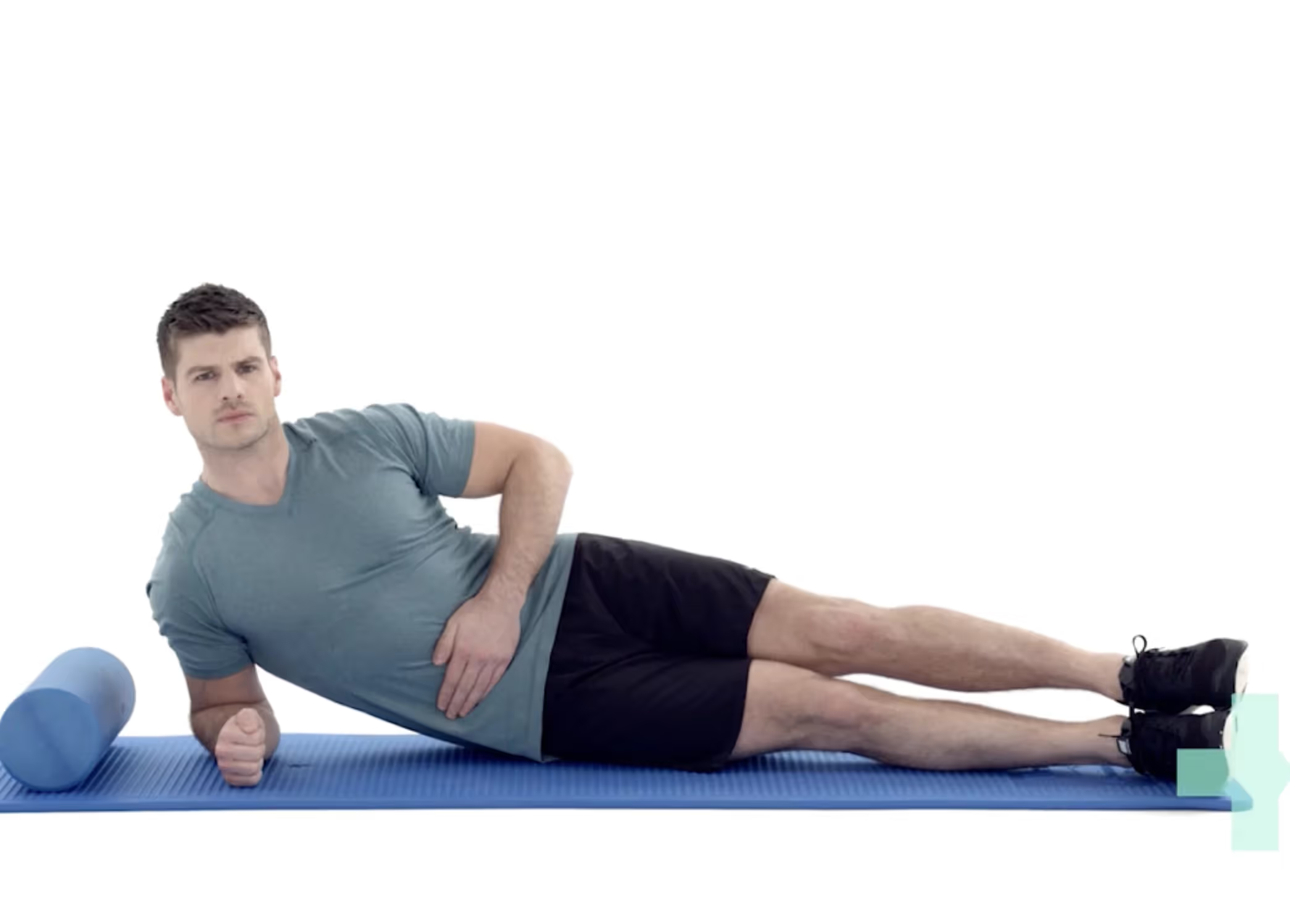
Step-by step guide to the lateral leg raises exercise

Maximize effectiveness: Tips for patients and practitioners

Step-by step guide to the lateral leg raises exercise

Maximize effectiveness: Tips for patients and practitioners

video camera icon

1. Step-by-step on how to do lateral leg raises.

Icon of a checkbox

2. How to perform lateral leg raises. Follow these instructions.

Step 1
Lie on your side with your legs extended and stacked on top of each other with your feet in a neutral position and your toes pointing forward. Place your upper hand onto your stomach throughout the exercise and perform the movements at a slow pace.
Step 2
Raise your upper body off the floor using your elbow and forearm to support your weight, keep your hips and legs in contact with the floor throughout the exercise.
Step 3
Raise the upper leg so the top foot is slightly above the other foot and hold for the desired number of seconds then lower the leg until both legs touch, then repeat the movement.
Step 4
Step 5
Prescribe. Educate. Engage.

Unlock Physitrack - all in one platform for practitioners!
Start your 30-day free trial today.
Get Started
Various devices showing the Physitrack UI
Want to receive your exercise programs via app?

Refer your physiotherapist and start using PhysiApp!
Leave clinic details
Mobile devices showing the user interface of Phystrack
Icon of a checkbox

3. About lateral leg raises.

  • Targets the hip abductor muscles which are responsible for elevating the leg sideways
  • Isolates the hip muscles to build lower body strength
  • Easily scales to different levels depending on an individual's capabilities
Icon of a checkbox

4. Benefits of the lateral leg raises exercise.

Here are some potential benefits of performing this exercise:

  • Strengthens the hip abductor muscles.
  • Increases the functional strength of your core, as the abdominal muscles contract when you raise your leg outward.
  • Improves mobility of the hip joint by improving range of motion.
  • Helps prevent injury of the lower body muscles and joints.
Icon of a checkbox

5. FAQ on lateral leg raises.

What muscles does lateral leg raise exercise target?
Plus iconMinus icon

The lateral leg raise exercise targets the gluteal muscles, abductors, and quadriceps.

How often should lateral leg raises be performed?
Plus iconMinus icon

Lateral leg raises should be performed two to three times per week. This exercise can be done as part of a lower body workout or as a standalone exercise. Make sure to take at least one day of rest in between workouts to allow your muscles to recover.

Is there a risk of injury with lateral leg raises?
Plus iconMinus icon

Yes, there is a risk of injury with lateral leg raises. It is important to use proper form and technique when performing this exercise to minimize the risk of injury. Be sure to warm up before doing any exercise, and if you feel any pain or discomfort, stop immediately and consult a healthcare professional.

Are lateral leg raises suitable for beginners?
Plus iconMinus icon

Yes, lateral leg raises are suitable for beginners. They are a simple exercise that can help strengthen the muscles in your hips and thighs. Start by lying on your side with your legs straight and your feet together. Then, lift your top leg up as high as you can while keeping your hips and shoulders still. Lower your leg back down and repeat.

Plus iconMinus icon

Prescribe. Educate. Engage.

Unlock Physitrack - all in one platform for practitioners!
Start your 30-day free trial today.
Get Started
Various devices showing the Physitrack UI
Want to receive your exercise programs via app?

Refer your physiotherapist and start using PhysiApp!
Leave clinic details
Mobile devices showing the user interface of Phystrack

Thank you for using our exercises!

We would love to know just one thing about you to help us improve these pages

What do you currently use as the main form for assigning exercises to your patient?

Next
Thank you! Your submission has been received!
Oops! Something went wrong while submitting the form.
Thank you! Your submission has been received!
Oops! Something went wrong while submitting the form.