Step-by-step guide to the tuck up exercise
Maximize effectiveness: Tips for patients and practitioners
1. Step-by-step video on how to do the tuck up.
2. How to perform tuck up? Follow these instructions.
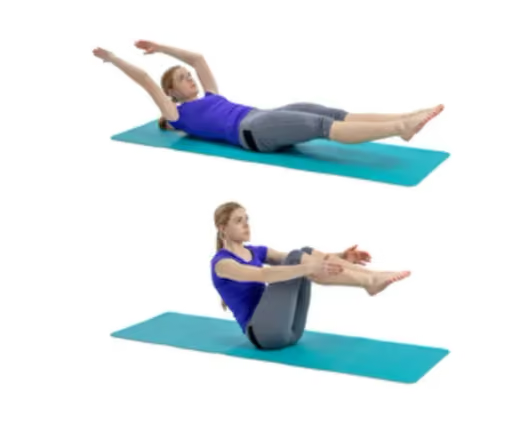
Step 1
Start by sitting on the floor with legs bent. Lean back so that your lower back and buttocks touch the floor. Straighten your legs close to the floor and straighten your arms overhead so you are in the 'hollow hold' position.
Step 2
Bend your hips and curl your upper body up. Reach towards your toes with your arms and let your knees bend and bring them towards your chest. Reverse movement to return to starting position (hollow hold position).
3. About tuck up.
- Strengthens and tones back muscles and core
- Improves posture
- Relieves lower back pain
- Builds stability and balance
4. Benefits of tuck up exercise.
Here are some potential benefits of performing this exercise:
- Strengthens the back, shoulders, and arms
- Promotes muscular balance, helping to prevent injury
- Improves core stability and joint mobility
- Increases overall body strength, stability, and coordination
FAQ on tuck up.
What muscles does tucking up target?
Tucking up targets the core muscles, including the rectus abdominis, obliques, transverse abdominis, and hip flexors. It also works the glutes, hamstrings, and quads.
How often should I do tucking up?
The frequency of tucking up depends on the individual and their needs. Generally, it is recommended to tuck up every night before bed and when getting dressed in the morning. Some people may need to tuck up more frequently, such as after physical activity or when feeling particularly uncomfortable. It is important to listen to your body and adjust the frequency of tucking up accordingly.
Is tucking up safe for beginners?
Tucking up is a gymnastics skill that requires a lot of strength and flexibility, so it is not recommended for beginners. It is important to make sure you are properly warmed up and have the correct technique before attempting this skill. It is also important to have a spotter or coach present to help ensure your safety.
What are the benefits of tucking up?
Tucking up has many benefits, including improved posture, better breathing, improved digestion, and improved circulation. It can also help to reduce stress and anxiety levels, as it encourages a more relaxed body position. Additionally, tucking up can help to improve your overall balance, coordination, and flexibility.