Step-by-step guide to the sumo squat exercise
Maximize effectiveness: Tips for patients and practitioners
1. Step-by-step video on how to do the sumo squat.
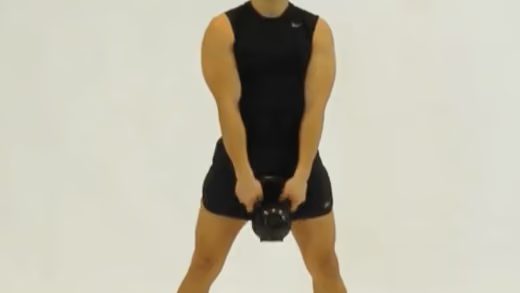
2. How to perform the sumo squat? Follow these instructions.
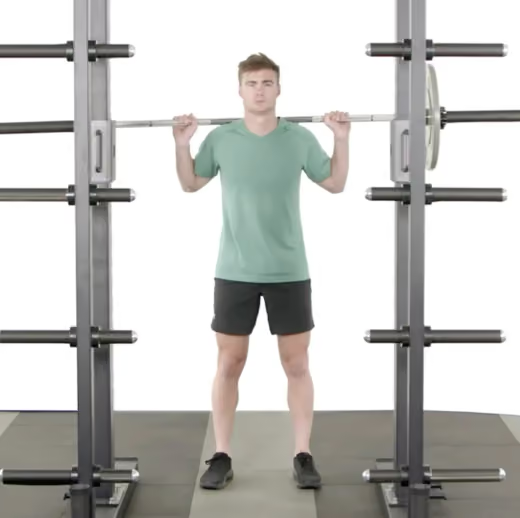
Step 1
Set the barbell rests on the power rack to just below shoulder height, and lay a barbell across them. Add the desired weight to each end of the barbell, distributed evenly, and secure in place with a pair of barbell clamps. Stand up straight with your upper chest against the bar, your feet a shoulder’s width apart, and your knees soft.
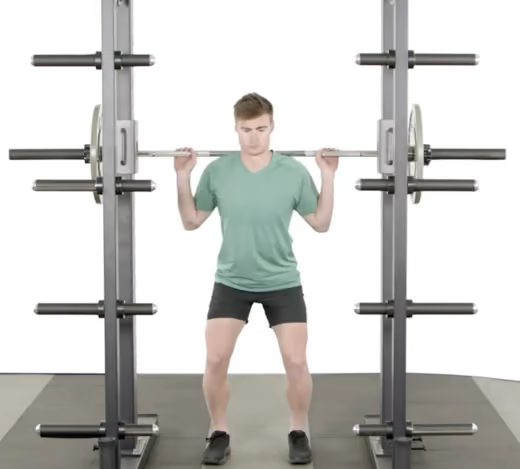
Step 2
With your palms facing forwards and your hands wider than your shoulders, grab a hold of the bar. Now, duck your head and shoulders under the bar to position it to rest across your upper back. Lift your elbows to create a secure platform across your shoulder muscles for the bar to rest upon.
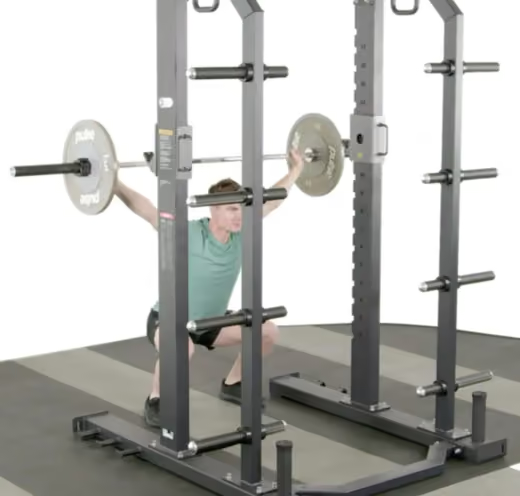
Step 3
When ready, straighten your knees to lift the bar, then take a step backwards away from the barbell rests. Postion your feet to wider than a hip's width apart and turn your toes out to approximately 45 degrees.
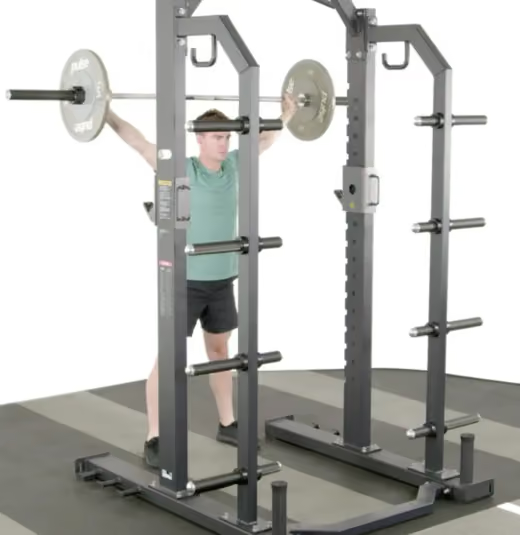
Step 4
In a fluid motion, bend your knees slightly and then lift the bar directly above your head as you return to an upright postion. Keeping your elbows straight and your upper body upright, begin bending at your knees as you sink your buttocks behind you.
3. About the sumo squat.
- Targets the lower body muscles, including the quads, hamstrings, and glutes
- Helps to improve balance, coordination, and stability
- Can be done with or without weights for various levels of intensity
- May be a good addition to a cardio program for added resistance training
4. Benefits of sumo squat exercise.
Here are some potential benefits of performing this exercise:
- Strengthens the legs, glutes and core muscles.
- Helps build strong, toned legs.
- Increases range of motion and mobility in lower body and hips.
- Improves overall posture and stability.
FAQ on sumo squat
What muscles does the sumo squat target?
The sumo squat primarily targets the muscles of the lower body, including the glutes, quadriceps, hamstrings, and adductors. It also engages the core muscles, including the rectus abdominis and obliques.
How often should I perform sumo squats?
Sumo squats should be performed two to three times per week, with at least one day of rest between each session. Aim for three sets of 12 to 15 repetitions per session.
What are the benefits of performing sumo squats?
Sumo squats are a great exercise for strengthening the legs and glutes, as well as improving balance and coordination. They can also help to improve hip mobility and stability, and can be a great way to increase overall leg strength and power. Additionally, sumo squats can help to improve posture, and can be a great way to add variety to your leg workouts.
Is the sumo squat suitable for all fitness levels?
Yes, the sumo squat is suitable for all fitness levels. It can be modified to suit a beginner's level of fitness, or it can be made more challenging for more advanced exercisers.