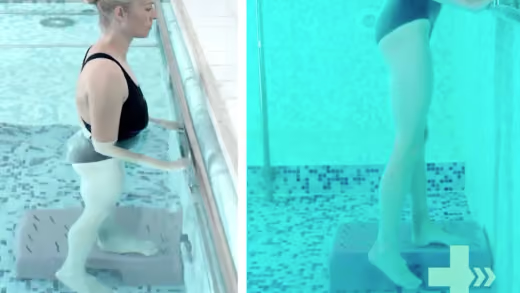
Step-by-step guide to Squat in Pool
Maximize effectiveness: Tips for patients and practitioners
1. Step-by-step how to do Squat in Pool
2. How to perform Squat in Pool. Follow these instructions.
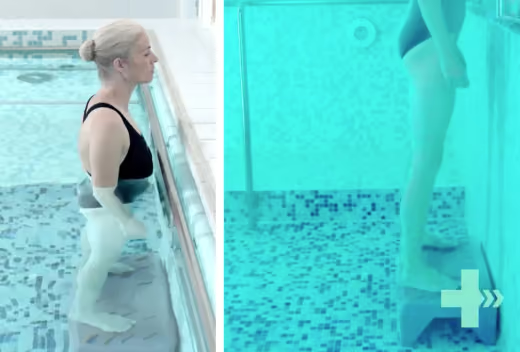
Step 1
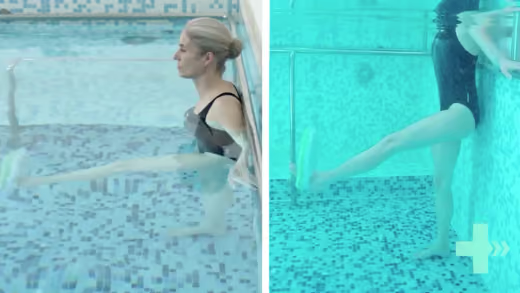
Stand up straight in the water holding onto the poolside at a depth as instructed by your therapist. You may need to use a pool step to alter the depth of the water.
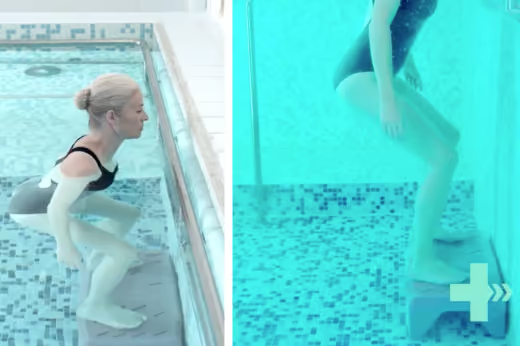
Step 2
Keep your feet shoulder width apart at arms length from the wall. Sit back into the water as if sitting into a chair. Push down through your heels, tensing your buttock and thigh muscles to stand back up without using your arms.
3. About Squat in Pool
- Performing squats in a pool - Provides resistance and buoyancy - Targets lower body muscles - Reduces impact on joints
4. Benefits of Squat in Pool
Here are some potential benefits of performing this exercise:
- Provides resistance and buoyancy for added challenge - Targets lower body muscles - Reduces impact on joints
5. FAQ on Squat in Pool
How do I perform squats in the pool?
Stand in the pool, perform squats by lowering your body and then rising back up.
What are the advantages of pool squats?
Buoyancy in water reduces impact on joints, making it suitable for those with joint issues.
Can pool squats be part of a full-body workout?
Yes, incorporate pool squats with other pool exercises for a comprehensive water-based workout.
How deep should I squat in the pool?
Aim for a comfortable range of motion, gradually increasing depth as your strength and flexibility improve.