Step-by step guide to the single leg balance exercise
Maximize effectiveness: Tips for patients and practitioners
1. Step-by-step video on how to do the single leg balance exercise
How to perform the Single Leg Balance
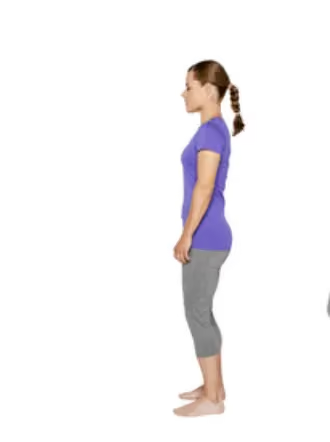
Step 1
Shift your weight from the balls of your feet onto your heels and back a few times whilst keeping your feet flat on the floor.
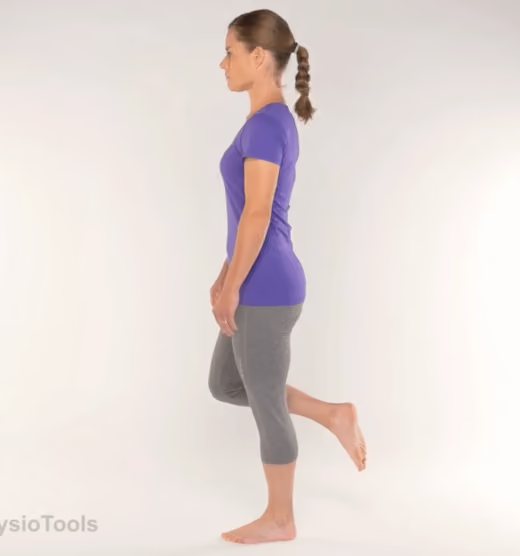
Step 2
Move your weight onto one foot and lift the other. Repeat with the side. You can close your eyes to increase difficulty.
3. About the single leg balance exercise
- Activate your core and keep your abdominal muscles engaged
- Hold for 30 seconds and then switch to the other leg
- Maintain a steady breath while focusing on maintaining the balance.
4. Benefits of the single leg balance exercise
Here are some potential benefits of performing this exercise:
- Improved balance and coordination
- Improved hip and core muscle strength
- Reduced risk of injury and falls due to improved balance and coordination
5. FAQ on the single leg balance exercise
How do I perform a single leg balance?
To perform a single leg balance, start by standing up straight with your feet together. Lift one foot off the ground and hold it in the air for as long as you can. Keep your core engaged and your back straight. Make sure to keep your eyes focused on a fixed point in front of you to help maintain your balance. If you start to lose your balance, lower your foot to the ground and try again.
What muscles does a single leg balance work?
A single leg balance works the muscles of the core, glutes, and legs, including the quadriceps, hamstrings, and calves. It also helps to strengthen the stabilizing muscles of the hips and ankles.
What are the different variations of a single leg balance?
The different variations of a single leg balance include: 1. Standing on one leg with the other leg extended forward 2. Standing on one leg with the other leg extended backward 3. Standing on one leg with the other leg bent and lifted up 4. Standing on one leg with the other leg bent and lifted to the side 5. Standing on one leg with the other leg bent and lifted behind the body 6. Standing on one leg with the other leg bent and lifted in front of the body 7. Standing on one leg with the other leg bent and lifted up and out to the side 8. Standing on one leg with the other leg bent and lifted up and behind the body 9. Standing on one leg with the other leg bent and lifted up and in front of the body 10. Standing on one leg with the other leg bent and lifted up and out to the side while rotating the torso
How long should I hold a single leg balance?
The length of time you should hold a single leg balance depends on your fitness level and goals. Generally, a beginner should aim to hold the balance for 10-15 seconds before switching legs. As you become more advanced, you can increase the time up to 30 seconds or more.
What type of surface is best for performing a single leg balance?
The best type of surface for performing a single leg balance is a flat, stable surface such as a yoga mat or a carpeted floor. It is important to make sure that the surface is free of any objects that could cause you to lose your balance.