Step-by step guide to the seated dumbbell press exercise
Maximize effectiveness: Tips for patients and practitioners
1. Step-by-step video on how to do the seated dumbbell press exercise
How to perform the Seated Dumbbell Press
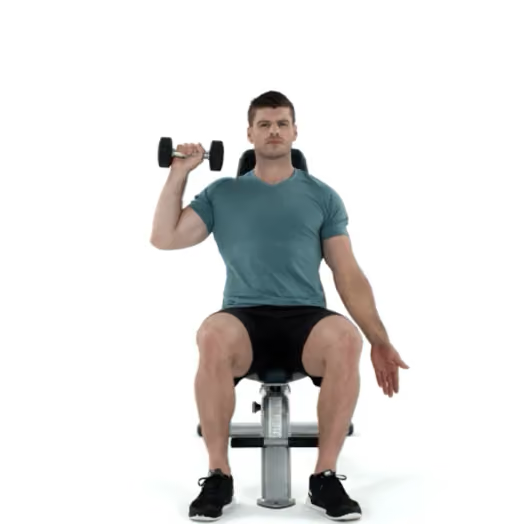
Step 1
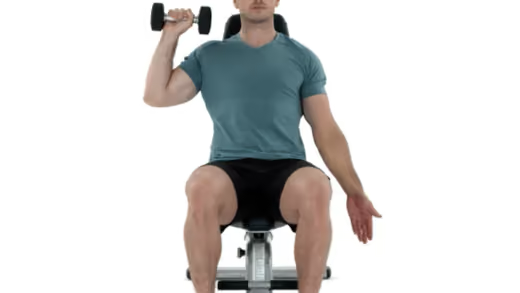
Sit on a bench holding a dumbbell in one hand at shoulder level in the press position.
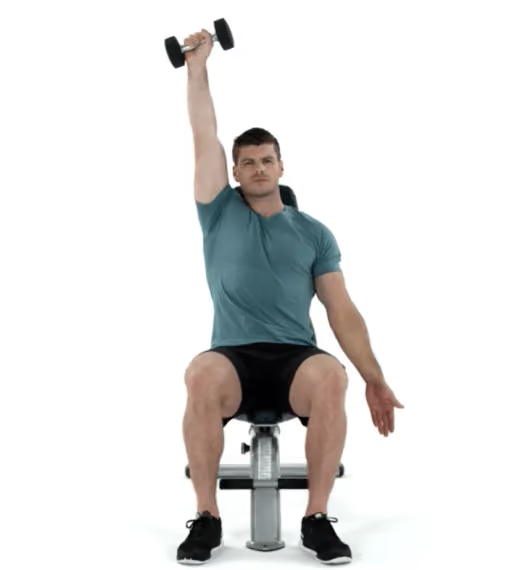
Step 2
Press the weight overhead ensuring your arm is fully locked out, and lower the dumbbell back down to your shoulder.
3. About the seated dumbbell press exercise
- Targets the shoulder muscles- deltoids, trapezius, triceps, and upper pectoral muscles
- Increases stability to the shoulder joint
- Improves posture
- Helps to prevent shoulder and back injuries
4. Benefits of the seated dumbbell press exercise
Here are some potential benefits of performing this exercise:
- Enhance upper body strength
- Improve muscle and strength endurance
- Promote healthy posture and good body alignment
- Strengthen the core muscles, such as the abdominal and back muscles.
5. FAQ on the seated dumbbell press exercise
What muscles does a seated dumbbell press target?
A seated dumbbell press primarily targets the anterior deltoids, as well as the triceps and the trapezius muscles.
What is the best way to position the dumbbells for a seated dumbbell press?
The best way to position the dumbbells for a seated dumbbell press is to hold them at shoulder level with your palms facing forward. Make sure your elbows are tucked in close to your body and your upper arms are parallel to the floor. Keep your back straight and your core engaged throughout the exercise.
What is the best grip for a seated dumbbell press?
The best grip for a seated dumbbell press is an overhand grip (palms facing away from you). This grip will help to keep the wrists in a neutral position and provide the most stability.
What are the common mistakes to avoid when doing a seated dumbbell press?
1. Not using proper form: Make sure to keep your back straight and core engaged throughout the exercise. 2. Not using enough weight: Make sure to challenge yourself by using a weight that is heavy enough to make the exercise difficult. 3. Not keeping your elbows tucked in: Make sure to keep your elbows tucked in close to your body as you press the dumbbells up. 4. Not engaging your shoulder blades: Make sure to squeeze your shoulder blades together as you press the dumbbells up. 5. Not controlling the movement: Make sure to lower the dumbbells in a slow and controlled manner to ensure you are using the correct muscles.