Step-by step guide to the ipsilateral exercise
Maximize effectiveness: Tips for patients and practitioners
1. Step-by-step video on how to do the ipsilateral
2. How to perform the ipsilateral? Follow these instructions:
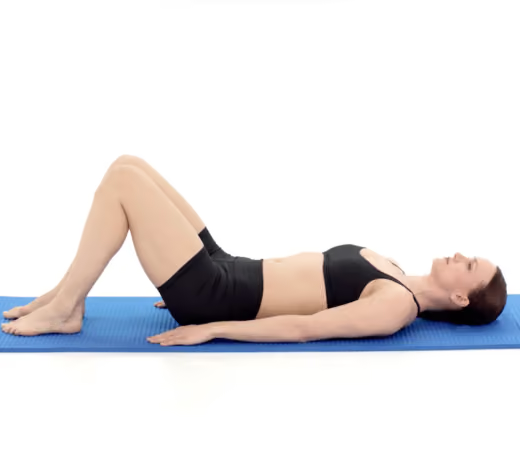
Step 1
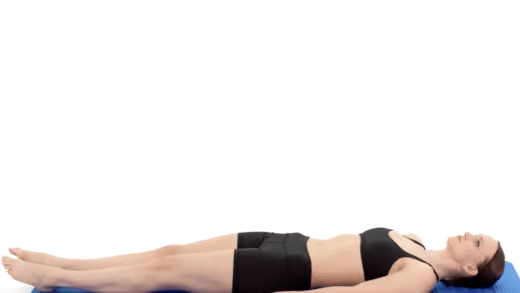
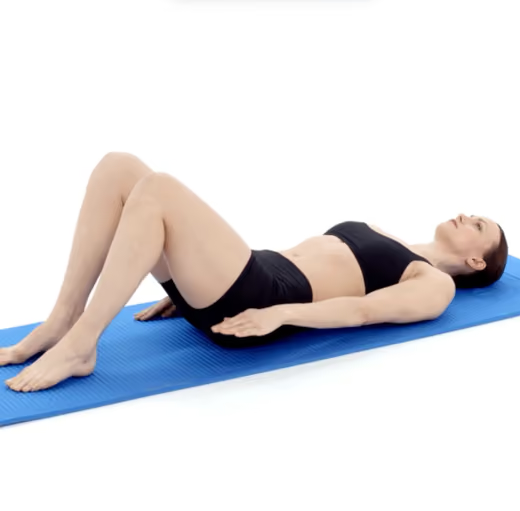
Lie on your back with your knees bent and feet flat on the floor. Tighten your pelvic floor and abdominal muscles, ensuring you keep a small arch in your lower back.
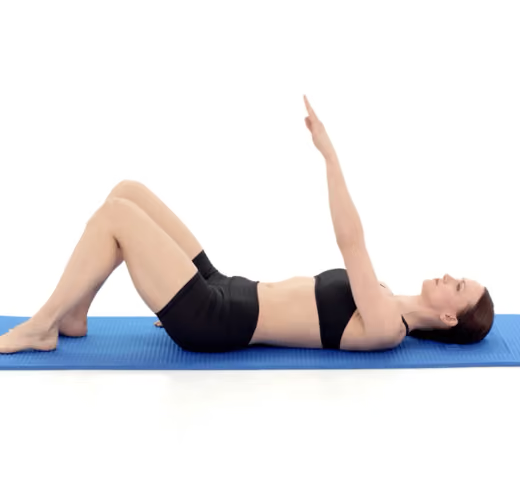
Step 2
Keeping the tension in your core stability muscles, lift one arm forwards and up towards the ceiling.
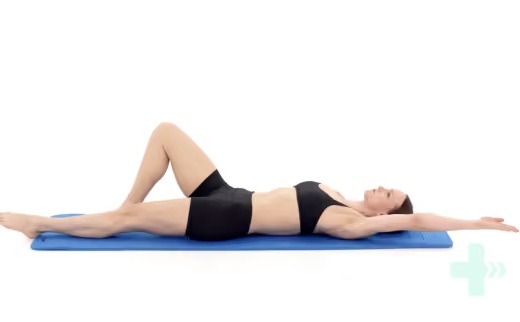
Step 3
Simultaneously slide your foot on the same side along the floor until your leg is straight.
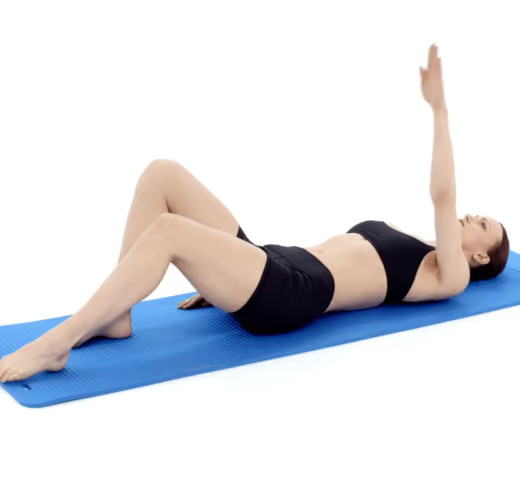
Step 4
Continue the movement, raising your arm overhead.
Step 5
Once your arm and leg are straight, control the movement as you simultaneously bring your arm back down and bend your leg back in.
3. About the ipsilateral
- Targets small shoulder muscles for stability and strength
- Utilizes the use of a resistance band to mimic the motion of the shoulder
- Improves shoulder flexibility and strength in the shoulder joint
- Can be done lying or standing and can be modified to the user’s strength level
4. List benefits of ipsilateral
Here are some potential benefits of performing this exercise:
- Improved muscular coordination and balance
- Enhanced proprioception
- Increased muscle strength and power
- Improved joint stability
- Reduced risk of injury
5. FAQ on ipsilateral
What is ipsilateral hip abduction?
Ipsilateral hip abduction is a movement in which the hip is moved away from the midline of the body on the same side. This movement is usually performed in a standing or lying position. It involves the contraction of the gluteus medius and gluteus minimus muscles and is used to strengthen the hip abductors.
What muscles are used during ipsilateral hip abduction?
The primary muscles used during ipsilateral hip abduction are the gluteus medius and gluteus minimus. Additionally, the tensor fasciae latae, sartorius, and quadratus femoris may also be used.
What are the benefits of ipsilateral hip abduction?
Ipsilateral hip abduction is a type of exercise that strengthens the muscles of the hip and thigh. It is an important exercise in rehabilitation programs for hip and knee injuries, as well as in preventative programs. The benefits of ipsilateral hip abduction include improved hip stability, increased strength in the hip and thigh muscles, improved balance and coordination, and improved posture. Additionally, this exercise can help to reduce pain and discomfort in the hip and knee joints.