Step-by step guide to the half ball exercise
Maximize effectiveness: Tips for patients and practitioners
1. Step-by-step video on how to do the half ball
2. How to perform the half ball? Follow these instructions:
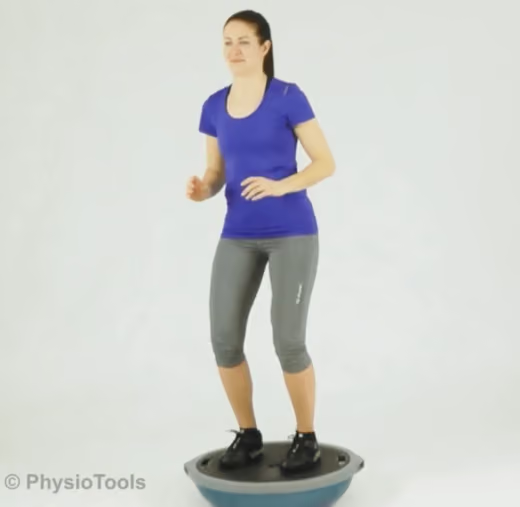
Step 1
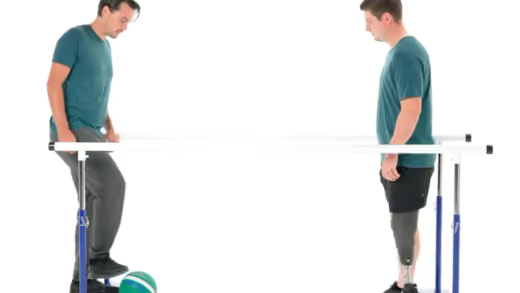
Stand on a half ball with the flat side up, holding a ball.
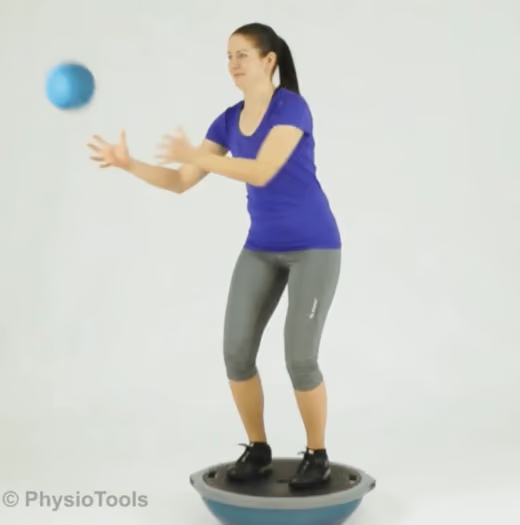
Step 2
Throw a ball with a partner or against a wall.
3. About the half ball
- Strengthens the abdominal muscles
- Targets the muscles of the lower abdomen
- Uses a stability ball for better support
- Stabilizes the back muscles to prevent injury
4. List benefits of half ball
Here are some potential benefits of performing this exercise:
- Strengthens and tones abdominal muscles
- Increases core stability
- Improves balance and coordination
- Enhances posture and flexibility
5. FAQ on half ball
What muscles does the half ball crunch target?
The half ball crunch primarily targets the rectus abdominis (abs) and obliques. It also engages the hip flexors, transverse abdominis, and erector spinae muscles.
How do I properly perform a half ball crunch?
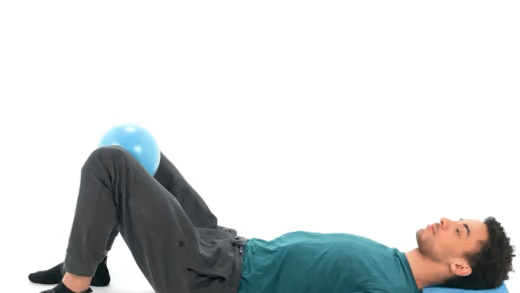
To properly perform a half ball crunch, start by lying on your back with your feet flat on the floor and your knees bent. Place a half ball or exercise ball under your lower back, just above your hips. Place your hands behind your head, keeping your elbows wide. Exhale and curl your torso up towards your knees, contracting your core muscles. Hold for a few seconds, then slowly lower your torso back down to the starting position. Repeat for the desired number of repetitions.
How often should I do half ball crunches?
Half ball crunches should be done 2-3 times per week as part of a well-rounded core strengthening routine. Be sure to take at least one day of rest between workouts to allow your muscles to recover.
What is the correct form for a half ball crunch?
The correct form for a half ball crunch is to start by lying on your back with your feet on the ball. Your legs should be bent at a 90-degree angle and your arms should be crossed over your chest. From there, you should lift your upper body off the floor, contracting your abdominal muscles as you do so. Hold this position for a few seconds before returning to the starting position.