Step-by step guide to the bent knee fall out exercise
Maximize effectiveness: Tips for patients and practitioners
1. Step-by-step video on how to do the bent knee fall out
2. How to perform the bent knee fall out? Follow these instructions:
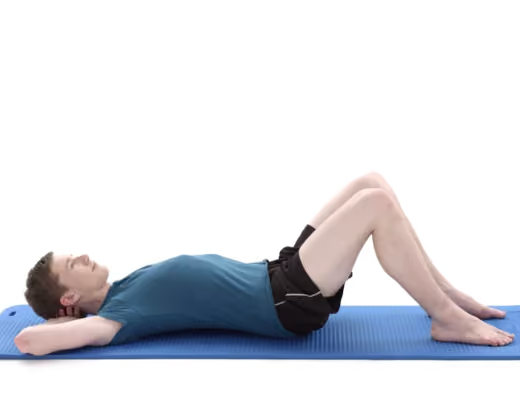
Step 1
Lie on your back with your knees bent and your feet flat on the floor.
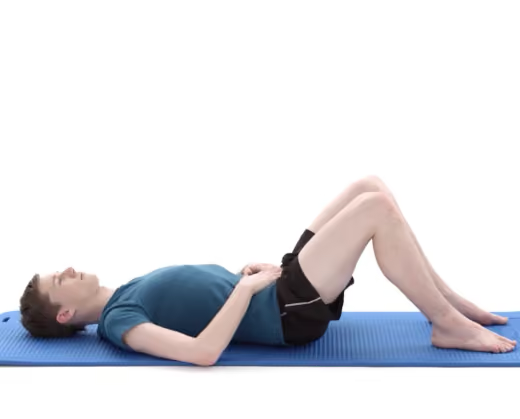
Step 2
Place your hands on your lower tummy, just inside your hip bones. Gently tighten your tummy muscles.You should feel your back flatted on to the floor.
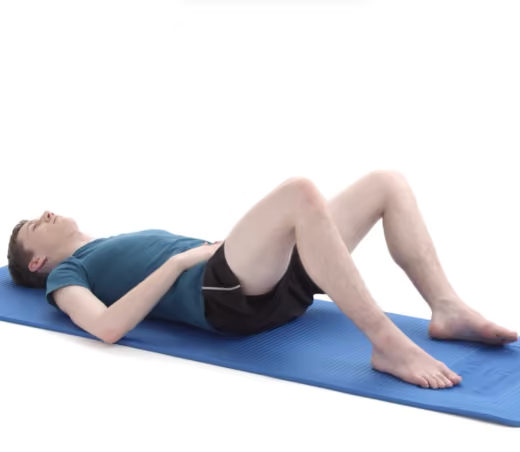
Step 3
Allow one knee to slowly fall out to the side. Do not allow your back or pelvis to move.
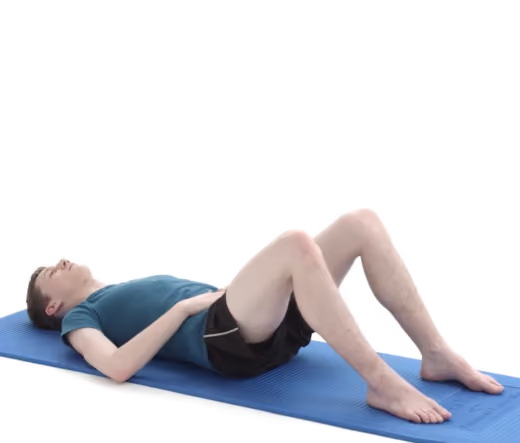
Step 4
Control the movement as you bring the knee back up to the starting position.
Bent knee fall out exercise is an easy and effective way to stretch and strengthen your abdominals muscles. It works as a challenging yet gentle core workout that helps you improve posture and strengthens your stabilizing muscles.
3. About the bent knee fall out
- Strengthens the core and hips
- Improves balance and coordination
- Can help to reduce lower back pain
- Increases Quadriceps, gluteal and hamstring flexibility
- Helps to improve posture and overall movement
4. List benefits of bent knee fall out
Here are some potential benefits of performing this exercise:
- Improved balance and coordination
- Strengthened lower body muscles
- Improved joint range of motion and flexibility
- Increased muscular power and endurance
5. FAQ on bent knee fall out
What muscles are activated during a bent knee fall out?
The muscles activated during a bent knee fall out are the gluteus maximus, rectus femoris, vastus medialis, and vastus lateralis. Additionally, the hamstrings and adductor magnus are also activated.
Should I use a mat when doing a bent knee fall out?
Yes, it is always a good idea to use a mat when doing a bent knee fall out. This will help to cushion your body and protect you from potential injuries.
How many repetitions of bent knee fall outs should I do?
The number of repetitions of bent knee fall outs you should do depends on your fitness level and goals. If you are a beginner, start with 1-2 sets of 8-12 repetitions and gradually increase the number of sets and repetitions as you get stronger. If you are more advanced, you can do 3-4 sets of 12-15 repetitions.