

Physitrack is the better platform for patient engagement and remote care
Our team is dedicated to supporting your practice, whether you're an independent provider or part of a large clinic. We're committed to delivering top-notch digital health solutions tailored to your needs.








Physitrack vs WebPT
Physitrack and WebPT are both EMR and practice-management platforms for physical therapy practices, but they serve different operational needs.
Physitrack is an all-in-one, AI-powered platform built for solo and small practices. It combines scheduling, patient intake, charting, an AI scribe, administrative automation, home exercise programs, patient engagement, and remote care in one system.
WebPT is an established rehabilitation therapy platform with broad documentation, billing, and operational capabilities. It may suit larger organizations with more complex requirements and add-on needs.
Physitrack can replace WebPT as the core clinical and practice-management system for solo and small practices. This comparison explains where each platform performs best and which option fits different practice needs.
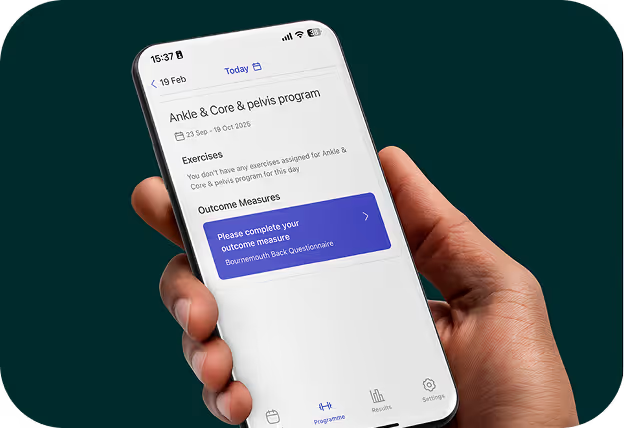
Why clinics consider alternatives to WebPT
Clinics typically begin evaluating alternatives or additions when their care model evolves beyond clinical documentation alone. Common reasons include the need for:
An all-in-one EMR and practice-management platform built for smaller practices
AI-assisted charting that turns consultations into SOAP notes
Scheduling, patient intake, and administrative automation in one system
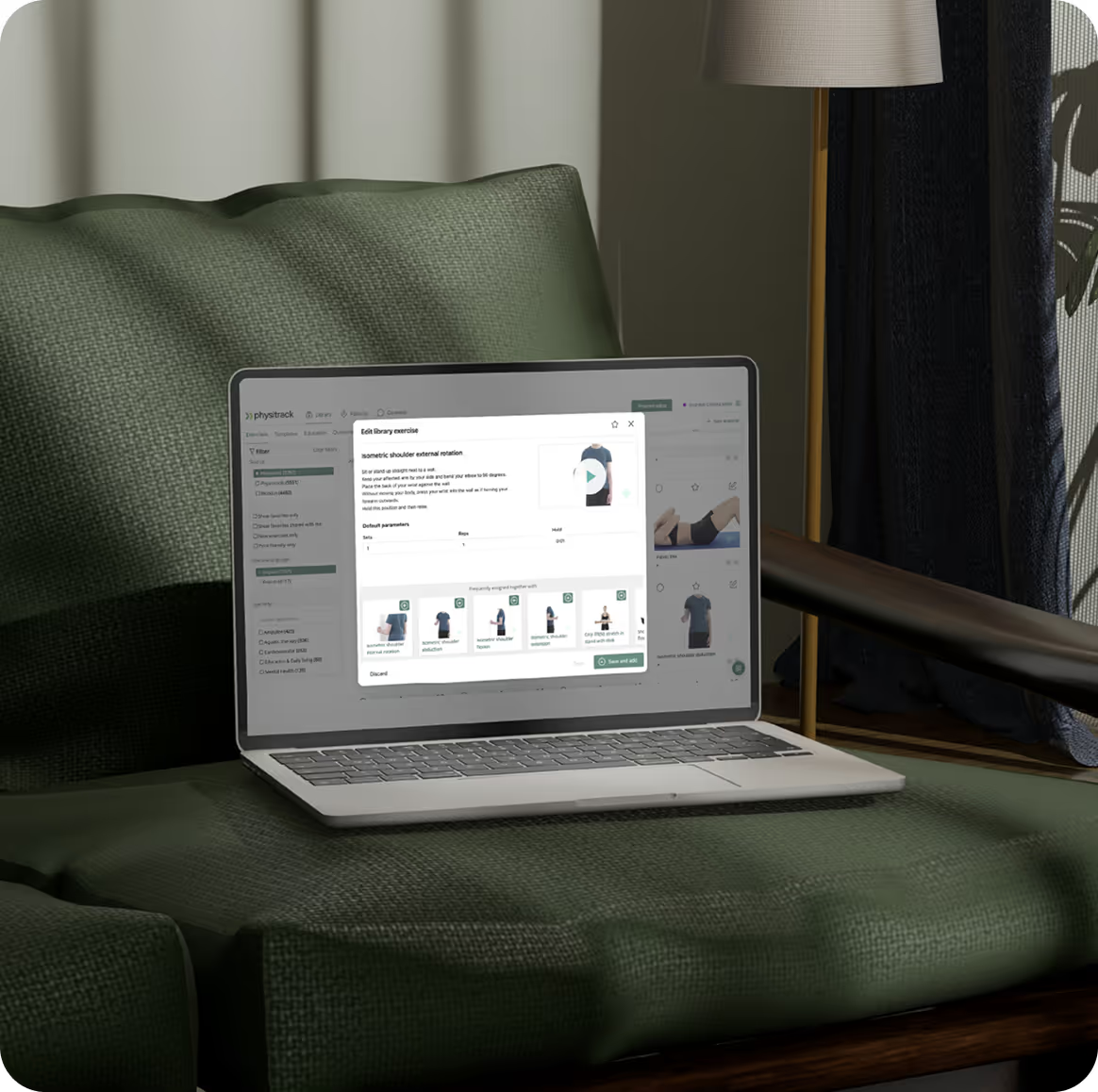
Integrated home exercise programs with an extensive exercise library
A connected patient app for exercise delivery, adherence tracking, and progress reporting
Telehealth, secure communication, and remote care tools within the clinical workflow
Physitrack brings these capabilities together in one AI-powered platform. For solo and small physical therapy practices, it can replace WebPT as the core EMR and practice-management system while providing deeper patient-engagement and remote-care capabilities.
Feature comparison:
Physitrack vs WebPT
.avif)


What matters for modern physio delivery

Remote care and patient engagement
Remote care is now a core part of the patient recovery journey. Physitrack supports:
Telehealth consultations
Patient messaging
Team‑based inbox workflows
This enables clinicians to manage care beyond the clinic while maintaining continuity and oversight.

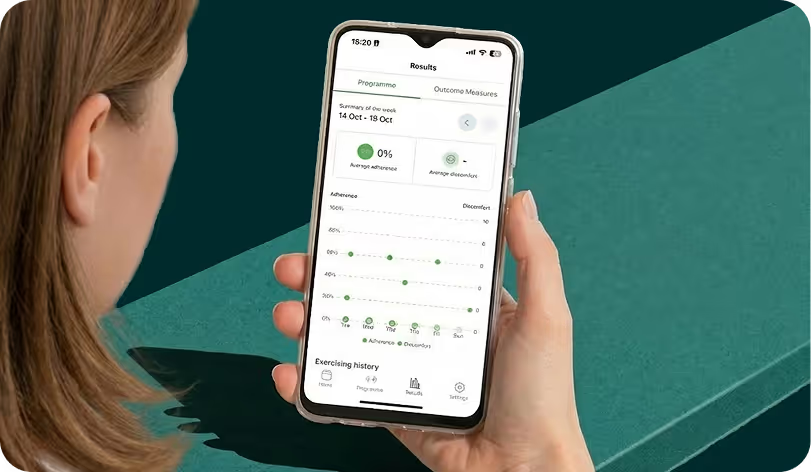
Physitrack supports structured PROMs and outcomes reporting, which areincreasingly required by public providers, enterprise organisations, andvalue‑based care models.
Outcomes and reporting
Scaling across teams and clinics
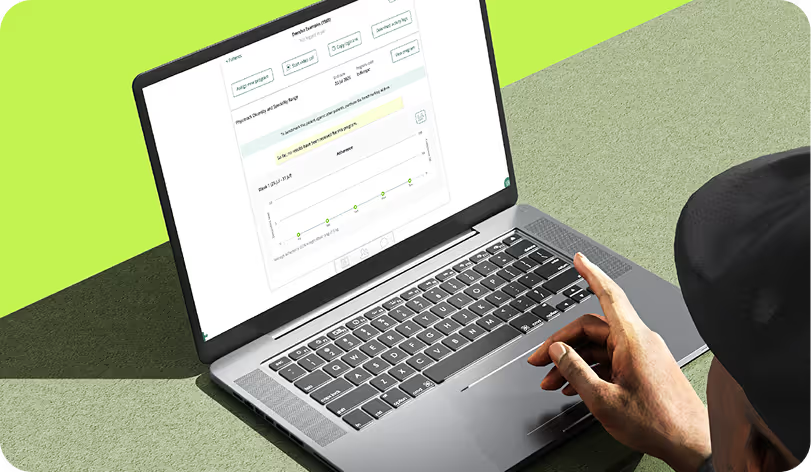
Physitrack is designed to support multi‑clinic operations, enabling consistent workflows, shared visibility, and operational insight across teams and sites.
Which platform is right for you?

Physitrack is a good fit if you:
Deliver hybrid care (in‑person + remote)
Need patient messaging and engagement tools
Collect PROMs and report outcomes
Operate across teams or multiple clinic locations
Require scalable integrations via API + SSO
Need languages available in English, Danish, Swedish and Finnish

WebPT may be sufficient if you:
Primarily need digital exercise delivery
Do not require broader remote‑care or outcomes workflows
What matters for modern physio delivery
Adherence, engagement, remote care, and outcomes. Physitrack delivers where legacy EMRs fall short.
Patient engagement and gamification
Adherence to home exercise programmes is one of the biggest challenges in physiotherapy. PhysiApp addresses this with built-in gamification and streaks that motivate patients to keep going.
Remote care and patient engagement
Telehealth consultations, patient messaging, team-based inbox workflows, and remote therapeutic monitoring (RTM) with billing support. Manage care beyond the clinic while maintaining continuity.
Global compliance and data security
Physitrack is ISO 27001 and GDPR compliant. Essential for clinics and health systems operating outside the US. WebPT is HIPAA-focused and primarily serves the US market.
Physitrack + WebPT: better together
Many organisations use both platforms. WebPT for clinical documentation and billing. Physitrack for patient engagement, remote care, and exercise delivery. The two integrate, so clinicians operate seamlessly without duplicating data entry.
Works with Epic
Physitrack integrates with Epic, making it a strong fit for health systems and hospital-affiliated clinics that run WebPT alongside Epic.
Works with Jane App
For smaller independent clinics, Physitrack integrates with Jane App, a popular all-in-one clinic management platform, giving practices a best-in-class patient engagement layer.
Physitrack + Jane App: the better choice for small and mid-sized clinics
For independent clinics and small group practices, WebPT can feel like too much. Many already use Jane App for scheduling, notes, and billing. The problem is that neither Jane nor WebPT provides a genuinely great home exercise and patient engagement experience. That's the gap Physitrack fills.
Jane handles
Scheduling, SOAP notes, billing, and intake. The business of running a clinic.
Physitrack handles
Everything between appointments. Exercise delivery, patient adherence, messaging, telehealth, PROMs, and RTM billing.
WebPT alone
Physitrack + Jane
EMR / scheduling / billing
Strong
Strong (via Jane)
Home exercise quality
Basic via Reach add-on
Best-in-class library + patient app
Patient adherence and engagement
Limited
Gamification, streaks, two-way messaging
RTM billing (CPT 98975-98985)
Via add-on
Native, built-in
Price for a small clinic
Higher cost, scales with volume
Jane is cost-effective; Physitrack priced per clinician
For a solo physio or a 3-5 clinician practice, paying for WebPT to get an adequate HEP tool is the wrong trade-off. Physitrack + Jane delivers a better outcome for patients and a better return for the clinic, especially once RTM revenue is factored in.
RTM revenue: a major differentiator
Physitrack's native RTM support enables clinics to bill all 6 Medicare RTM CPT codes (98975, 98976, 98977, 98980, 98981, 98985) directly within their Physitrack workflow. With CPT 98985 new for 2026, clinics using Physitrack can generate meaningful new recurring revenue that WebPT's EMR workflows alone do not enable.
At current CMS rates, a clinic actively using RTM can offset the cost of Physitrack several times over.
Independent app quality research
PhysiApp has been independently evaluated in a peer-reviewed systematic review using the Mobile App Rating Scale (MARS), a validated framework for assessing health app quality across five dimensions (scale 1-5).
MARS quality scores
Category
PhysiApp
Study avg
Engagement
3.4
3.4
Functionality
4.3
3.8
Aesthetics
4.3
3.9
Information
3.7
3.6
Mean quality
3.9
3.7
Behaviour change scores
Subscale
PhysiApp
Study avg
Knowledge
4
3
Feedback and monitoring
4
2.9
Action support
3
2.4
Total
11
8.5
Which platform is right for you?
Physitrack is a good fit if you:
Want patients who are genuinely engaged, not just prescribed programmes
Deliver hybrid care (in-person + remote)
Need patient messaging and telehealth in a single patient-facing experience
Collect PROMs and report outcomes at scale
Already use an EMR and want a best-in-class patient engagement layer on top
WebPT is a good fit if you:
Primarily need clinical documentation, scheduling, and billing
Want an all-in-one EMR for a US outpatient PT clinic

Switching from WebPT to Physitrack (or adding Physitrack)
Many clinics run Physitrack alongside their existing EMR, including WebPT. The integration means clinicians manage clinical notes in WebPT and patient engagement in Physitrack — without double data entry.
For clinics looking to consolidate their stack, Physitrack can migrate patient data in under 30 days with full onboarding support.
Ready to explore Physitrack?


