What is Cognitive Appraisal?

The fact that a difficult situation has occurred is less critical than your perception of it . This process helps determine whether a situation is perceived as threatening or challenging .
A "threat appraisal" (e.g., "This difficult patient will drain all my energy and I can't help them" ) often leads to lower motivation, a feeling of external locus of control, and a helpless orientation. Conversely, a "challenge appraisal" (e.g., "This is a complex case, but an opportunity to learn and apply new skills" ) is more desirable, fostering higher intrinsic motivation, an internal locus of control, and a mastery orientation. This perspective allows you to regain psychological control following unexpected or uncontrollable events in your practice. Even the perception of pain (e.g., personal discomfort from manual therapy, or a patient's pain response) can be reframed as a tool and challenge, rather than just a warning and threat.
Managing Your Thoughts: The Three "D"s and Self-Talk ABC's
Effective management of your thought patterns is crucial for mental toughness and sustaining your professional well-being, particularly when dealing with negative self-talk that can arise from a demanding profession.
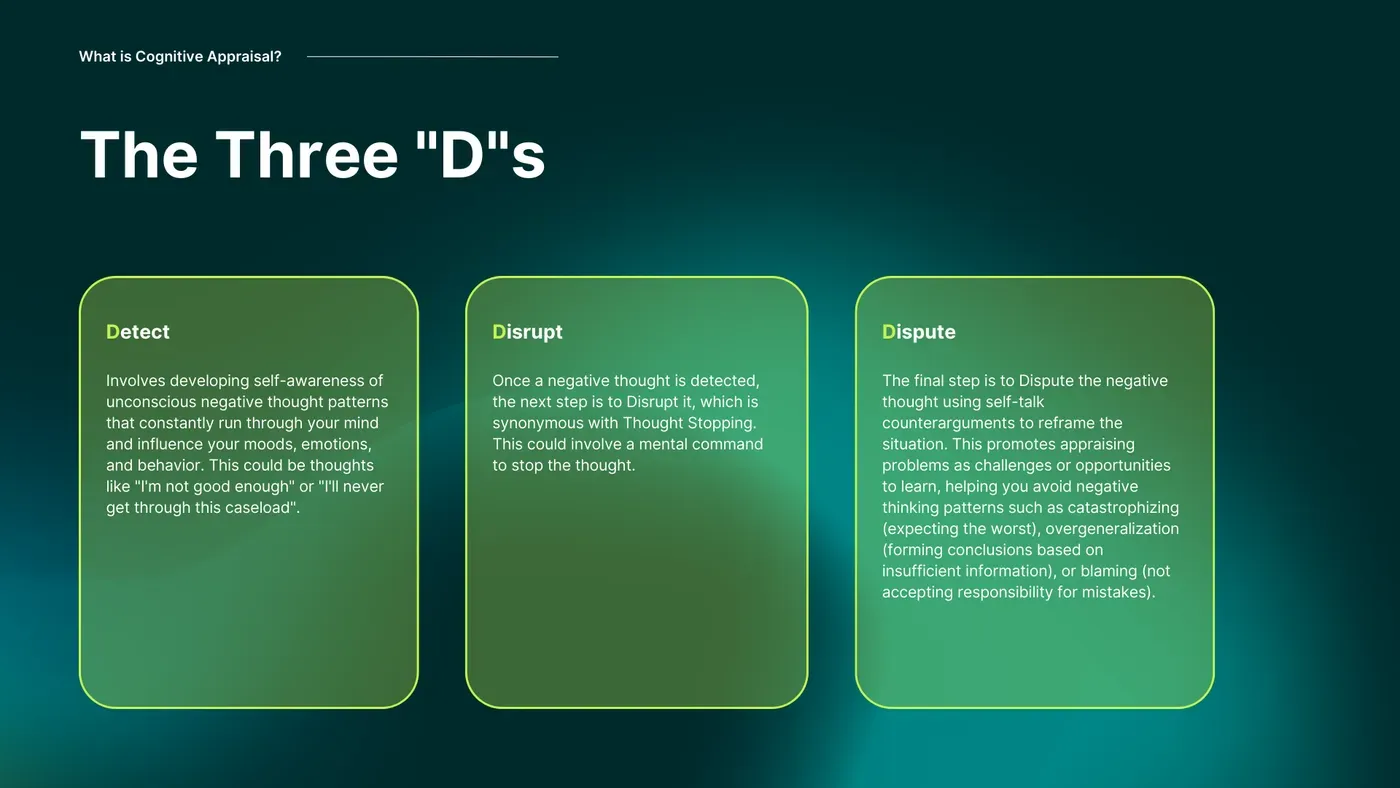
This strategy helps you manage negative thought patterns and reframe your perspectives.
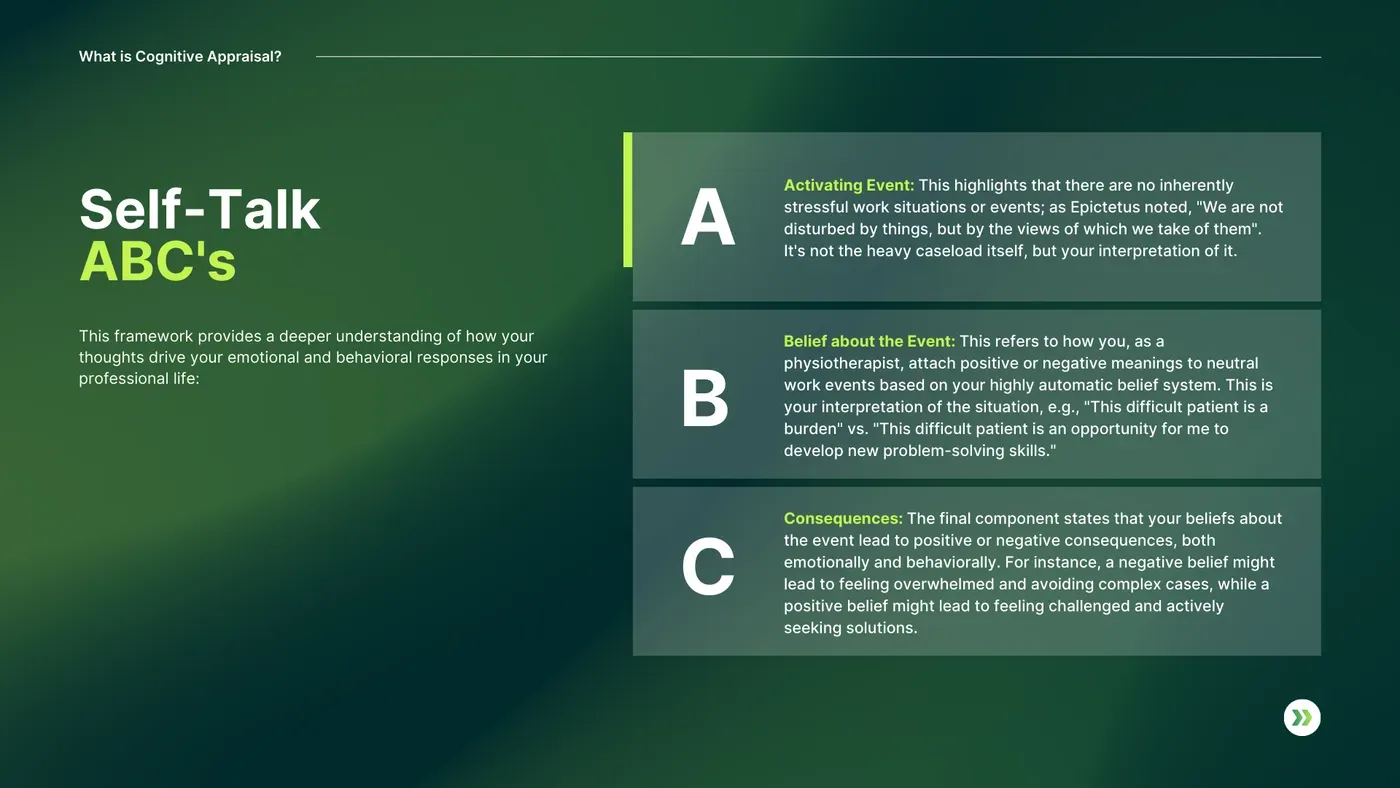
In conclusion, sustaining your professional vitality and effectiveness as a physiotherapist involves a holistic approach that integrates carefully managed workload with multidimensional recovery strategies that address your physical, psychological, and emotional stressors. Empowering yourself through self-education and fostering self-awareness, combined with the application of mental skills like cognitive appraisal , the Three "D"s , and understanding the Self-Talk ABC's , allows you to not only cope with the demands of your profession but to actively thrive and view challenges as opportunities for personal and professional growth.
Just as athletes are encouraged to "train smart, train hard, recover well," physiotherapists should aim to "work smart, work hard, recover well."
References:
Mental Toughness in Rehabilitation", Seth Haselhuhn, PhD, CSCS, Washington State University
Jeffreys, I. (2005). A Multidimensional Approach to Enhancing Recovery. Strength & Conditioning Journal , 27 (5), 78-85. DOI: 10.1519/1533-4295(2005)027[0078:AMATER]2.0.CO;2
Jeffreys, I. (n.d.). The performance lifestyle – a multidimensional approach to enhancing recovery and optimising performance (Ian Jeffreys BA(Hons), MSc, CSCSD , ASCC, NSCA-CPTD )

Monika Chmiel
Clinical Content Manager