Cupping Therapy in Physical Therapy: Does It Work and When to Use It
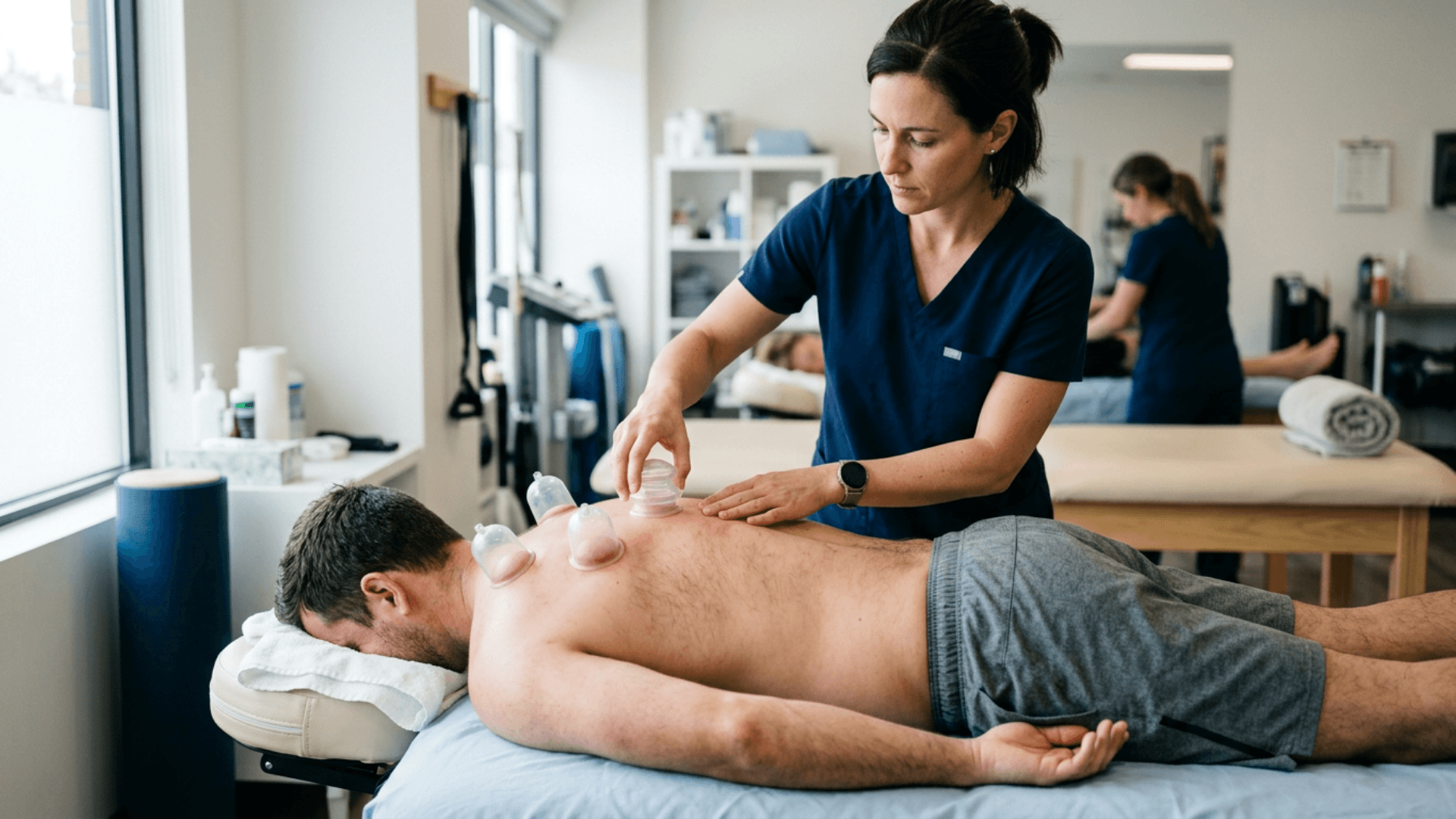
TL;DR
- Cupping may provide short-term pain relief for some musculoskeletal conditions, including neck and low back pain. However, sham-controlled trials often narrow or eliminate the measured benefit.
- Clinicians should use cupping as an adjunct to therapeutic exercise or manual therapy, not as a standalone cure. Evidence for lasting improvements in function remains limited.
- Dry cupping applies suction without breaking the skin. Wet cupping uses small incisions and is rarely used in mainstream US physical therapy.
- Physical therapists often call dynamic dry cupping myofascial decompression. They apply it to targeted tissue and pair it with active movement, unlike cupping used as an isolated spa or traditional treatment.
What cupping therapy is
Cupping therapy uses negative pressure inside a cup to lift the skin and underlying soft tissue. Cups may be made of glass, silicone, or plastic. Clinicians vary the suction, placement, and treatment time according to the target area and the patient’s response.
-
Dry cupping applies suction without breaking the skin. Physical therapists use this form most often because it avoids blood exposure and can fit within a manual therapy session.
-
Static cupping leaves one or more cups in place for a set period. The suction creates the familiar circular marks, which reflect changes in small blood vessels near the skin rather than conventional bruising caused by impact.
-
Dynamic cupping moves a cup across lubricated skin or combines suction with active movement. Physical therapy literature often calls this approach myofascial decompression because the clinician targets restricted movement between skin, fascia, and muscle.
-
Wet cupping combines suction with small skin incisions to draw blood. Mainstream US physical therapy clinics rarely use it because blood exposure raises infection-control concerns, and state scope-of-practice rules may restrict the technique.
-
Pulsatile cupping uses a mechanical device that repeatedly changes the suction pressure. Researchers have studied it for musculoskeletal pain, but clinicians use it less often than standard dry cupping.
Physical therapists generally use myofascial decompression as part of a clinical plan. They select a target tissue, adjust the dose, reassess movement, and pair the technique with exercise or other manual treatment. Spa and traditional acupuncture-style cupping may use similar cups, but those sessions may follow different treatment goals and may use cupping as a standalone service.
Does cupping therapy work? What the evidence actually shows
Cupping therapy may reduce musculoskeletal pain in the short term, especially immediately after treatment. Systematic reviews report pain reductions for low back pain, neck pain, osteoarthritis, and broader chronic musculoskeletal pain. Some studies also report better range of motion or disability scores. However, researchers often compare cupping with no treatment or usual care, which cannot separate the effect of suction from expectations, clinician attention, and the natural variation of symptoms.
Sham-controlled trials provide a more cautious picture. When researchers compare real cupping with a convincing imitation, differences in pain, physical function, mobility, and quality of life often narrow or disappear. A sham procedure can reproduce pressure, touch, treatment rituals, and patient expectations without delivering the intended suction dose. Those shared effects may account for part of the improvement seen against no-treatment controls.
Study quality also limits the certainty of pooled findings. Trials use different cup types, suction pressures, session lengths, treatment schedules, and comparison groups. Many studies include small samples or carry a risk of bias. Combining those studies can produce a positive average effect without identifying which technique works, who benefits, or how long any improvement lasts.
Current evidence supports cupping as an optional adjunct for short-term symptom relief. A physical therapist may use it when temporary pain reduction or easier tissue movement helps a patient tolerate stretching, manual therapy, or therapeutic exercise. Evidence remains weaker for lasting gains in function, sustained mobility changes, or cupping as a standalone treatment. Clinicians should judge its value by whether measurable progress continues through active rehabilitation rather than by temporary soreness, skin marks, or an immediate change in sensation alone.
Best for: conditions and use cases where PT clinicians use cupping
Physical therapists most often use cupping for short-term symptom relief or tissue mobility before active treatment.
-
Myofascial pain and trigger points. Dry cupping may temporarily reduce localized pain and sensitivity, which can make movement or hands-on treatment more tolerable.
-
Muscle tightness and restricted fascial glide. Static or moving cups apply suction across the skin and underlying soft tissue. Clinicians may use the technique when tissue restriction limits comfortable range of motion.
-
Scar tissue and adhesion mobility. A physical therapist may move cups around a fully healed scar to address restricted skin mobility. Cupping should not be applied over open wounds or incompletely healed tissue.
-
Preparation for manual therapy. Cupping can precede joint mobilization, soft-tissue treatment, or stretching when pain and guarding interfere with treatment.
-
Preparation for therapeutic exercise. Short-term changes in pain or mobility may help a patient perform strengthening and movement exercises with less discomfort. Exercise then addresses the capacity and movement deficits that cupping cannot treat on its own.
Evidence supports possible short-term pain relief, but findings for lasting functional improvement remain limited. Cupping works best as an adjunct within a broader physical therapy plan rather than as a standalone treatment.
How PT-administered cupping differs from spa or acupuncture cupping in practice
A physical therapist doses cupping according to the treatment goal and the patient’s response. The clinician adjusts suction strength, application time, cup placement, and whether the cups remain still or move across the tissue. Skin response, discomfort, and changes in movement guide the next application. Darker marks do not indicate a better treatment.
Progression depends on reassessment rather than a fixed routine. A clinician may begin with lighter suction or a shorter application, then increase the dose if the patient tolerates it and shows a useful response. The physical therapist may also change the target area or technique when cupping fails to affect pain or mobility.
Clinical cupping usually leads directly into active treatment. A patient might move a joint while cups remain attached, then perform stretching or strengthening after removal. The physical therapist can reassess the same painful or restricted movement to determine whether cupping created a useful window for exercise.
Spa or acupuncture sessions may treat cupping as the main service. Physical therapy places it within a plan built around functional goals, therapeutic exercise, and reassessment. Cupping may reduce symptoms long enough to support movement practice, but repeated passive sessions alone are unlikely to address the strength, coordination, or activity tolerance behind a lasting limitation.
Where cupping fits in a full plan of care
Cupping fits best as an adjunct that creates a short-term opportunity for active rehabilitation. If a patient experiences less pain or easier movement after treatment, the physical therapist can use that window to practice movements and loading tasks tied to the patient’s goals. Cupping alone cannot provide the repeated strengthening, motor control practice, or activity exposure needed for lasting functional change.
A home exercise program reinforces the movement introduced during the visit. For example, cupping for calf tightness may be followed by ankle mobility exercises and progressive calf loading. The patient can then repeat an appropriate version at home. Consistent practice helps the physical therapist assess whether improved movement continues after the immediate effects of cupping fade.
Digital tools can make that follow-through easier to prescribe and monitor. Physitrack gives clinicians an exercise library and home exercise program builder for creating structured plans that patients can continue between visits. The clinician still chooses the exercises, dosage, and progression according to the patient’s assessment and response.
FAQs
How long do cupping marks last?
Cupping marks reflect small blood vessels responding to suction and typically fade within a few days to about a week. Darker marks or sensitive skin may take longer to clear. Patients should contact their clinician if pain, swelling, blistering, or skin changes worsen.
How often can cupping be done?
No standardized dosing schedule for cupping frequency exists in the research. In practice, a physical therapist times sessions around skin response, treatment goals, and overall health, and waits until marks and any skin irritation from the prior session have resolved. Individual assessment helps prevent repeated treatment of tissue that has not recovered.
Is cupping painful?
Cupping usually causes pressure, pulling, or temporary tenderness rather than sharp pain. Strong suction or movement over sensitive tissue can feel uncomfortable. Patients should tell their physical therapist about pain so the therapist can reduce suction or stop treatment.
Can cupping be combined with other physical therapy treatments?
Physical therapists commonly combine cupping with manual therapy, mobility work, and therapeutic exercise. Cupping may temporarily reduce discomfort or tissue restriction before active movement. Exercise then helps reinforce mobility and functional gains.
Who should avoid cupping?
Cupping may be unsuitable over open wounds, infections, fragile skin, recent injuries, or areas with impaired sensation or circulation. People with bleeding disorders, blood-clotting concerns, or anticoagulant use need medical and clinical screening. A physical therapist can review health history and choose a safer alternative when needed.