

Step-by-step guide to the step up exercise
Maximize effectiveness: Tips for patients and practitioners
Step-by-step guide to the step up exercise
Maximize effectiveness: Tips for patients and practitioners

1. Step-by-step video on how to do the step up.

2. How to perform the step up? Follow these instructions.


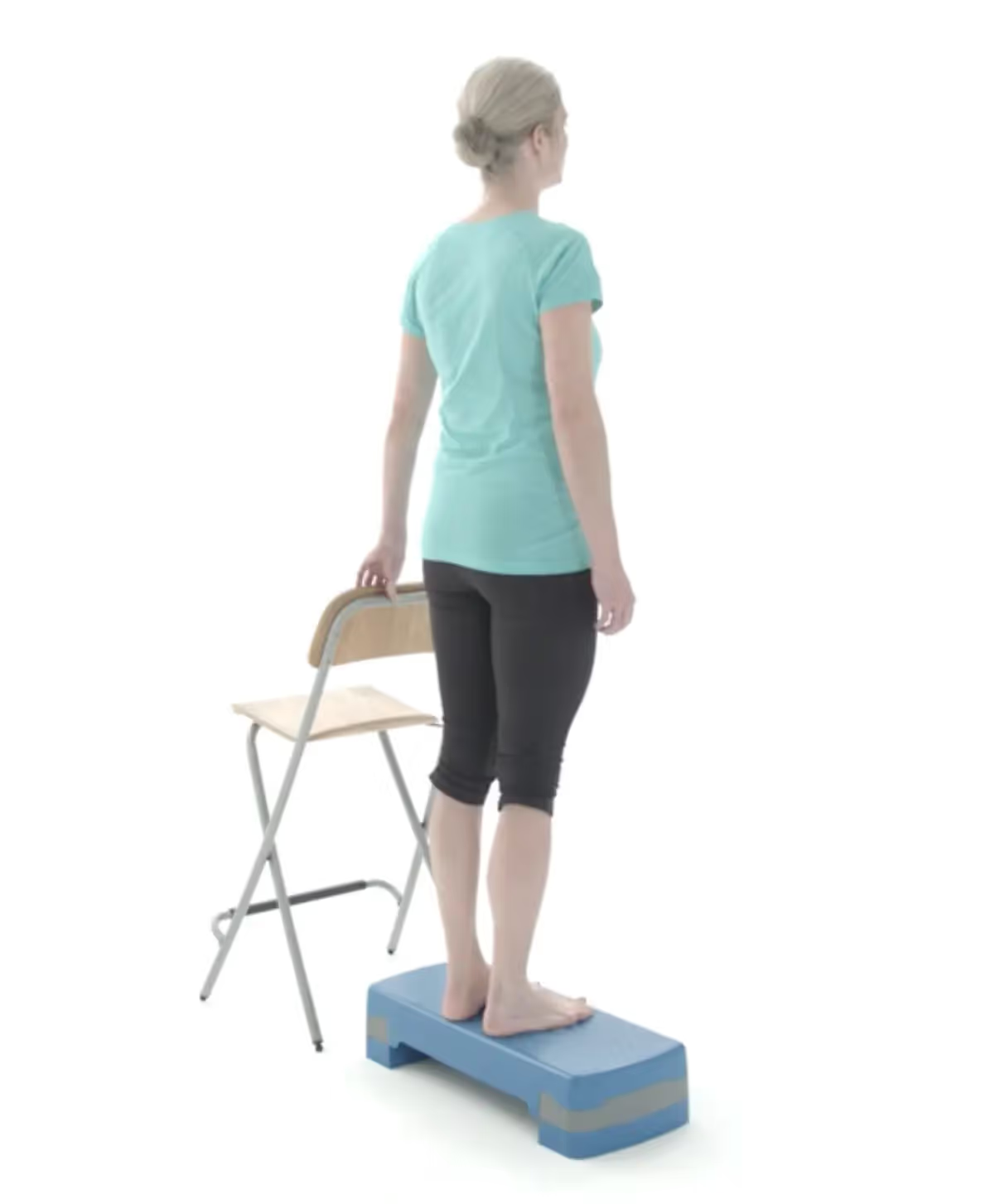

%20(1).avif)
3. About the step up.
- Increases cardiovascular fitness and stamina
- Reduces the risk of injury by improving balance
- Improves coordination, agility, and range of motion
4. Benefits of step up exercise.
Here are some potential benefits of performing this exercise:
- Increased core strength: Step ups require you to use a variety of muscles throughout the body, including those in the abdomen and back, resulting in improved core strength.
- Improved balance: Balance is essential for safe and effective movements. Step ups help improve balance by requiring you to focus on the movement, resulting in better coordination and balance control.
- Improved lower-body strength: Since the step up machine targets the lower body, including the legs, hips, and glutes, using it regularly can help improve your lower-body strength.
FAQ on step up and down exercise


Step up and down exercises target the glutes, quads, hamstrings, and calves.
It is recommended that step up and down exercises be done at least twice a week. However, if you are looking to increase your strength and endurance, you may want to do them more often.
When doing step up and down exercises, it is important to take safety precautions to avoid injury. Wear supportive shoes with good grip and cushioning to help protect your feet and ankles. Make sure the step is stable and secure, and start with a lower step before progressing to a higher one. Always use a railing or wall for support if available, and keep your back straight and your core engaged while performing the exercise. Additionally, it is important to listen to your body and stop if you experience any pain or discomfort.
1. Not using proper form: Make sure to keep your back straight and your core engaged when doing step up and down exercises. 2. Not using the correct height: If the step is too low, you won’t get the full benefit of the exercise. If the step is too high, you risk injury. 3. Not using the correct speed: Step up and down exercises should be done at a slow and controlled pace. 4. Not using the right muscles: Make sure to engage your glutes and quads when stepping up and down. 5. Not using the correct foot placement: Make sure to place your entire foot on the step when stepping up and down.

